
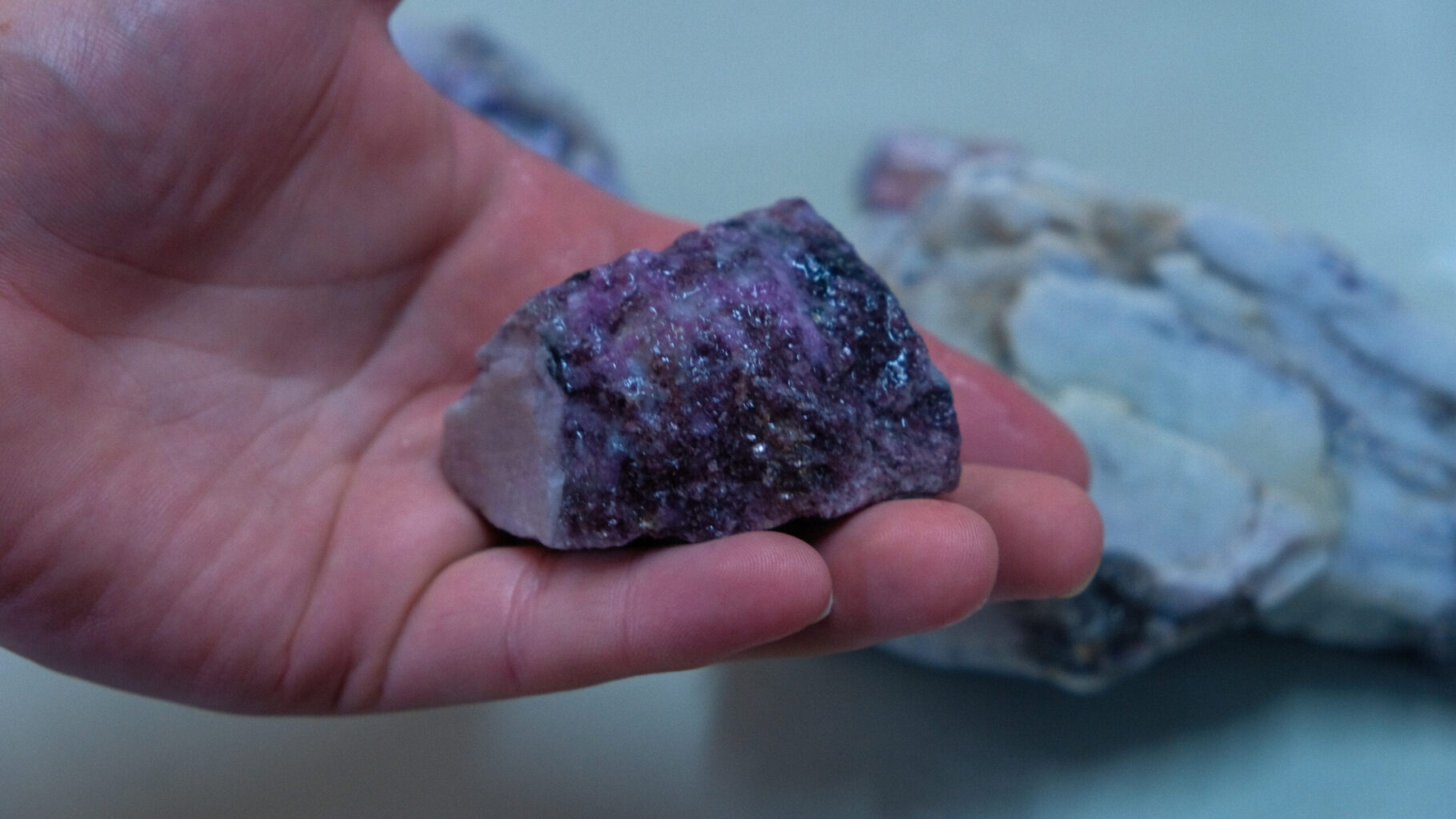
18 Aug #MineAlert launches new Transition Minerals Tracker
The Oxpeckers #MineAlert project returns 10 years after the success of its pilot – this time focusing on transition minerals. Andiswa Matikinca reports
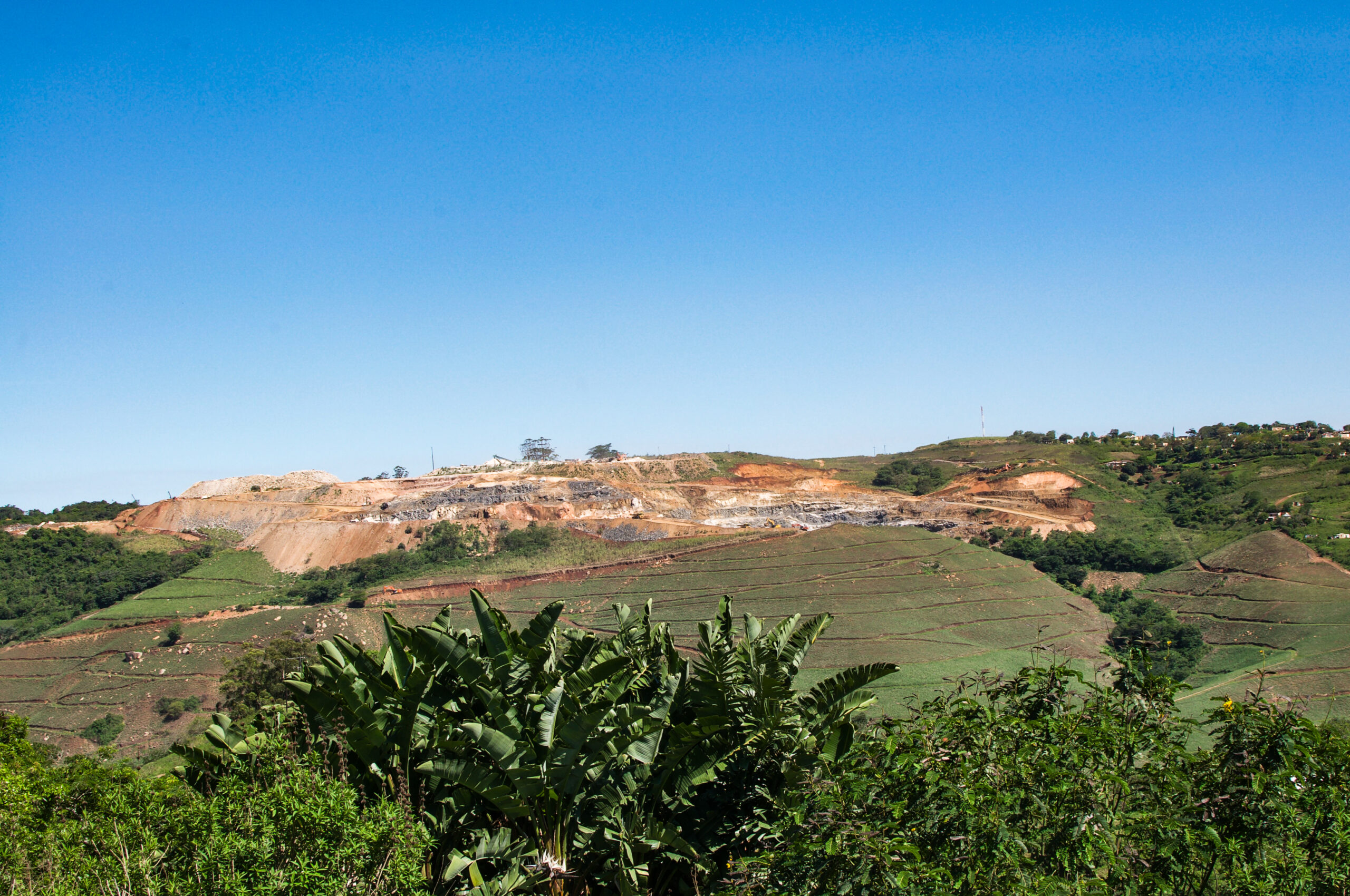
A view of the Highbury Mine in KwaZulu-Natal taken in 2024. The lithium mine in Umzumbe has grown exponentially since Oxpeckers first wrote about it for #PowerTracker in 2024. Photo: Aphiwe Moyo
Oxpeckers journalists have been investigating the rise in demand for transition minerals and what this means for Africa’s mining sector and environment. Our dossier of investigations includes a range of cross-border exposés since 2024.
In response to growing public interest, #MineAlert is launching a new Transition Minerals Tracker project in 2026. It is headed by Andiswa Matikinca, award-winning Oxpeckers Associate whose work shines a powerful light on the hidden abuses that threaten communities, natural resources and governance across Southern Africa.

Andiswa Matikinca (right) will be heading up the new Transition Minerals Tracker project in 2026. Photo: Supplied
The project will build a unique dataset of transition minerals mining projects that will be shared on the pioneering #MineAlert mapping platform; create a repository for investigations, dialogues and policies affecting transition minerals in the Southern Africa region and across the continent; fund investigative journalism through grant calls; and present its work and findings via webinars and at regional and global conferences.
Continuing the Oxpeckers legacy, the project seeks to improve citizen access to environmental and social justice. It does this by mapping mining plans, making related licences publicly available, and empowering journalists to conduct investigations using its open-data platform.
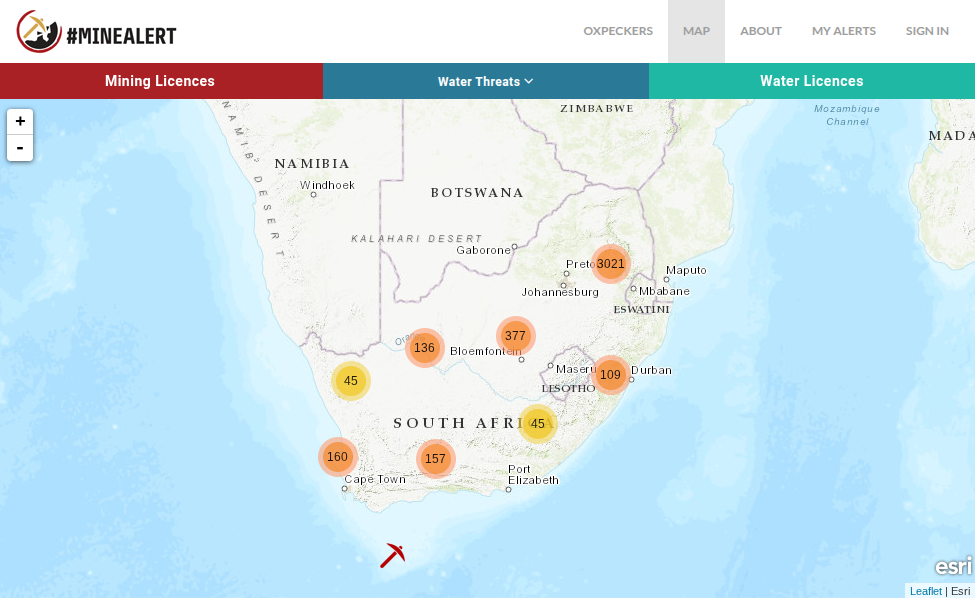
Launched on March 1 2015, #MineAlert is one of the first Oxpeckers multi-disciplinary platforms combining traditional investigative journalism techniques with data analysis and geo-mapping
A decade of #MineAlert
Launched on March 1 2015, #MineAlert was one of the first Oxpeckers multi-disciplinary platforms combining traditional investigative journalism techniques with data analysis and geo-mapping.
Its first phase of development, completed in September 2016, focused on initiating, constructing and maintaining a mining licence database and mapping tool. In its second phase, the mapping project was enhanced and focused on tracking mining threats to ground and surface water reserves.
In its third phase, #MineAlert’s Mining your Water map was developed to map mining-related threats to Strategic Water Source Areas across the country. This project drilled into water use licence data, identifying strategic water source areas and investigating threats that mining activities pose to them. These investigations were part of the body of work that earned the Vodacom Young Journalist of the Year regional award for the KwaZulu-Natal and Mpumalanga region.

Andiswa Matikinca at the Vodacom Journalist of the Year regional award ceremony for the KwaZulu-Natal and Mpumalanga region in 2019. Photo: Supplied
An iteration inspired by the #MineAlert platform was developed in partnership with the Environmental Investigation Forum to document biodiversity threats posed by mining licences across the African continent. #MineAlert-Africa confronts official boundaries of mining licences across over 21 African countries against protected areas, enabling journalists to verify any licence holders’ operations.

Lithium being crushed and packaged by artisanal miners in Bikita, Zimbabwe, for export across the border. Photo: Supplied
Green economy future
With the launch of the Oxpeckers #PowerTracker project in 2022, which tracks renewable energy projects in South Africa, it became apparent that the clean energy transition and the renewables revolution would still depend on the extraction of minerals deemed “critical” to power them.
An example was provided by the successful #PowerTracker lithium series exposing the impacts of lithium mining in rural KwaZulu-Natal communities, land disputes and expectations in the Northern Cape, and corruption in the lithium value chain seeping through porous Southern African borders
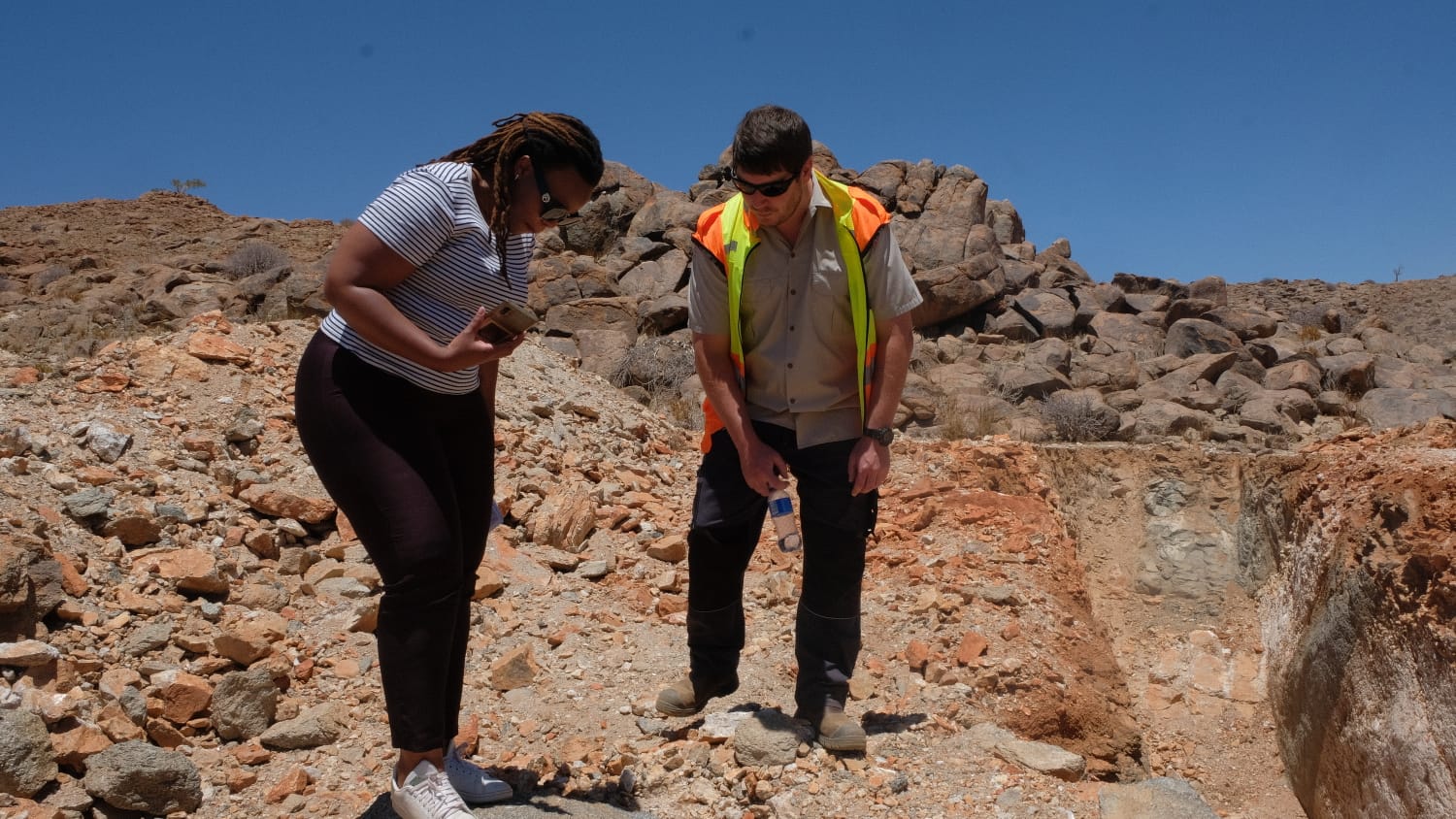
Andiswa Matikinca with Riaan Zierman, geologist at Norrabees Mine, a lithium operation in the Northern Cape. Photo: Dianah Chiyangwa
Critical vs. Transitional
South Africa launched its Critical Minerals and Metals Strategy over a year ago, identifying mineral commodities such as gold, vanadium, palladium, rhodium, and rare earth elements as minerals with moderate to high criticality. Minerals such as copper, cobalt, lithium, graphite, nickel, titanium, phosphate, fluorspar, zirconium, uranium, and aluminium were identified as minerals with moderate criticality.
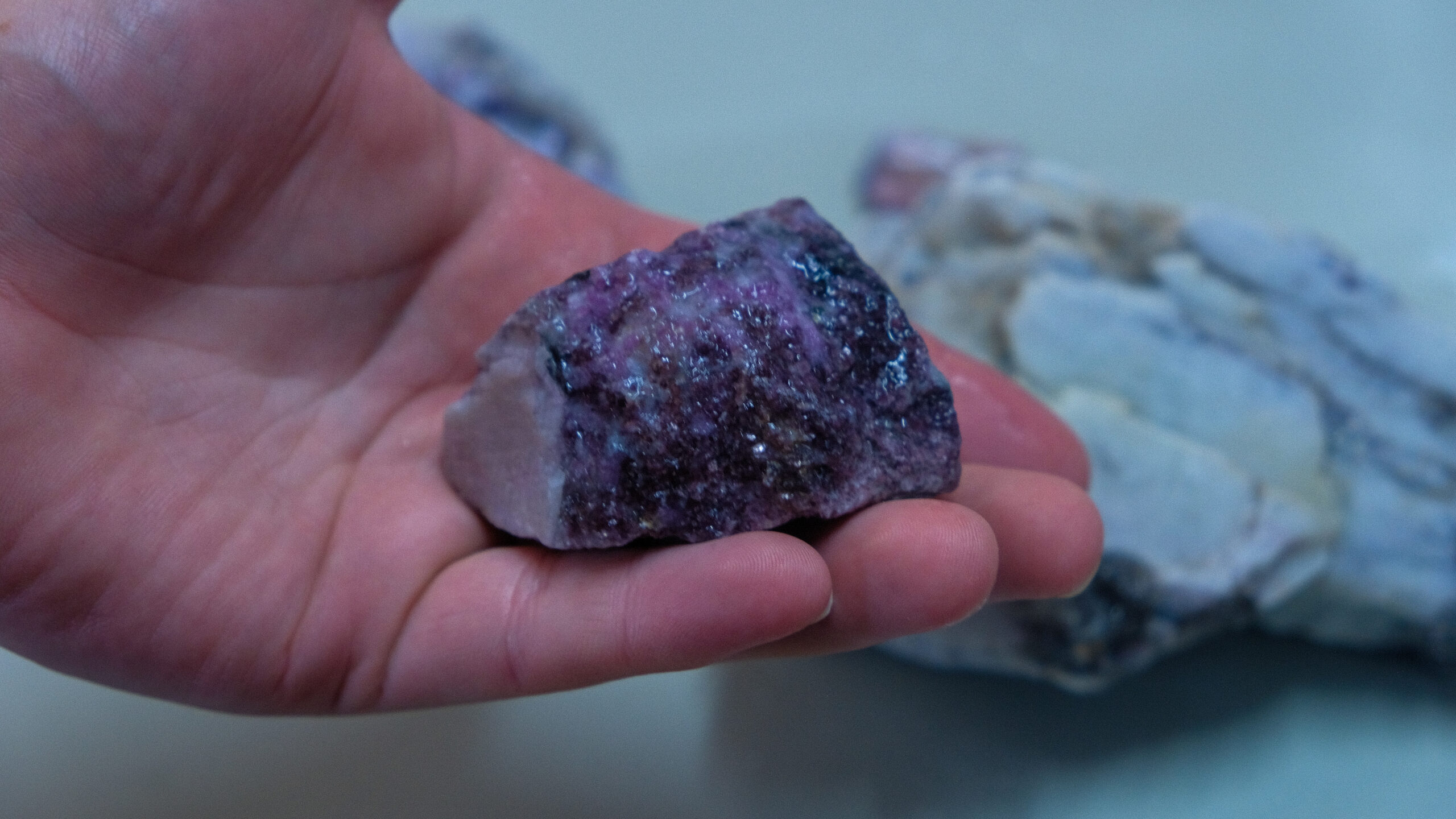
Pegmatite crystals containing lithium from Norrabees Mine in the Northern Cape. Photo: Dianah Chiyangwa
The decision to use the term “Transitional Minerals” instead of “Critical Minerals” for this new portfolio places emphasis on minerals that are important not only for the country’s economic development and national interests, but also for understanding South Africa’s transition toward a more sustainable and low-carbon economy.
In his statement issued by the Department of Mineral and Petroleum Resources, Minister Gwede Mantashe mentioned that this list would be reviewed and updated continuously, “as the criticality classification mix is dependent on underlying market conditions, exploration, technological advancement, substitutability, recycling, and geopolitics, among other factors”.
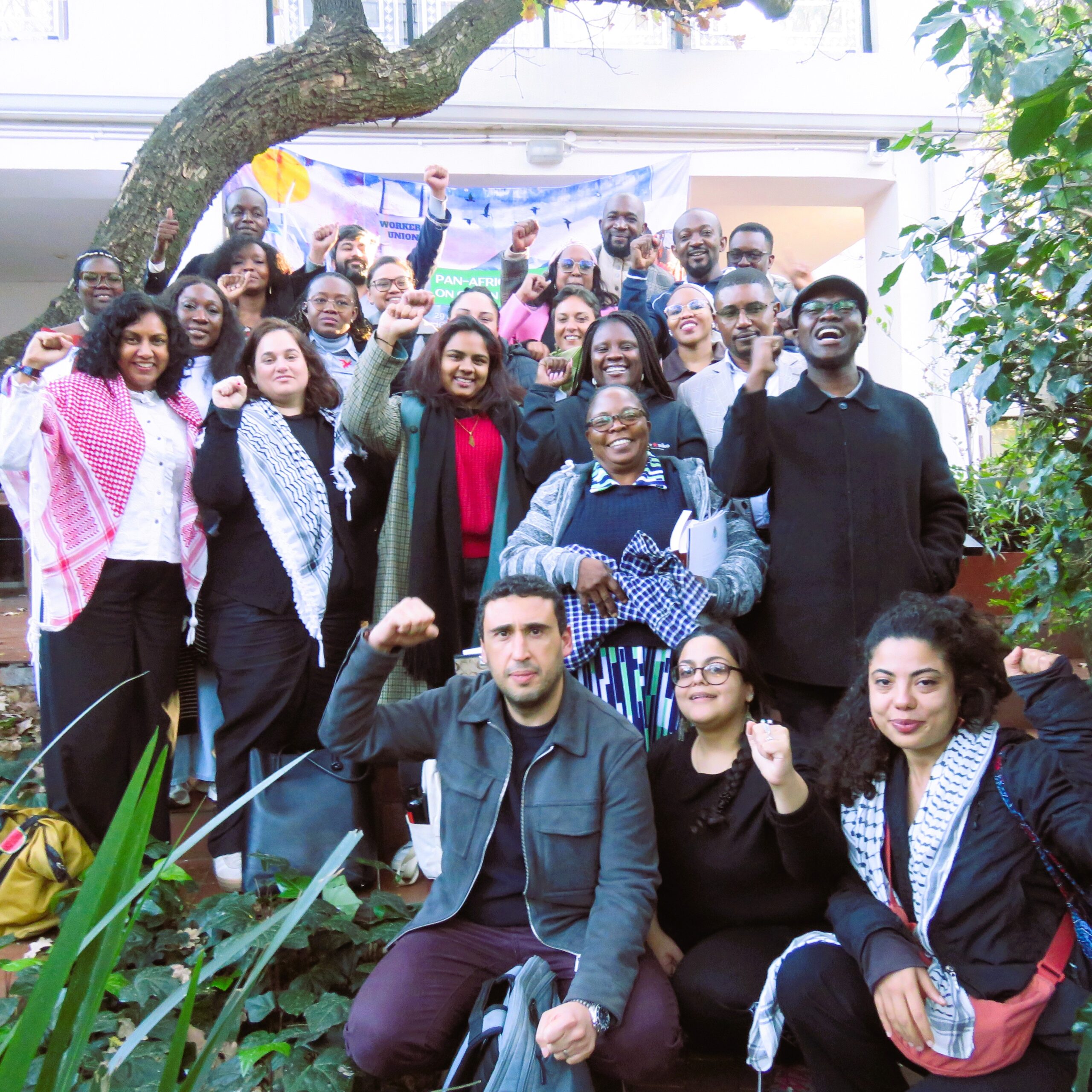
Civil society representatives attended the Pan-African Gathering on Green Extractivism convened by Womin in July. Photo: WoMin
Green Extractivism
As part of the longstanding mandate to engage with civil society and affected communities, #MineAlert joined a four-day pan-African gathering convened by WoMin in July that brought together social movements to discuss ‘Green Extractivism’ — a new form of extractivism throughout the African continent purported as a ‘solution’ to the current global ecological problems and the climate crisis.
Transnational Institute’s Hamza Hamouchene, described extractivism as an age-old mode of accumulation by capitalism expansion.
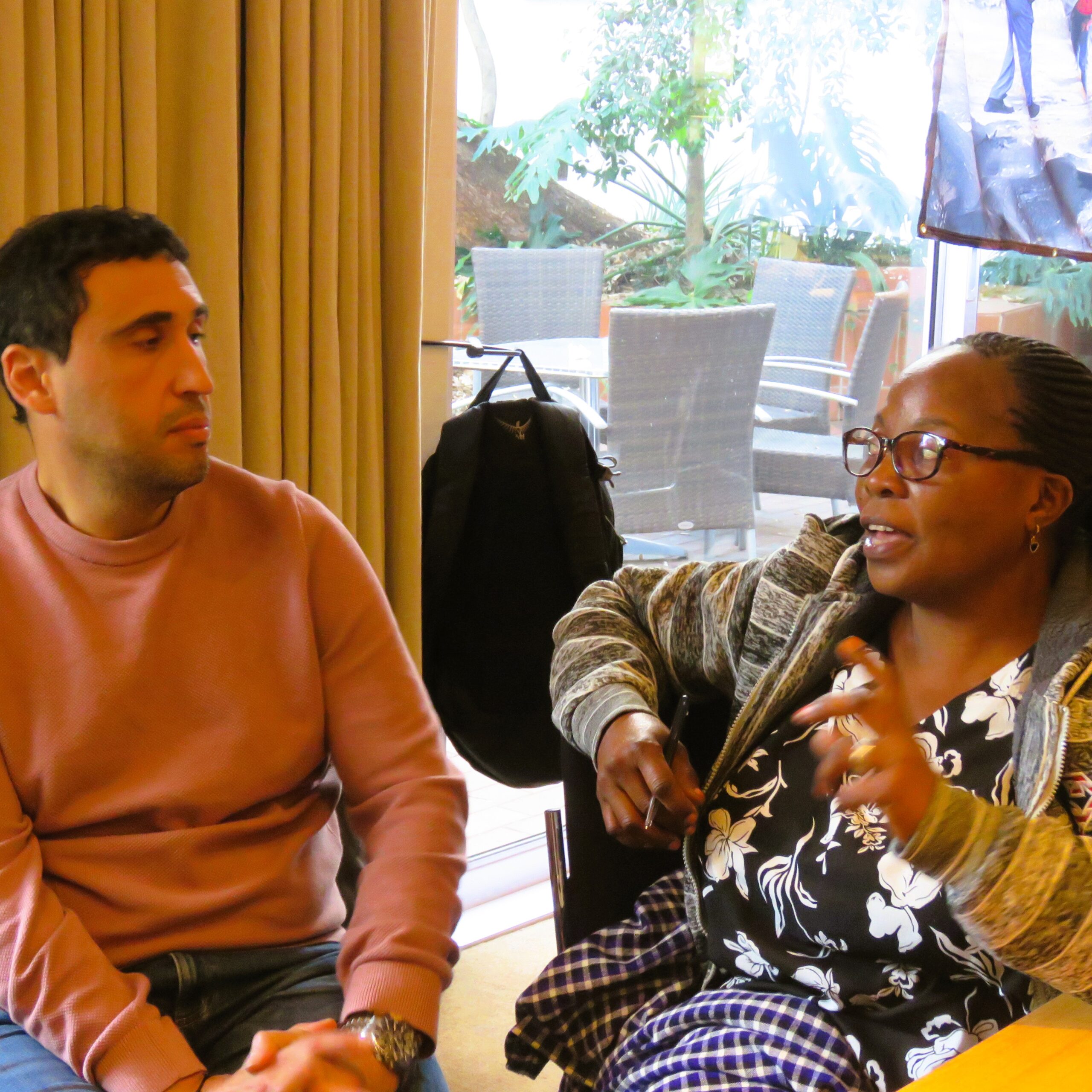
Hamza Hamouchene (left): ‘Extractivism means massive extraction that removes large quantities of natural resources that are not processed or only processed to a certain degree especially for export to the international market.’ Photo: WoMin
“Extractivism means massive extraction that removes large quantities of natural resources that are not processed or only processed to a certain degree especially for export to the international market.
“This creates a relation of dependency and unequal exchange between the core of the system and its peripherals”, said Hamouchene.
Hamouchene further explained in his presentation that the extraction creates “sacrifice zones” where the “extraction of natural resources and the burden from environmental degradation are the consequences that are distributed with marked inequality between urban and rural areas, social groups and nations (north and south) and externalisation of social and environmental cost from core to periphery”.
With the rise in the extraction of transition minerals, which can also be called “strategic” or “critical”, depending on a country-by-country context of a mineral’s supply-chain vulnerability or a specific role that the mineral plays in the transition away from fossil fuels, some areas may end up paying a much higher price than others for the global energy transition.
By mapping these proposed and ongoing mining activities, #MineAlert Transition Minerals aims to highlight what the mining of these minerals means for the people in these ‘sacrifice zones’. This portfolio will continue to support journalism that investigates the true environmental and social costs of when companies extract natural resources such as pollution, environmental damage, displacement and health problems while the benefits such as profits, clean energy and renewable energy technology are enjoyed in other parts of the world.
Andiswa Matikinca is project manager and investigations coordinator of the Oxpeckers #MineAlert Transition Minerals Tracker programme. The project is funded by proceeds from the Sheikh Tamim Bin Hamad International Anti-Corruption Excellence Award won by Andiswa Matikinca in 2025