
01 Jul Titanium, conflict and consent
Andiswa Matikinca investigates a case of history repeating itself as another rural Eastern Cape community stands united in resistance against a proposed heavy-minerals mine
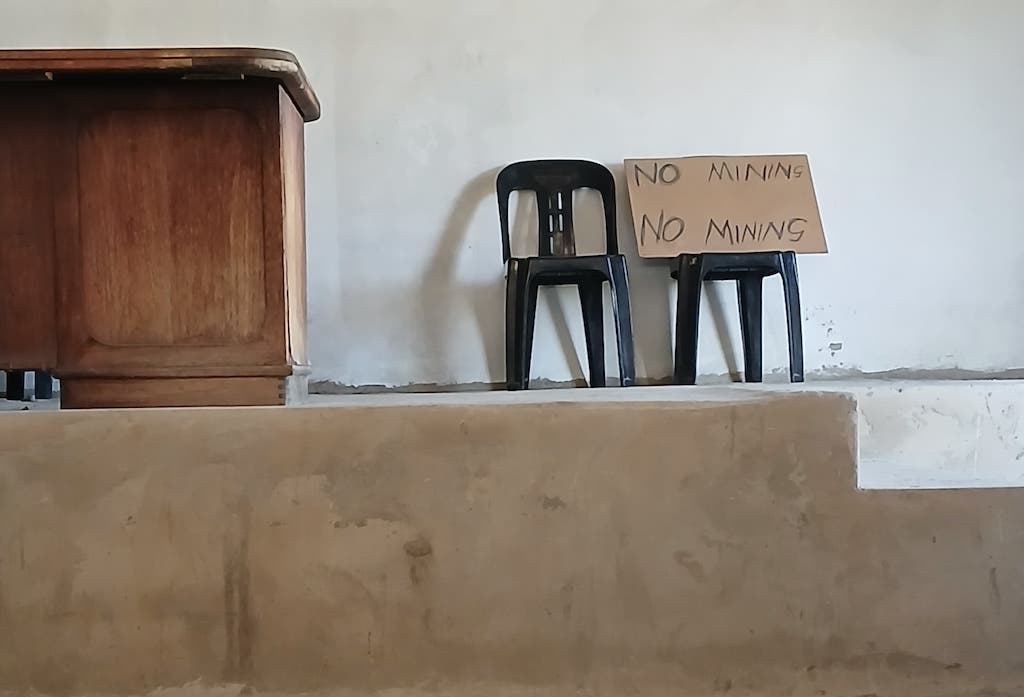
The Phozi community stands together in agreement that no mining will take place on their land, fearing impacts of the activities on their livelihoods, health and water security. Photo courtesy Natural Justice
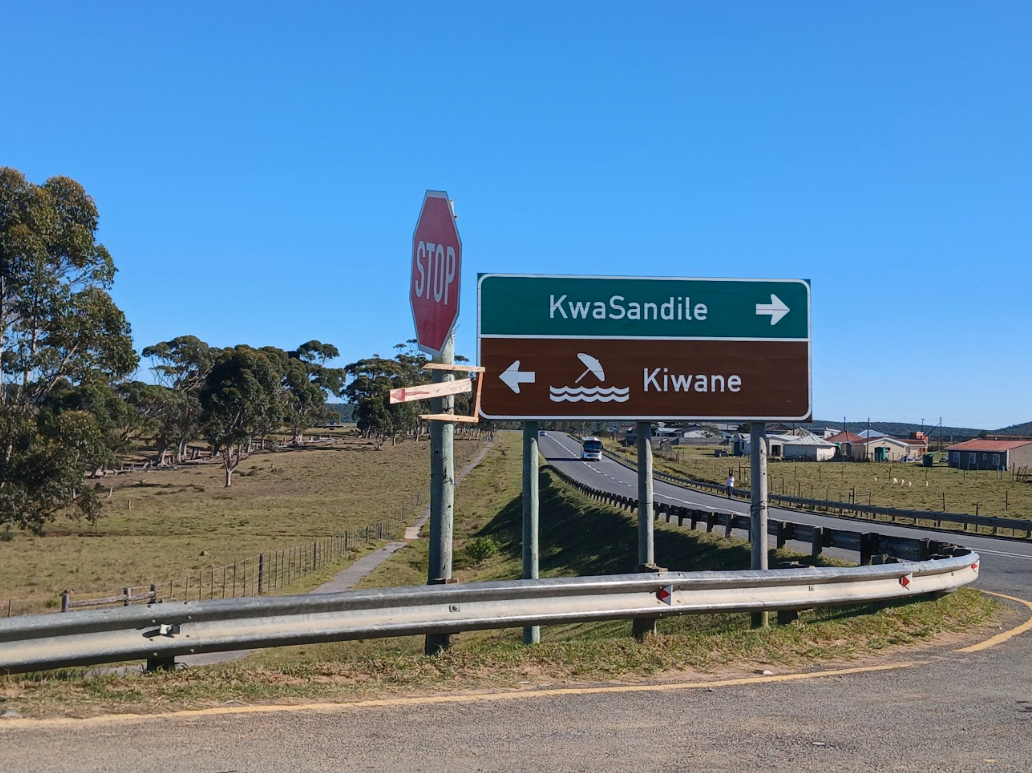
The proposed mining project is situated 50km south of the city of KuGompo, a major industrial and harbour city in the Eastern Cape province. Photo courtesy Natural Justice
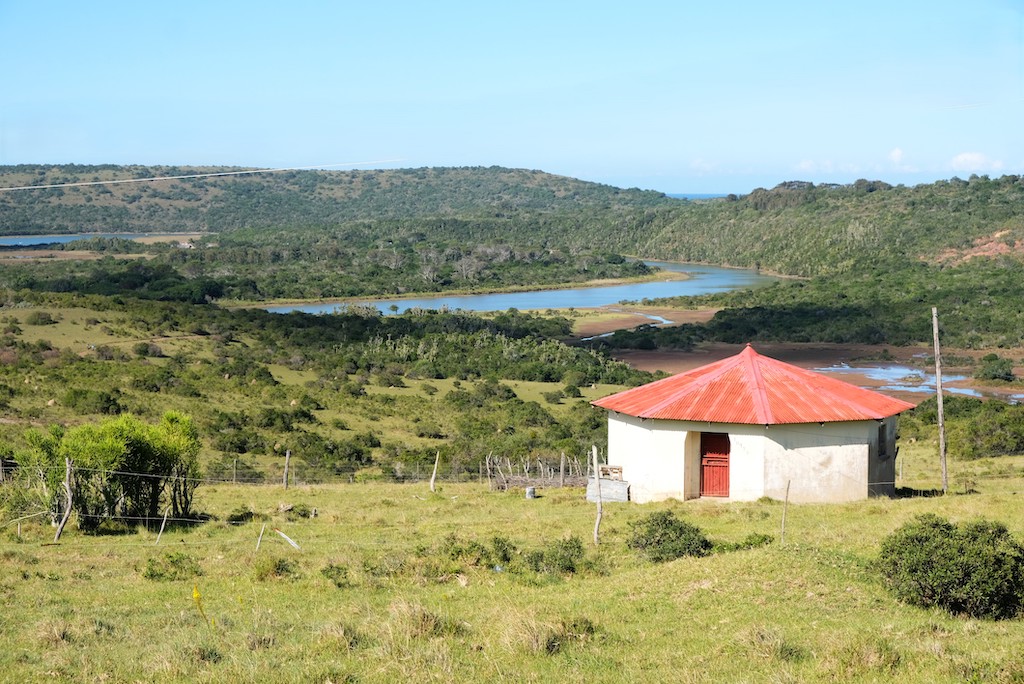
The proposed Tyolomnqa Heavy Minerals Sands Project is situated near the Tyolomnqa, Kiwane and Keiskamma estuaries, and borders the biodiverse Hamburg Nature Reserve. Photo courtesy Natural Justice
Just more than 50km away from KuGompo City (formerly East London), a stretch of land that is home to three estuaries, nature reserves and communal property is being eyed for a heavy mineral sands open-caste mine projected to operate 24 hours a day for at least 30 years following a four-year construction and infrastructure phase.
Targeting almost 3,000ha of land, including communal land under the custodianship of the Traditional Authority of Amagqunukwebe aseLwandle, the proposed mine is situated near the Tyolomnqa, Kiwane and Keiskamma estuaries, and borders the biodiverse Hamburg Nature Reserve.
The Tyolomnqa Heavy Minerals Sands Project is a flagship initiative of the Vendicom Minerals Beneficiation Group (VMBG), a South African company registered in 2019 and headquartered in Irene, Gauteng, which aims to dry-mine sand minerals.
These minerals include zircon, rutile, ilmenite and leucoxene of heavy mineral concentrates stretching over three locations: Tyolomnqa, Keiskamma and Hamburg. A notification of the application for mining rights and environmental authorisation for this project was published in the Daily Dispatch on March 24 2026.
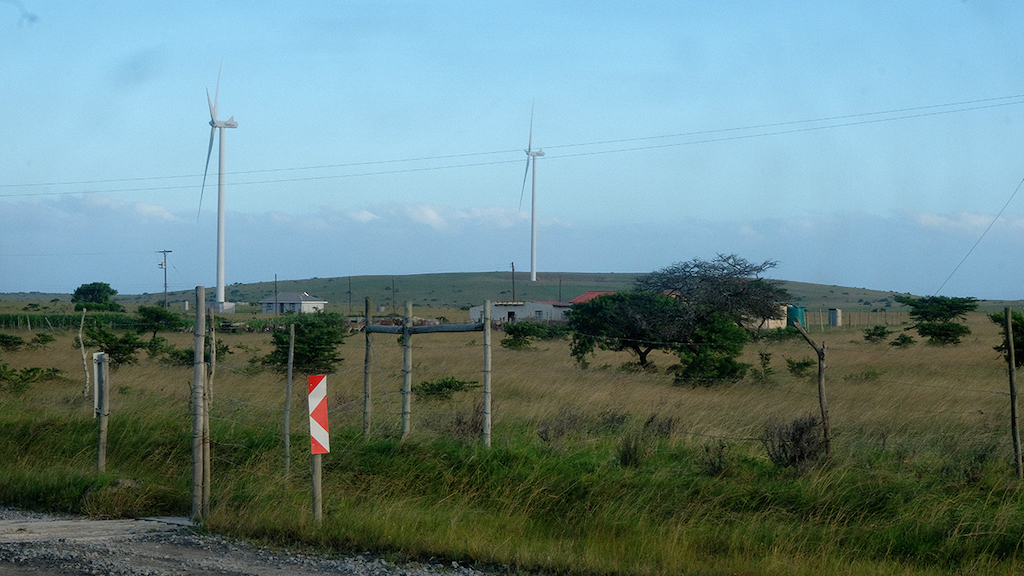
Titanium is the ideal material for offshore wind turbines, such as these pictured on the Wesley-Ciskei Wind Farm in the Eastern Cape. Photo: Dianah Chiyangwa
Energy efficiency
These titanium dioxide-containing mineral sands are mostly used for white pigments in paints, plastics and paper, as well as for manufacturing titanium metal.
Research shows that titanium’s high strength-to-weight ratio, exceptional corrosion resistance and thermal stability make it essential for building modern, low-carbon infrastructure and improving energy efficiency.
Titanium’s resistance to extreme environments makes it ideal for offshore wind turbine components, geothermal power generation and specialised condensers in thermal and nuclear power plants.
Titanium and its alloys are also critical materials key for technology used in the hydrogen economy and its compounds are used in the production of durable solar panel systems and certain advanced battery technologies.
South Africa is the second-largest producer of these titanium-containing minerals, trailing only Australia. The country’s reserves are heavily concentrated in the coastal regions such as the Eastern Cape and KwaZulu-Natal and have secured a rating of “moderate criticality” in the 2025 Critical Minerals and Metals Strategy published by the Department of Mineral and Petroleum Resources (DMPR).
According to #PowerTracker data, South Africa currently has at least 10 heavy mineral sands projects at different stages. These are mostly based in KwaZulu-Natal and a few are in the Western Cape.
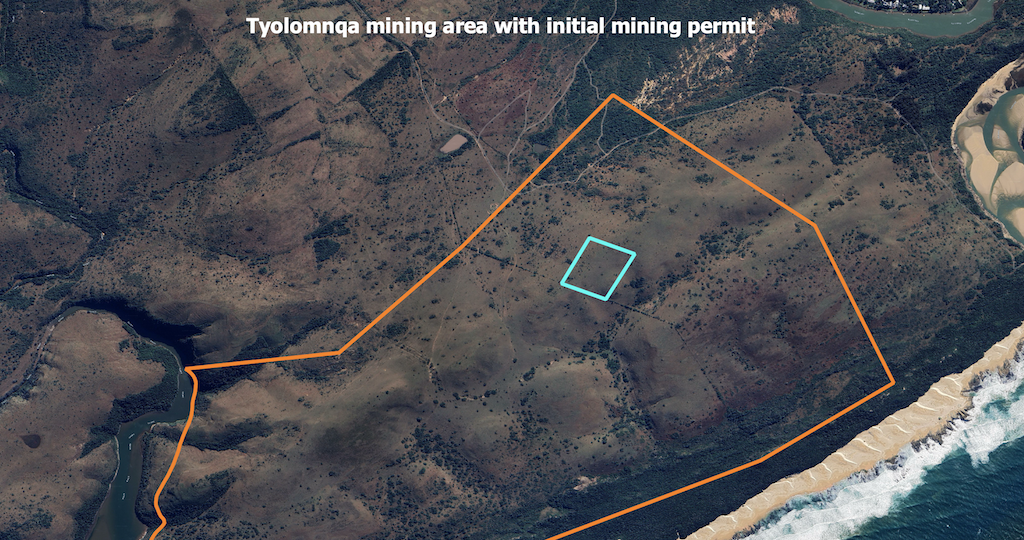
Between 600 and 800 jobs are promised during the construction phase of the Tyolomnqa Heavy Minerals Sands Project. Pictured here is a map of the initial mining permit acquired in 2019 covering 5ha area near the mouth of the Tyolomnqa estuary. Photo supplied
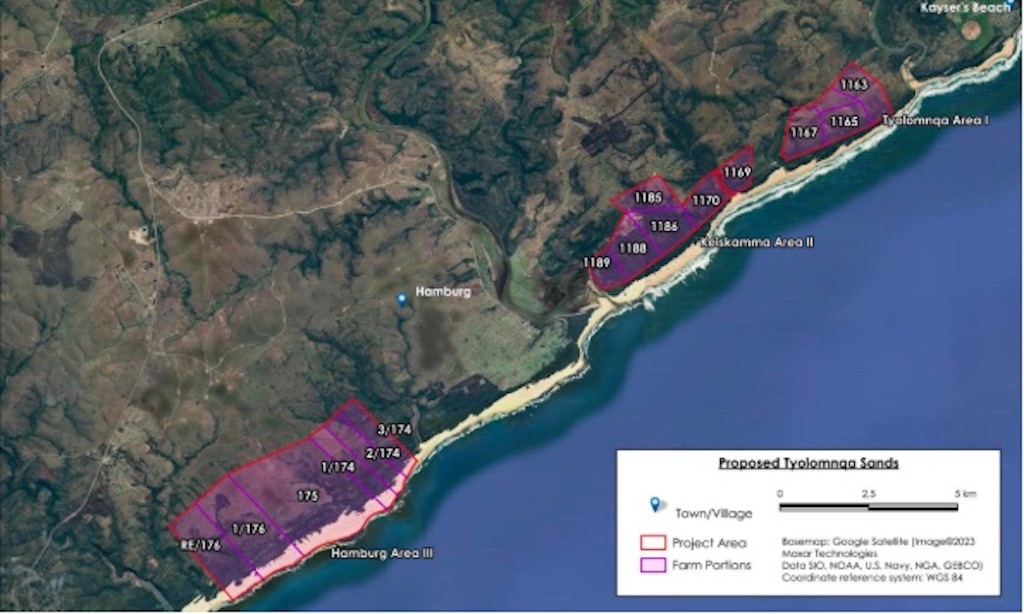
A map of the proposed Tylomonqa Sands project areas, targeting almost 3,000ha of land. Photo supplied
Promise of employment
The background information document (BID) accompanying the application promises between 600 and 800 skilled, semi-skilled and unskilled jobs during the peak period of the construction phase.
Mamdumane “Primrose” Ndongeni, secretary of the committee elected by the Phozi community to represent their interests, spoke to Oxpeckers and disagreed with the promise of jobs for the community. Phozi is a few kilometers’ drive from the Kiwane Resort situated on the western bank of the wildlife-rich Kiwane Estuary and bordering the biodiverse Hamburg Nature Reserve.
“In all three of these areas where they plan to mine, it will only be 20% of our unskilled labour that will be employable. Most of the people they say they will employ will be brought from outside because none of us or our children have the skills they require at a mine,” she said.
“It’s not that we do not want jobs or development but we do not want harmful development such as mining,” said Ndongeni.
Oxpeckers reached out directly to Andile Sontundu, VBMG’s director, for comments and he responded that the company had been advised by its environmental, social and governance practitioners not to handle any media requests in person and referred us to the appointed environmental assessment practitioner (EAP), Assured Turnkey Solutions.
Assured Turnkey Solutions informed Oxpeckers via email that they do not engage the media on behalf of VMBG as the appointed EAP and are only authorised to conduct the environmental impact assessment (EIA) process. The company suggested registering Oxpeckers as an interested and affected party (I&AP) in order to receive relevant information about the process.
Rethabile Sindi, candidate attorney at the Legal Resources Centre (LRC), told Oxpeckers it is important that community members and other affected stakeholders should ensure that they register as I&APs and clearly record their concerns and objections: “Registration ensures that they receive notices, updates, and opportunities to comment on the proposed mining activities.”
“This process allows community members and stakeholders to review relevant application documents, understand the potential impacts of the proposed mining activities, submit comments, concerns and objections, and ensure that decision-makers consider these concerns before making any final decision,” she said.
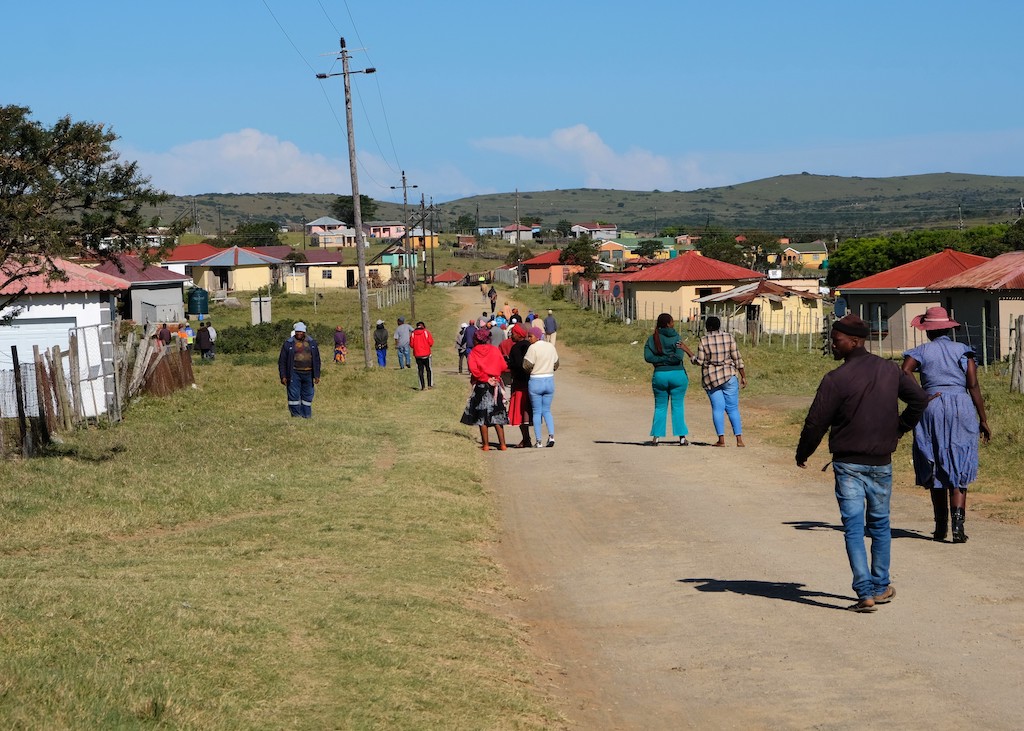
Community members on their way to the community meeting organised by the traditional council and VBMG in May 2026. Photo courtesy Natural Justice
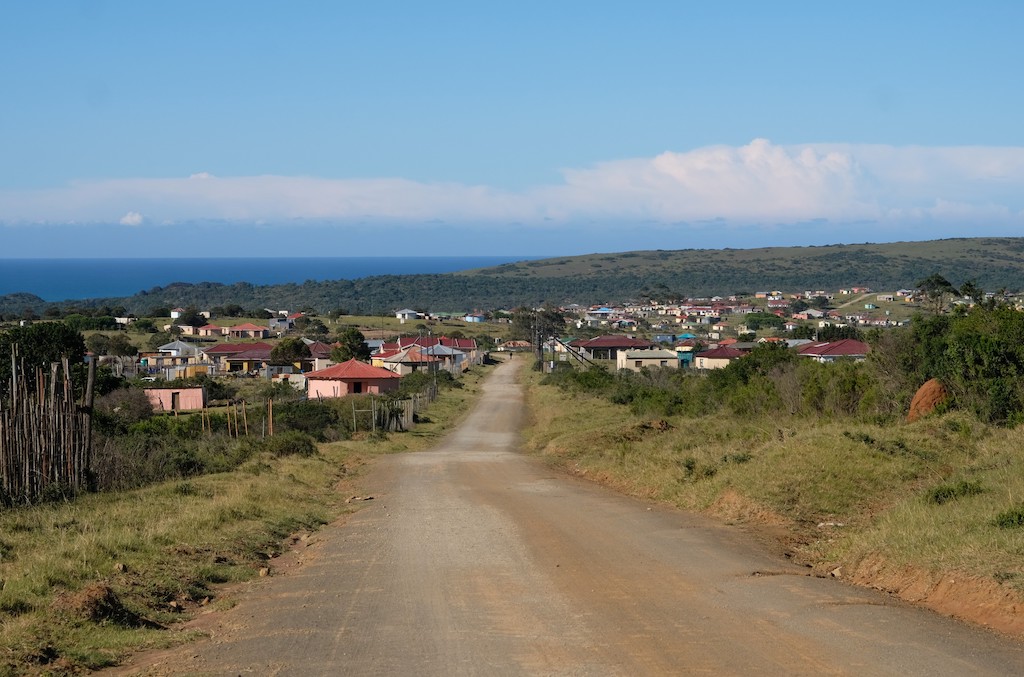
Phozi village is one of the villages that will be directly affected by the proposed mining project. Photo courtesy Natural Justice
Show! Don’t tell!
The mentions that findings of land capability studies “will determine the optimal composition to ensure pre-mining conditions for utilisation”, promising that topsoil and the unconsidered materials stripped and stockpiled separately before mining starts would be replaced into the open pits caused by excavation.
However, a petition calling on DMPR Minister Gwede Mantashe, the Minister of Forestry, Fisheries and the Environment, Willem Abraham Stephanus Aucamp and the Premier of the Eastern Cape, Oscar Mabuyane, to halt VMBG’s plans currently sits at 1,048 signatures and highlights the community’s fears.
They raise concerns about impacts of the mining activities on their livelihoods, which are dependent on subsistence agriculture and fishing; their health, due to dust pollution; and increased water insecurity in a water-scarce area.
In a community meeting convened by the AmaGqunukwebe aseLwandle Traditional Council to allow Vendicom to meet with community members and present their proposed mining activities and hear the community’s views, residents of Phozi Village made it clear that they were not willing to listen to anything Vendicom had to say.
As Vendicom’s representatives Ngcali Nomtshongwana, Xolani Tivi and Phumelele Manyana stood to address the Phozi Community Hall filled with about 100 community members on the afternoon of May 11 2026, an elderly man from the community stood up to voice out what the community members all seemed to be in agreement about.
“We do not want to know anything about your mining. We don’t want this visual demonstration of the mining and rehabilitation process you say you will show us today. Show it to us in person so we see the potential damage ourselves.”
A second man in the crowd stood up and echoed these words, saying, “Go and dig in other areas where they will welcome you because we do not want your mining. We will be affected by the dust and the grazing land for our cattle will be affected.”
Following these comments, the Vendicom representatives were politely asked to leave the meeting.
The LRC’s Sindi told Oxpeckers that this meeting should not be regarded as a formal rejection of either the mining right application or mining in the community, but was simply an information-sharing meeting to ensure that the community had sufficient information before participating meaningfully in the formal public participation process.
“Any formal acceptance, objection, or rejection must take place during the legally prescribed public participation processes, where I&APs are given the opportunity to submit comments and objections. At present, that process has not yet commenced,” she said.

Vendicom (Pty) Ltd – not to be confused with VMBG – applied for a permit to mine a 5ha area near the mouth of the Tyolomnqa estuary in 2019. Photo courtesy Natural Justice
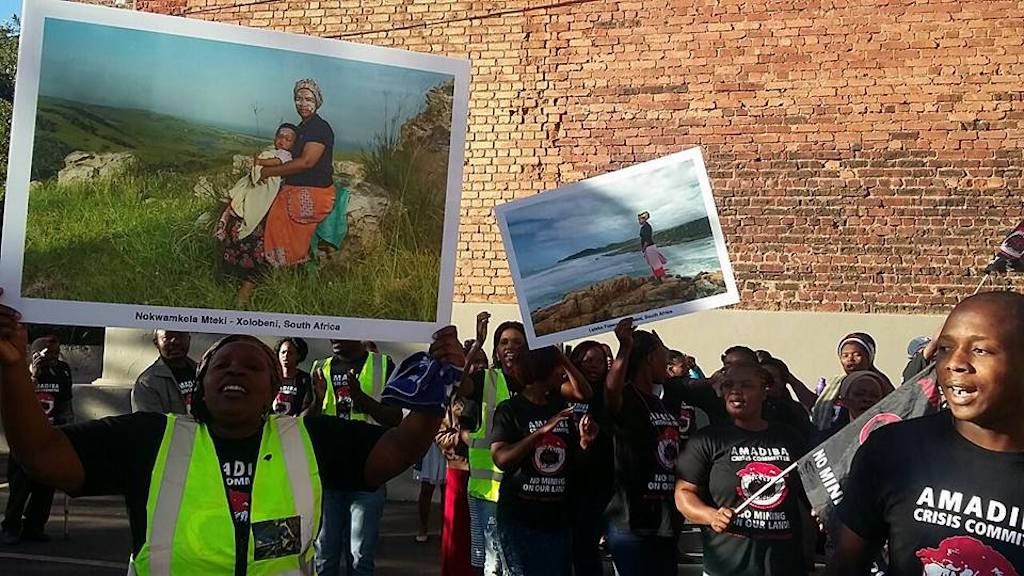
The Tyolomnqa Heavy Minerals Sands Project is reminiscent of the 15-year-long battle of the Xolobeni community, who won the ‘right to say no’ to unwanted mining activity in their area. Photo courtesy Sustaining the Wild Coast
Existing permit and processes
Vendicom (Pty) Ltd, registered in 2014 and headquartered in East London, applied for a permit to mine a 5ha area near the mouth of the Tyolomnqa estuary in 2019. Both the permit and environmental authorisation were approved in December 2021. This environmental authorisation was taken on appeal to former environment minister Barbara Creecy but the appeal was rejected, and a final mining permit was approved in June 2022, although mining has not commenced.
A mining permit is generally granted for small-scale mining operations over a limited area, for a short duration, and is intended for minimal mining activities.
The third and final renewal of the existing permit was granted in April 2026 and expires on June 28 2027. After this date, the company will have to stop all its mining operations and lodge a closure certificate with the Department of Mineral and Petroleum Resources (DMPR), according to Section 43 of the Mineral and Petroleum Resources Development Act, indicating the legal end to its mining operations.
Oxpeckers is currently in possession of two mining right applications covering almost 3,000ha submitted by VMBG to DMPR in September 2025. One application was withdrawn, the other was rejected by the DMPR.
Phozi village’s Ndongeni said all these processes were confusing community members, particularly as VBMG representatives had held an information-sharing meeting in June with residents of Wesley village, about 50km away from Phozi, indicating that VBMG still has intentions to continue with their mining plans.
At the Phozi community meeting in May, residents raised concerns about public consultation processes – a tale reminiscent of the “Xolobeni Ruling”, where it was ruled by the Pretoria High Court in Baleni and Others v Minister of Mineral Resources and Others on November 22 2018 that the minister “is obliged to obtain the full and informed consent of the… community, as holder of rights in land, prior to granting any mining right”.
For more than 15 years, the community of Xolobeni resisted a proposed 22km-long titanium open-cast mine on the Wild Coast in the Eastern Cape, driven by Transworld Energy and Mineral Resources, an Australian-based company. The High Court ruling affirmed the land rights of rural communities to ensure companies do not rely solely on the Mineral and Petroleum Resources Development Act, which only required the state to “consult” with affected parties on such projects, but should obtain free, prior and informed consent, ensuring that communities are not deprived of their land rights without their consent.
Ndongeni said this means that communities living and drawing their livelihoods from the land have the right to decide whether or not their land should be mined. The Phozi community follows current affairs, so they have seen the impacts of mining on other South African communities and that inspires their united voice against mining in their community, she said.
“We have watched the mining issue being discussed in Xolobeni and have seen the negative impacts of mining on the news and realised that the dangers are real to our communities, our health and the environment,” she told Oxpeckers.
Oxpeckers also reached out to the Chief of the AmaGqunukwebe aseLwandle Traditional Council, Chief Nongenile Pato, who was unable to attend the community meeting.
“We have not heard anything from Vendicom or been made aware of their next steps since the meeting held at Phozi Community Hall,” she said. “As far as I know, the issue has not yet been resolved and the community of Phozi village is still adamant that they do not welcome Vendicom’s intentions to mine on the land.”
This investigation was supported by the Oxpeckers #PowerTracker programme, New Economy Hub and Ford Foundation