
27 Oct Catching the sun: Laws for energy deals need to be changed – MACUA
A new report on the R2.1-billion Sonvanger Solar project raises questions about whether communities have legally enforceable rights to ownership, decision-making and economic benefits from renewable-energy developments. Refilwe Mochoari reports
Detail from the new report, ‘Green Power, Old Inequality’, which will be released on November 11 at the Sonvanger plant in Theunissen. Graphic courtesy MACUA
Legal reforms are needed for a genuine Just Energy Transition that shifts power to affected communities, argues a new report shared exclusively with the Oxpeckers #PowerTracker programme by Mining Affected Communities United in Action (MACUA), a community-based social movement fighting against the negative social, economic and environmental impacts of mining.
The report, titled Green Power, Old Inequality, raises questions about whether South Africa’s renewable-energy transition gives affected communities enforceable rights to ownership, decision-making and the economic benefits generated by projects developed in their areas. “A change in the source of electricity is not, by itself, a change in the distribution of power,” it states.
Produced in collaboration with Youth Affected by Mining United in Action (YAMUA) and Women Affected by Mining United in Action (WAMUA), it argues that meaningful participation must go beyond mere consultation with affected communities. Legal structures must be put in place to confirm community control over assets, decision-making and enforceable benefits, it says.
“We are witnessing billions being invested in renewable energy infrastructure, much of it connected to the decarbonisation of existing mining and industrial operations, while communities that have historically borne the environmental, social and economic costs of those industries remain marginalised from ownership, governance and economic benefits of the new energy economy,” Christopher Rutledge, executive director at MACUA/WAMUA advice office, said in an interview with #PowerTracker.
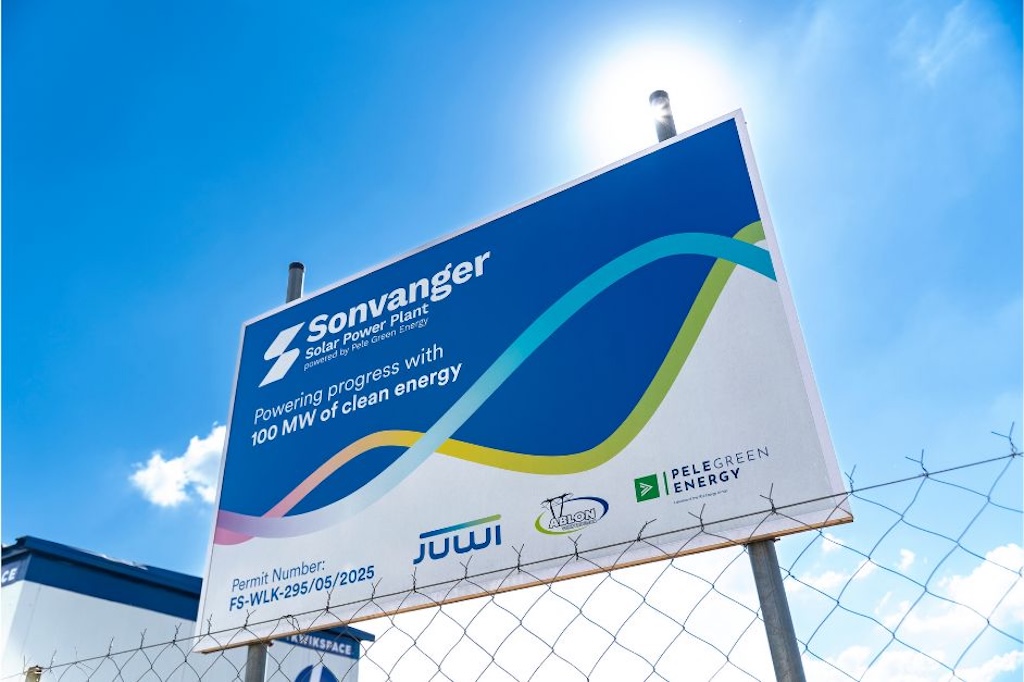
The Sonvanger Solar project in the Free State is at the centre of questions about community consultation, economic benefits and accountability in South Africa’s renewable-energy transition. Photo: JUWI
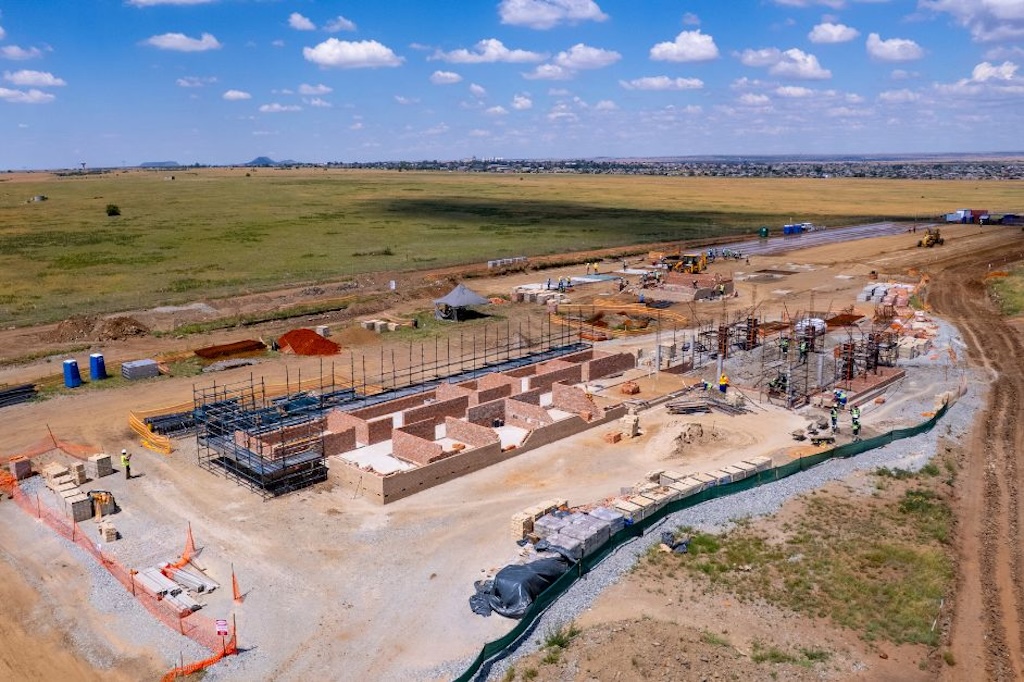
Construction of the R2.1-billion Sonvanger Solar plant, which supplies electricity to Glencore’s industrial operations under a 20-year power purchase agreement, is well under way. Photo: JUWI
Sonvanger Solar
The report uses a public-private partnership for the R2.1-billion Sonvanger Solar Power Plant near Theunissen in the Free State to examine the gap between the legal and commercial arrangements securing renewable-energy investments and the rights of the communities expected to benefit from them.
Launched in November 2024 in the abandoned gold-mining town of Theunissen, the Sonvanger (sun catcher) plant supplies electricity to mining company Glencore’s industrial operations under a 20-year power purchase agreement. Pele Green Energy, a South African renewable-energy developer, was selected by Glencore Operations South Africa, acting on behalf of the Glencore-Merafe Venture, to develop, finance, construct, own and operate the plant.
The MACUA report, due to be handed over by the community to Sonvanger, Glencore and the banks on November 11, states that the project’s commercial arrangements were negotiated without proper community input, and that small businesses which were supposed to benefit from the project have not done so. Rutledge said the movement is considering challenging these processes in court.
Sonvanger is not an isolated case, he added: “We are seeing a pattern in many of the green energy projects nationwide, particularly in Mpumalanga’s coalfields, where communities face the prospect of mine closure and the loss of economic livelihoods, and where new energy and transition mineral investments raise questions about who controls development and who benefits from it,” he said.
“What particularly concerned us was that, despite the substantial investment taking place in their immediate surroundings, community members were struggling to obtain clear information about how they would benefit from the project or exercise any meaningful influence over decisions affecting their future.
“As we examined the project documentation, correspondence and regulatory approvals, it became increasingly apparent that Sonvanger was not simply an isolated dispute about consultation or employment opportunities,” said Rutledge.
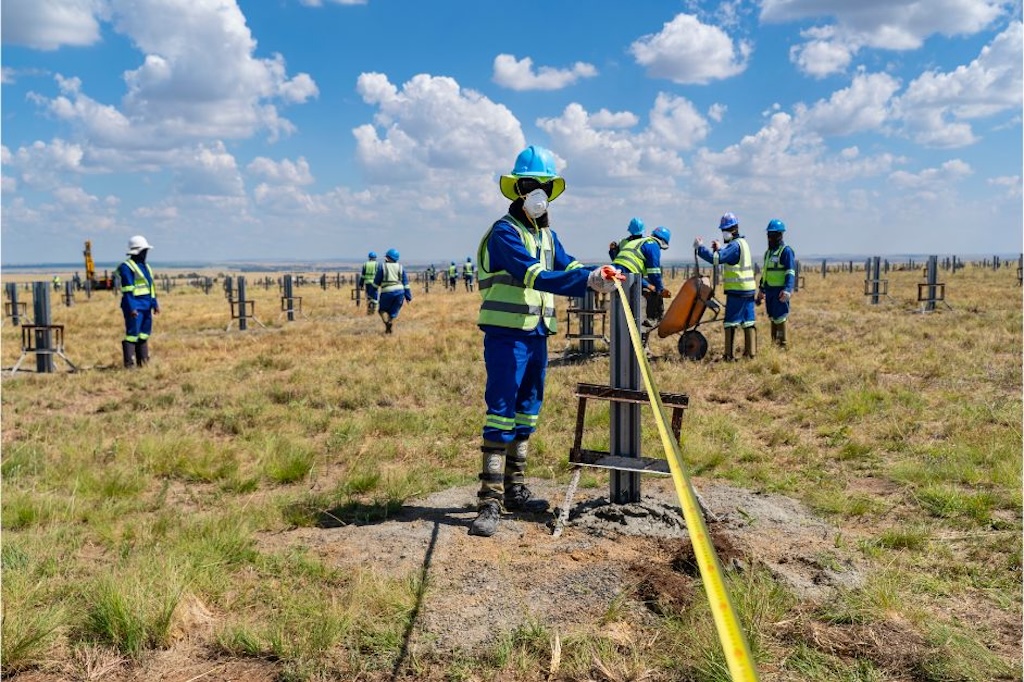
Pele Green Energy says it employed 805 general workers from Theunissen during construction of the Sonvanger Solar project, while acknowledging that employment opportunities decline as construction winds down. Photo: JUWI
Pele Green Energy
Boipelo Moloabi, chief strategy and partnerships officer at Pele Green Energy, said the company believed in empowering communities and involving them in its projects.
Moloabi said Sonvanger Solar was not procured through the Renewable Energy Independent Power Producer Procurement Programme (REIPPPP), but was developed to supply electricity to a private off-taker, Glencore. He said the project was therefore not subject to REIPPP’s specific community-benefit requirements.
The company was not obliged to employ people from the immediate community, Moloabi said, but Pele Green Energy had employed 805 general workers from Theunissen, drawn from all four wards. He said the company had initially planned to employ 300 people from the community.
Moloabi said community empowerment was central to the company’s approach to renewable-energy development. “We have a renewable-energy development programme where community members can get skills such as bricklaying and solar installation skills, as well as bursary programmes,” he said.
The company had also supported small, medium and micro enterprises (SMMEs) by contracting local businesses to provide services, including security, transport and hospitality. Other training opportunities offered to community members included quality control, logistics, mechanical engineering, bricklaying and solar installation.
Moloabi acknowledged that employment opportunities at Sonvanger were declining as the project approached the end of construction.
“I believe that is where MACUA is unhappy, because we have had to cut off some people because we don’t have a lot of work and therefore do not need many people,” he said.
This reflected a wider challenge in the renewable-energy sector, where employment typically peaks during construction and declines once a project becomes operational.
“Just like all green energy projects across the world, there is more work during construction, and less work beyond construction,” he said.
Commercial arrangements
REIPPPP, the government’s public-private tender programme that procures electricity from private power producers, includes bid requirements covering socioeconomic development, enterprise development and local and community ownership.
However, Rutledge said more than 60% of new renewable-energy projects are being developed through private commercial arrangements outside the REIPPP framework.
“This means that a substantial proportion of new renewable-energy development is taking place outside the specific community ownership and socioeconomic development requirements established under that programme,” he said.
Tsakane Khambane, spokesperson for the Ministry of Energy and Electricity, told #PowerTracker it is important to distinguish between obligations arising from the public IPPPP (REIPPP) procurement and contractual framework – which is formally regulated through public procurement legislation – and projects arising from bilateral public-private agreements in the market, which may not be subject to similar legislation or obligations.
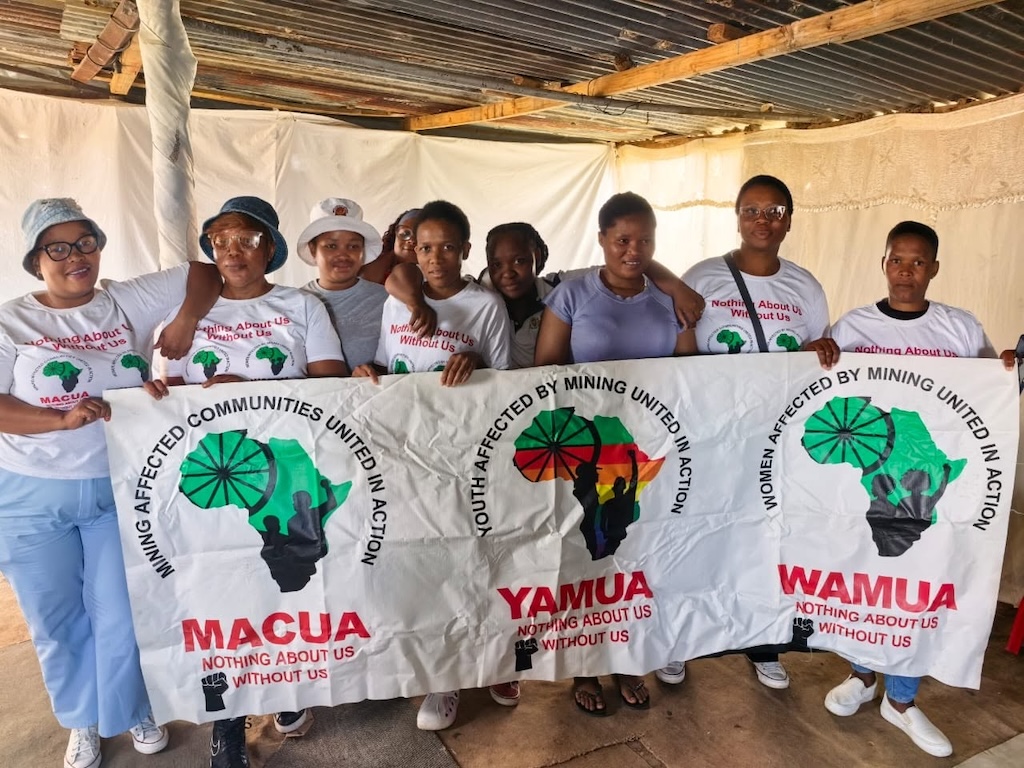
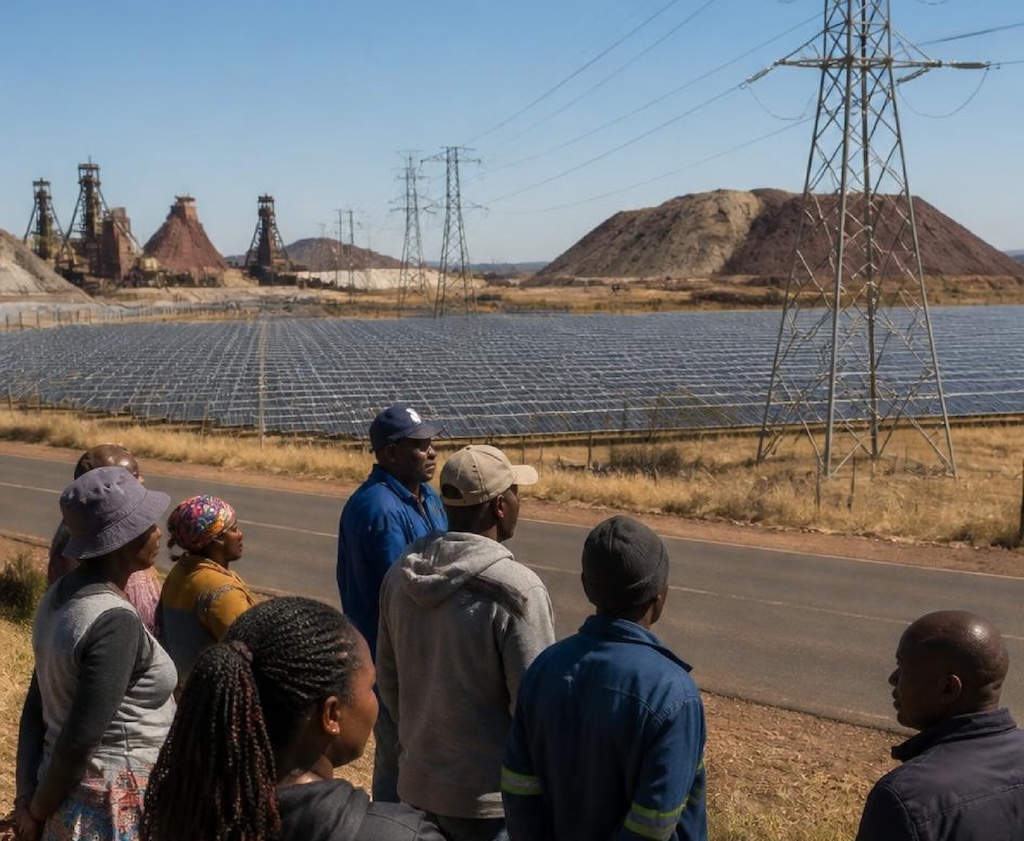
MACUA/WAMUA members are calling for affected communities to have a meaningful role in renewable-energy projects, including decision-making power and a fair share of the benefits through jobs, skills development, procurement and economic opportunities. Photo: Supplied
Meaningful participation
Blessing Manale, head of communications at the Presidential Climate Commission (PCC), said the success of projects such as Sonvanger should be measured not only by the amount of clean energy produced, but also by their contribution to improving livelihoods, expanding economic inclusion and strengthening local economies.
“In communities such as Theunissen, where renewable energy projects are being developed, the PCC advocates for meaningful participation of local communities in decision-making processes,” he said.
“We believe that communities should not simply host infrastructure projects but should share in the benefits through local job creation, skills development, support for SMMEs, procurement opportunities and broader economic empowerment.”
He said renewable-energy investments have the potential to contribute to economic diversification, cleaner energy production and new employment opportunities.
“However, investments alone do not guarantee more equitable outcomes. The critical issue is how benefits are distributed and whether local people are meaningfully included in economic opportunities arising from these projects,” Manale said.
“The PCC’s position is that the energy transition must actively address South Africa’s historical challenges of inequality, unemployment and poverty. If local communities continue to experience exclusion from ownership opportunities, procurement opportunities, skills development and quality employment, there is a risk that new industries could reproduce patterns of inequality associated with previous development models,” he said.
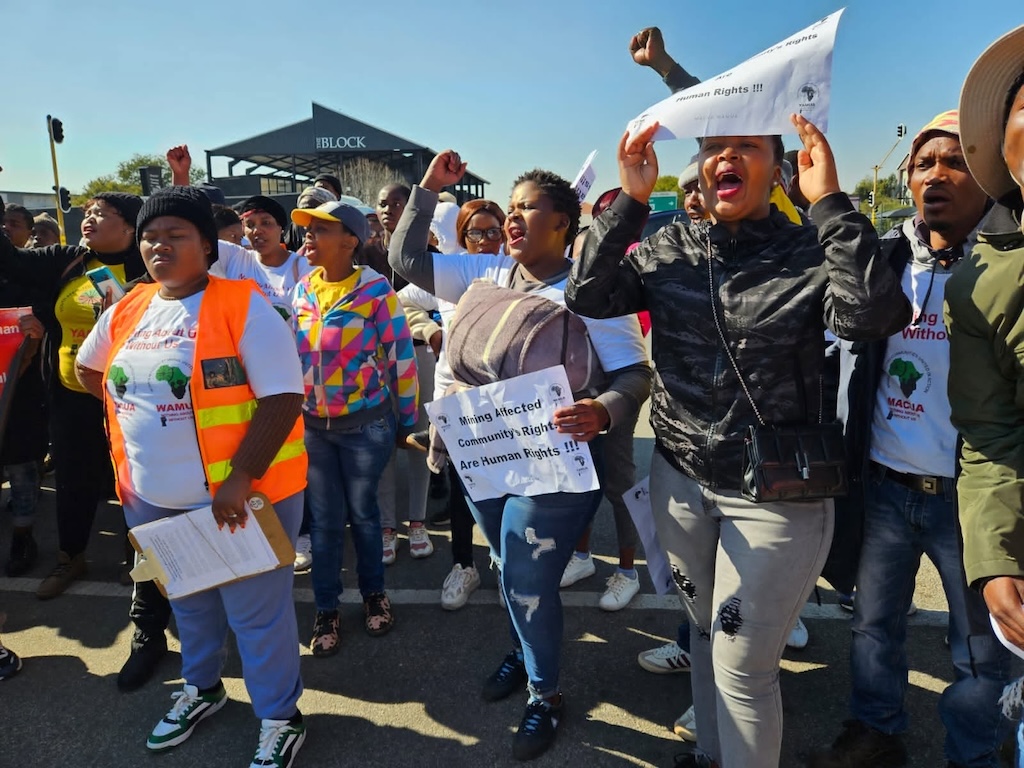
Theunissen community members at a march on June 2 2026. ‘We just want to have a dignified engagement with Sonvanger management,’ said local MACUA organiser Lekoebe Letshaba Photo: Supplied
Life in Theunissen
Lekoebe Letshaba, a Theunissen community member and local organiser for MACUA, told #PowerTracker that he wants Sonvanger to be transparent and open about its procurement processes that aim to empower small businesses in the community.
“Consultation with us was minimal and information is not shared with us as community members,” he said. “They need to share the full beneficiary list and procurement plan openly and explain how SMMEs and labourers got involved.”
“We want transparency in terms of a database for CVs and SMME engagement must be with the broader community, not only selected individuals,” he said.
“As the Theunissen community, we just want to have a dignified engagement with Sonvanger management. We are not planning violence, but a peaceful protest is a constitutional right when the community is fully ignored,” Leshaba said.
Track details of the Sonvanger project and other energy sources on the Oxpeckers #PowerTracker tool here.
This investigation is part of the Oxpeckers #PowerTracker programme, supported by the New Economy Hub and Ford Foundation