
28 Aug Hope for green hydrogen in the balance
A proposed R47-billion development in Hopefield could become a proving ground for the Western Cape’s green hydrogen ambitions. Barry Christianson investigates
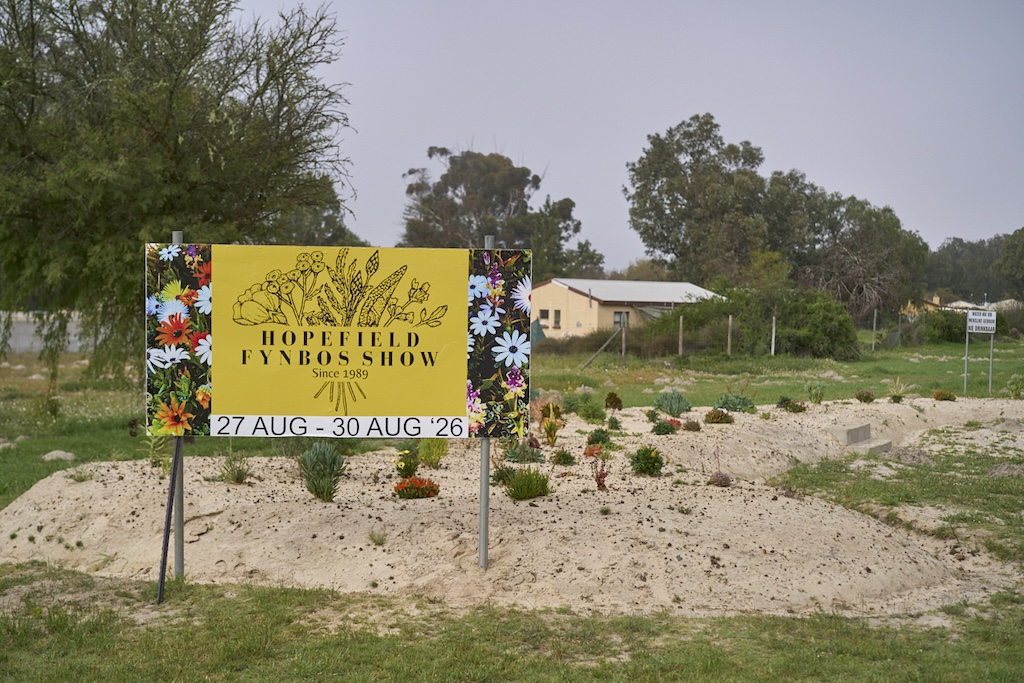
A sign advertising the annual Hopefield Fynbos Show welcomes visitors to the small West Coast town, where the festival draws thousands of tourists to a region recognised for its exceptional fynbos biodiversity. Photo: Barry Christianson
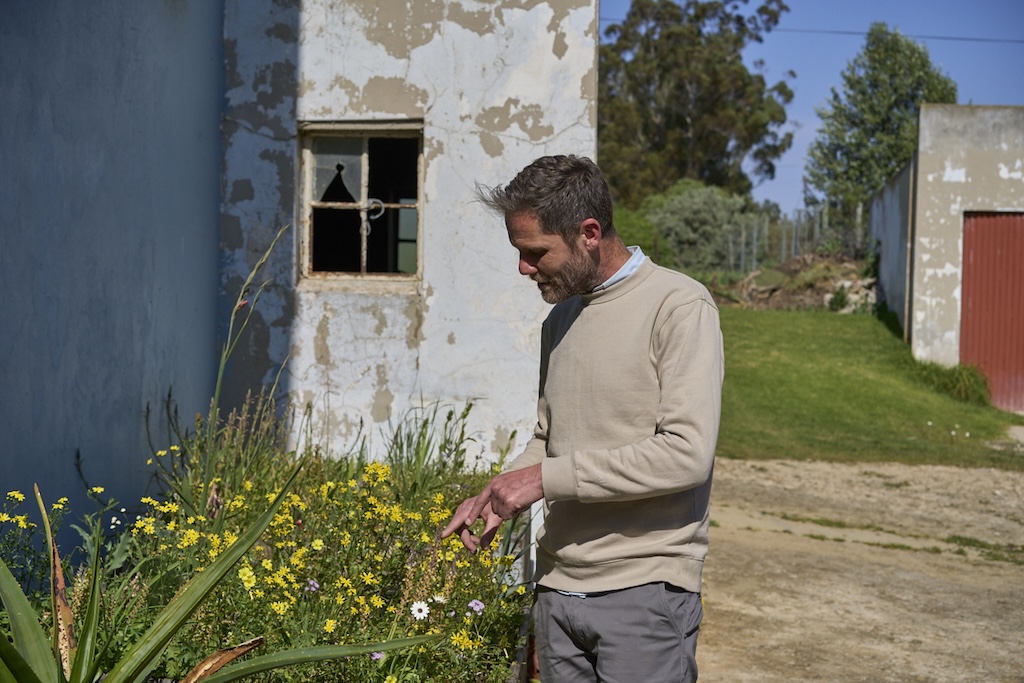
Hopefield hotel owner Jacques van der Westhuisen points to fynbos growing in the veld around the town, where he has collected species for an exhibition at the annual Fynbos Show. Photo: Barry Christianson
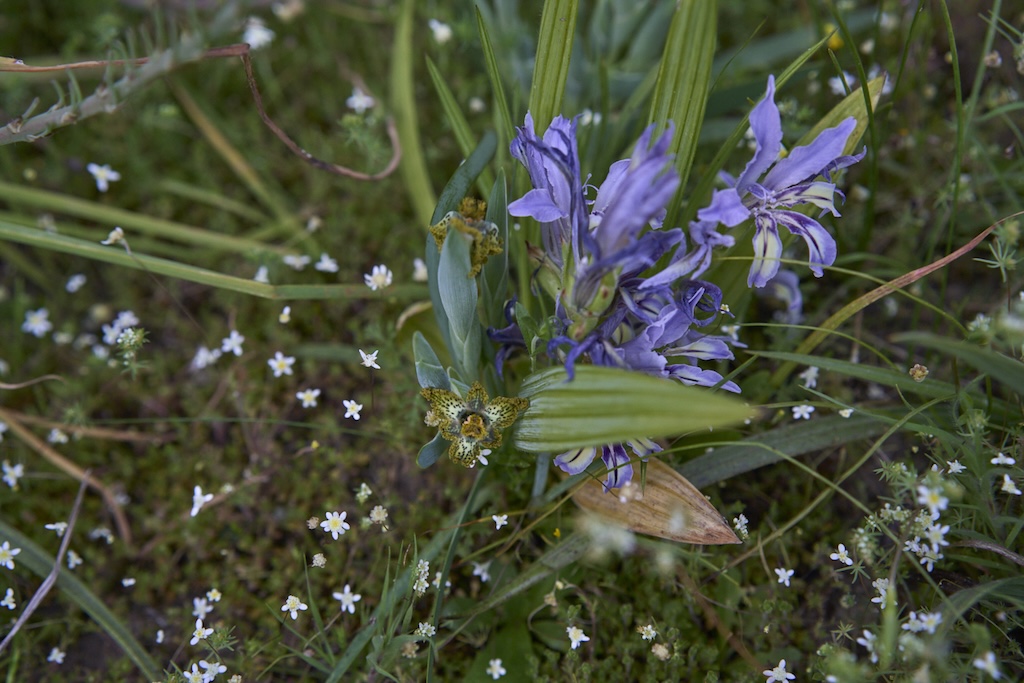
Fynbos, such as the Common Bobbejaantjie (right) and the Poor Spider Lily (left), growing at Van der Westhuisen’s hotel in Hopefield, where rescued specimens offer a reminder of the biodiversity residents fear could be lost as the proposed green hydrogen project takes shape on the town’s doorstep. Photo: Barry Christianson
Every year as spring approaches, the annual Fynbos Show held in Hopefield draws thousands of tourists to this critically biodiverse region in the Western Cape.
Local hotel owner Jacques van der Westhuisen says the festival draws up to 8,000 visitors and is a source of pride for residents. He collects as many species as he can find in the surrounding veld for an exhibition that forms part of the annual Hopefield Fynbos show.
But this year his attention has been drawn to a different kind of development on the edge of the town situated about 120km north of Cape Town. Phelan Green Group, a global renewable energy supplier owned by the Phelan family, from Ireland, has proposed a R47-billion green hydrogen (GH2) and electro-sustainable aviation fuel (eSAF) project that would place a 1.6GW solar farm and an industrial fuel plant on agricultural land beginning roughly a kilometre from Hopefield.
At full capacity, the project is expected to produce 140,000 tonnes of eSAF a year, for export to Europe. It will be developed in three phases, with the final phase expected to be completed in 2032.
The project’s footprint is significant: the solar component alone is expected to cover more than 3,000ha.
Residents are now asking whether Phelan’s promise of a green energy future comes at the expense of the region’s most valuable assets.
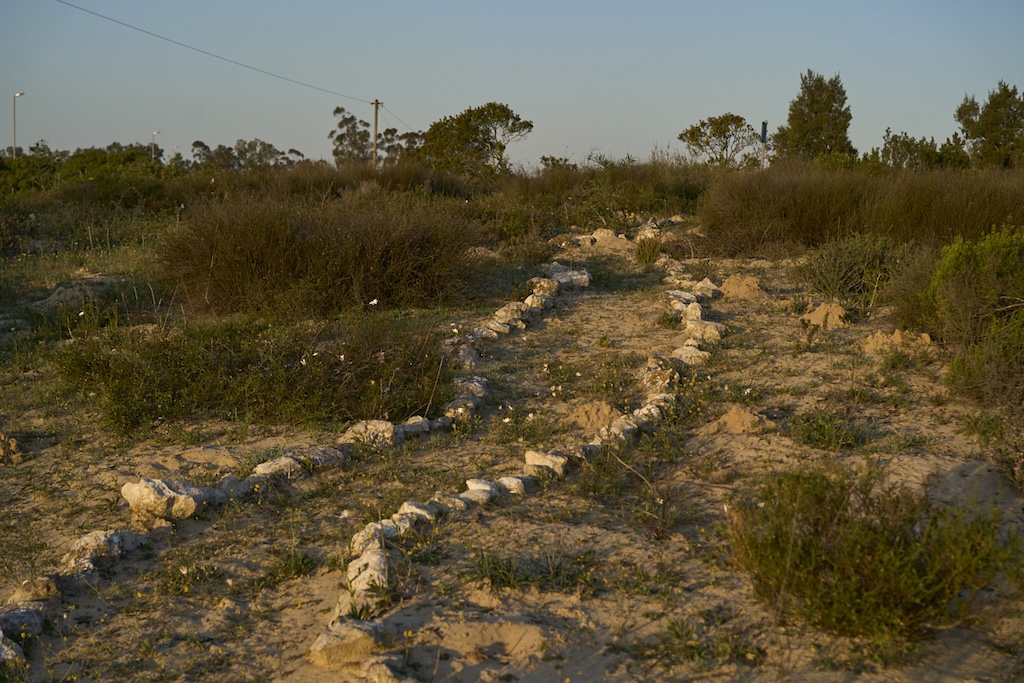
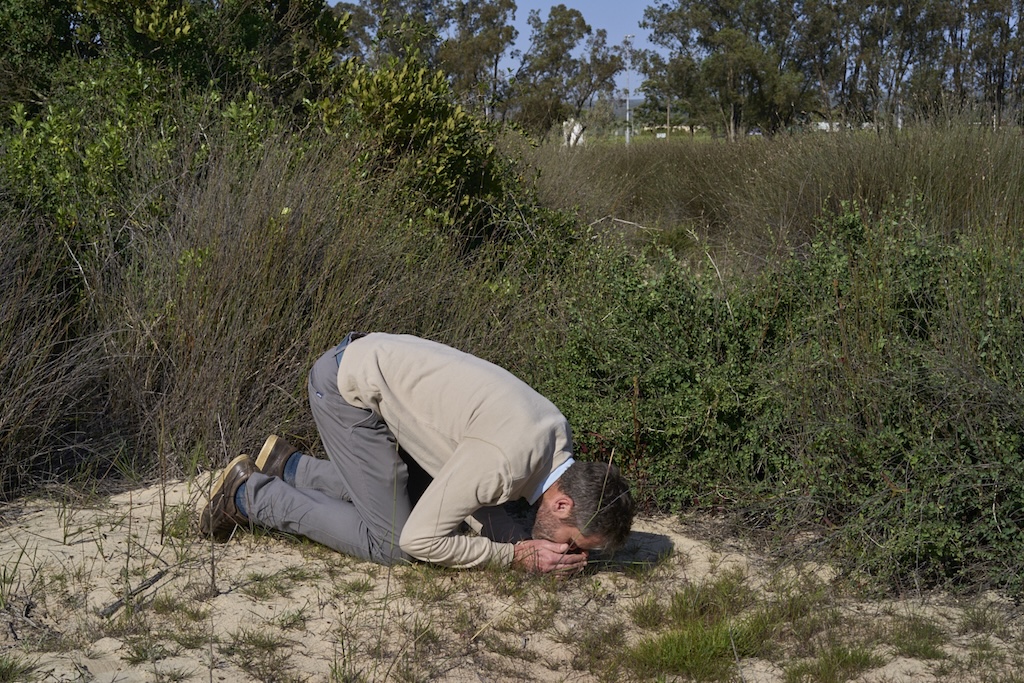
The fynbos in and around Hopefield can look like nondescript bush to the untrained eye. Photo: Barry Christianson
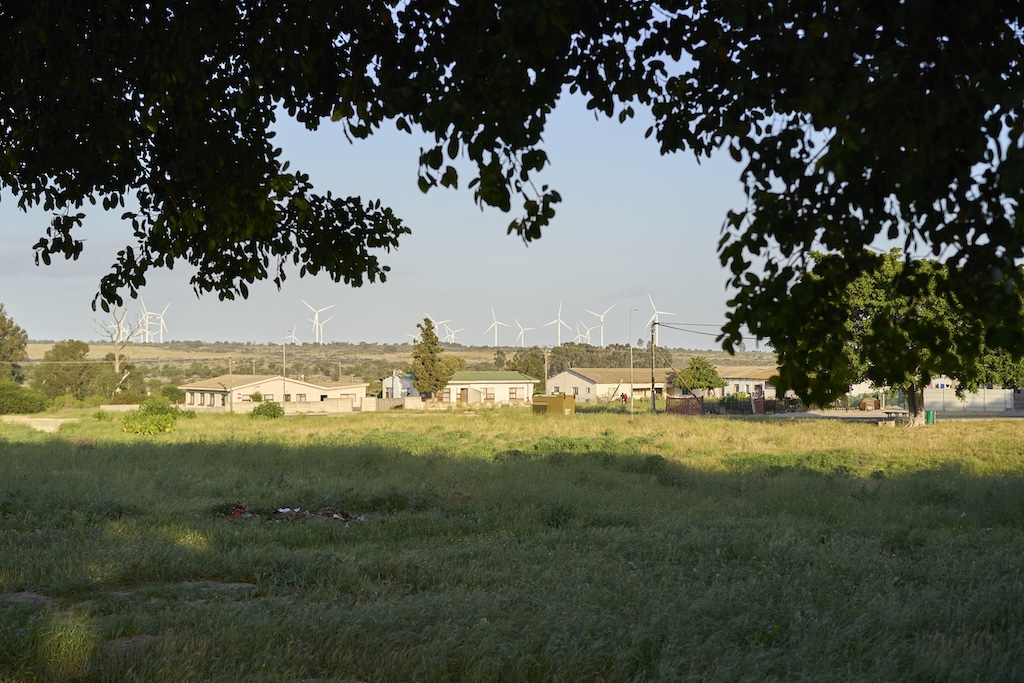
Umoya Wind Farm’s turbines are visible from parts of Hopefield, offering a view of how renewable energy infrastructure is already reshaping the landscape around the town. Photo: Barry Christianson
Master plan
The small town of roughly 6,000 inhabitants is close to the West Coast National Park and Saldanha Bay’s Freeport Industrial Development Zone. It is a protected pocket surrounded by agricultural land. The only evidence of outside development are the slowly turning turbines of the nearby Umoya Wind Farm, which feeds renewable energy into the national grid.
Hopefield is part of the Saldanha Bay Municipality, identified in the West Coast Green Hydrogen Master Plan as a potential GH2 hub because of its renewable resources, existing industrial infrastructure and proximity to the Saldanha Bay Special Economic Zone.
The Western Cape government has ambitious plans for GH2, including facilitating up to 15GW of renewable energy for projects.
According to Oxpeckers #PowerTracker data, there are 16 GH2 projects, in various stages, throughout South Africa. Four of these, including Phelan’s solar/GH2 /eSAF project, are concentrated in the Western Cape. The combined estimated production output capacity of these, where quantified, is roughly 190,000 to 195,000 tonnes of GH2 (or its direct fuel derivatives) per year.
While smaller proof-of-concept projects have been demonstrated, commercial output of GH2 is not yet active in the Western Cape.
A related concern is the rise in mining applications for phosphate in the region. In early 2025, non-profit organisation Protect the West Coast raised environmental concerns about an application to mine phosphates on a farm near Langebaan, which is just 35km from Hopefield. The project received environmental authorisation from the Western Cape Department of Minerals and Petroleum Resources on July 24 2026.
There is also the Kropz Elandsfontein phosphate mine, right outside the town. It has the overall capacity to produce between one million and 1.5-million tonnes of phosphate rock concentrate each year.
These activities are directly linked to GH2: nitrogen can be combined with GH2 to produce green ammonia, which is then used as an energy carrier and fuel.
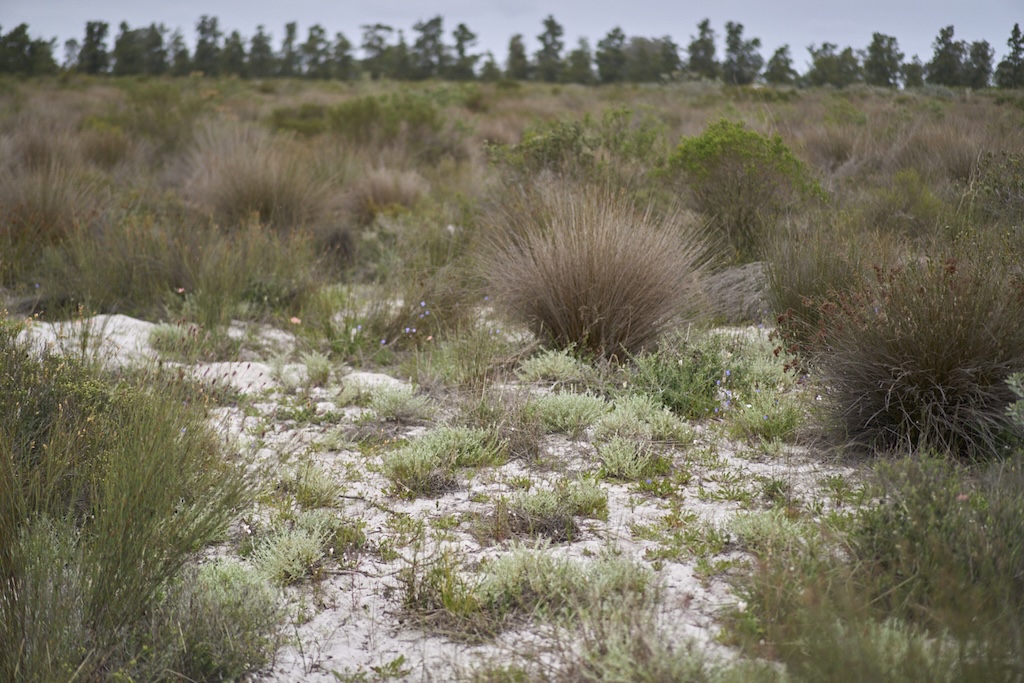
Botanist Nick Helme says the area in which the solar/GH2 /eSAF project will be located has an unusually high concentration of threatened plant species. Photo: Barry Christianson
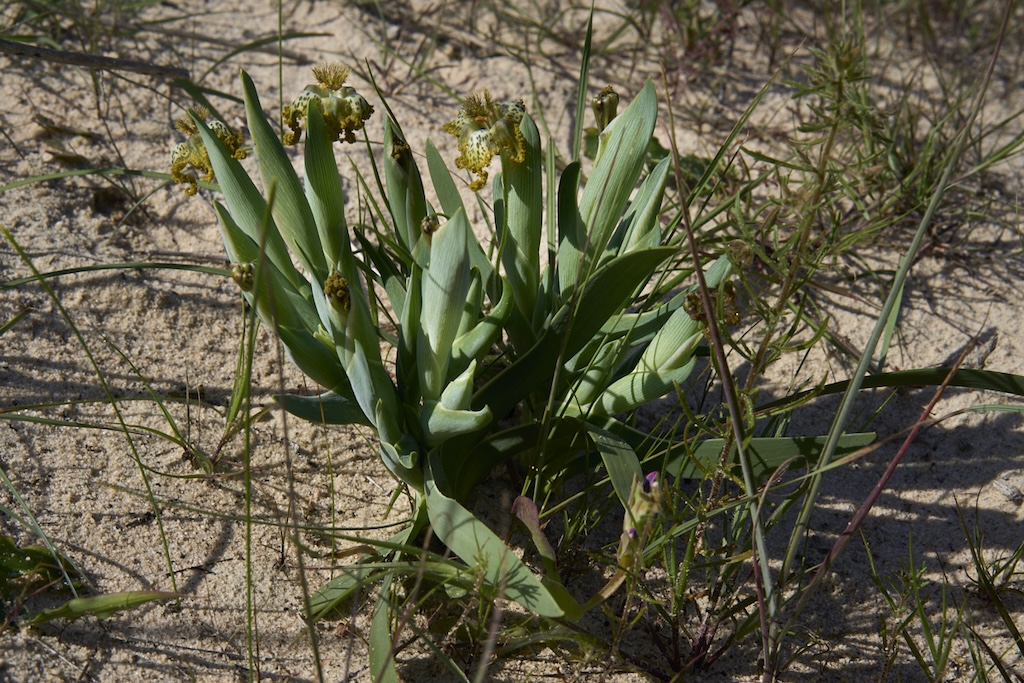
The ‘Ferraria parva’ (Poor Spider Lily) is listed as endangered by the South African National Biodiversity Institute (SANBI). Photo: Barry Christianson
Botanical experts have questioned why the development cannot be moved to an already degraded area. Pictured here, Van der Westhuisen smells a fragrant fynbos specimen. Photo: Barry Christianson
Fynbos on the frontline
Botanist Nick Helme told #PowerTracker the proposed Hopefield development area has an unusually high concentration of threatened plant species because two major vegetation systems meet there: sand fynbos on the deep acidic sands to the west and clay-based vegetation associated with the Renosterveld of Swartland to the east.
The area around Hopefield therefore acts as an ecological transition zone, he said.
According to him, the Theewatersvlei portion of the proposed solar development has roughly double the plant diversity that would normally be expected for an area of its size. About 25 threatened species have been identified in the greater project area, including species occurring in Hopefield sand fynbos.
The area also contains Piketberg Quartz Succulent Shrubland, a unique, arid habitat type that is found along the Sout River. “My assessment is this would have a high negative botanical impact,” Helme said.
He asked why the development could not be moved to an already degraded area. “I haven’t seen any suggestion of an alternative locality or any strong reasoning as to why this is the preferred locality,” he said. “Move this thing 20km to the east into the highly degraded Swartland system, and you’ve got no environmental issues.”
Mark Botha, an environmental professional specialising in land protection and conservation strategy, said Saldanha already has industrial infrastructure and an established industrial development zone.
“How do you make hydrogen green by putting it on a greenfields area and trashing biodiversity?” Botha said.
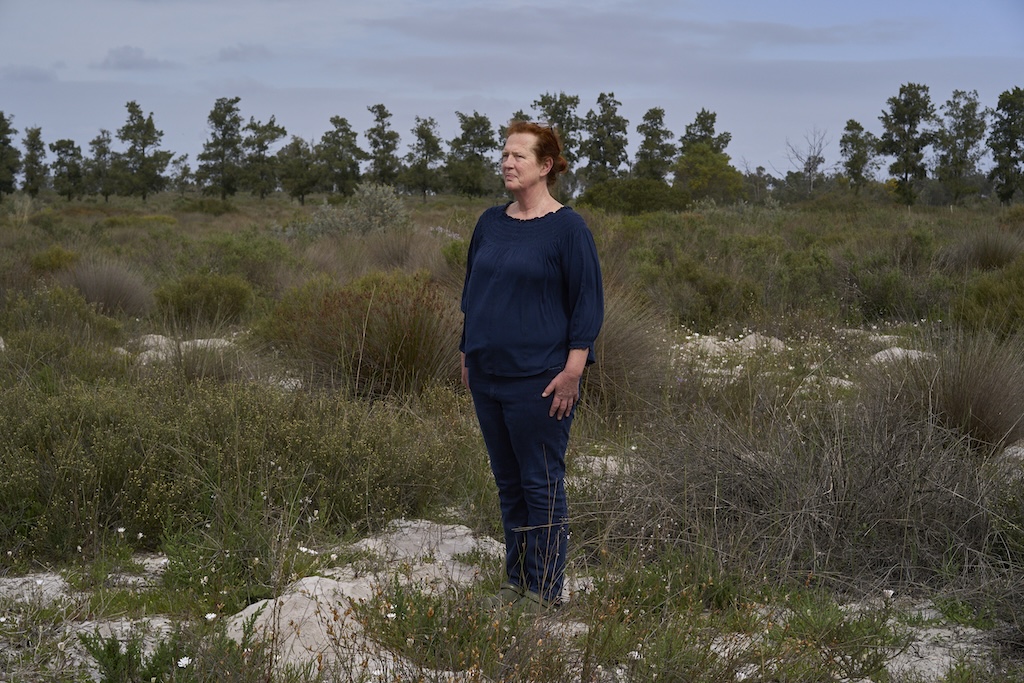
Nicola Viljoen, chairperson of the West Coast Environmental Protection Association, says splitting the proposed Hopefield development into separate applications has left residents navigating too much technical paperwork as they try to understand the project’s potential environmental impacts. Photo: Barry Christianson
Participation processes
Anthea Abraham, the head of communications at Phelan Green Energy, responded to inquiries from #PowerTracker that the site in Hopefield was “identified as the best possible location after multiple site assessments and regulatory requirements”.
Biodiversity has been identified as a critical aspect in the initial environmental impact assessment stages, she said, and CapeNature as a commenting authority had requested additional biodiversity investigations and information. These specialist studies are being undertaken to assess potential impacts and identify mitigation measures.
For Hopefield residents, the environmental concerns have been compounded by how they say the project was presented to them.
Van der Westhuisen said the development has largely taken residents by surprise. They first heard about plans for a solar farm in 2025. At the time, many assumed it would be comparable to other solar developments elsewhere in the province.
“When people hear ‘solar farm’, they think about the type of solar farm De Aar or Touws River have. I’ve seen it. It’s not that bad,” he said, referring to projects that occupy between 100ha and 200ha.
“It’s only when we saw the draft scoping report that we realised the scale of the project. It wasn’t just a solar farm, it’s a mega solar farm,” he said.
A year later, they discovered that the project involved much more than solar: “We discovered it wasn’t just going to be a solar farm, there would be a hydrogen plant as well,” he said.
Then residents found references to a biomass burner and a wind component. “Every step of the way we discover that there’s another component. We don’t know the full extent of the project,” Van der Westhuisen said.
The solar farm and GH2/eSAF development are being assessed through separate environmental processes, with different environmental assessment practitioners (EAPs) and different competent authorities. This has made it difficult for residents to understand the cumulative impact of developments that, although assessed separately, will occupy the same landscape.
Nicola Viljoen, chairperson of the West Coast Environmental Protection Association, said for projects of this scale EAPs should have substantive meetings with communities to explain the content of the highly technical documents.
By splitting the project into two separate components, residents have faced more paperwork than expected, she said.
The comment periods for the current draft scoping processes have closed, and applications for water use and atmospheric emissions remain part of the regulatory process ahead.
Residents have responded by creating WhatsApp groups to share documents, specialist reports and information, and have started compiling information from the draft reports and specialists on environmental laws to understand what the project is all about.
“We feel it’s quite unfair that they haven’t come to the community to explain the different projects on a deeper level, and how it’s going to impact our area,” said Des Coetzee, a Hopefield resident who lives in the village to be close to her son and grandchildren.
Phelan spokesperson Abraham responded that the two project components have “unique inherent technical scopes, characteristics and complexities that require dedicated technology, design, engineering and technical inputs. Environmental legislation dictates different competent authorities responsible for authorising the projects/project components – the Department of Forestry, Fisheries and Environment (national) for solar, and the Department of Environmental Affairs and Development Planning (provincial) for eSAF – which necessitate two environmental impact assessment processes.”
“The technical scopes put each component on a different project trajectory in terms of timescales, design/engineering, technology, etc. Phelan Green is adhering to these two processes to ensure process compliance and integrity,” she said.

Worries about water
Beyond the threats to the fynbos, Viljoen is concerned about the projected water usage.
“Hopefield is in a semi-arid region and this year we’ve not had the rainfall that we normally have. Going into summer, we’re already concerned that there’s going to be enough water to supply Hopefield,” she said.
According to the final scoping report, the project will use eight million litres of potable water a day, at full production.
Phelan’s Abraham told #PowerTracker the first phase will require two million litres of water per day, which will be supplied by Saldanha Bay Municipality, while longer-term water security is expected to involve desalination and the clearing of alien vegetation. She added that the first phase’s water provision is currently under assessment by the municipality.
“The plant itself has also been designed as a zero liquid discharge facility, meaning process water is recycled and reused within the plant to the greatest extent possible, rather than being discharged as effluent. This significantly reduces the plant’s overall water demand and reinforces the project’s water-conscious design approach,” Abraham said.
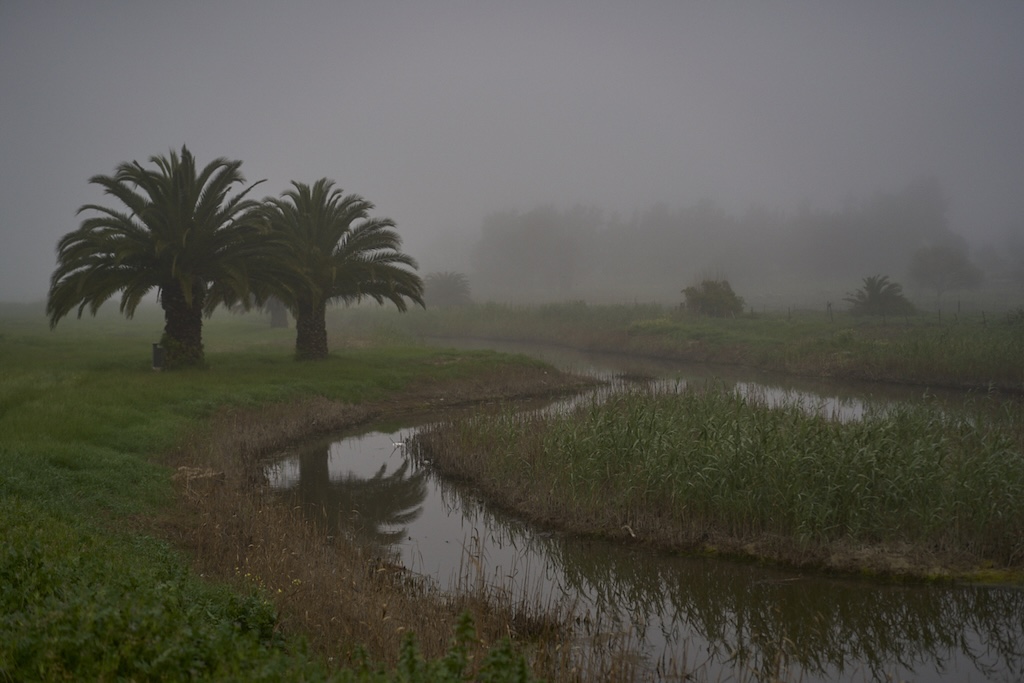
A foggy morning on the Sout River: Residents say they only had one day of rain this winter and are worried about the water situation after summer. Photo: Barry Christianson
Groundwater system
Residents are particularly concerned about the relationship between the proposed plant, groundwater and nearby waterways.
The hydrogen plant would be about 800m from the Sout River, which flows into the Berg River and ultimately the sea. The proposed development is also located above a groundwater system connected to the wider coastal environment.
Van der Westhuisen fears contamination could have consequences well beyond Hopefield, noting that if contamination happens above ground, it could very easily end up in the Berg River. On the other hand, contamination of the underground aquifer system could impact the Langebaan Lagoon.
Both the lagoon and river are Ramsar sites, wetland areas recognised as being of international importance under the international Ramsar Convention.
Abraham said the company will comply with all national and international laws in relation to water use, discharge and environmental protection, as well as chemical and fuel handling facilities. She said all zones where contamination risk exists will be contained if any leaks do occur.
Hydrogeologist Dale Barrow, of GEOSS, the company Phelan tasked to assess the sustainability of the project’s water needs, told #PowerTracker that the underwater aquifer system in the area is “complex”, and with current information it’s “difficult to predict impacts”.

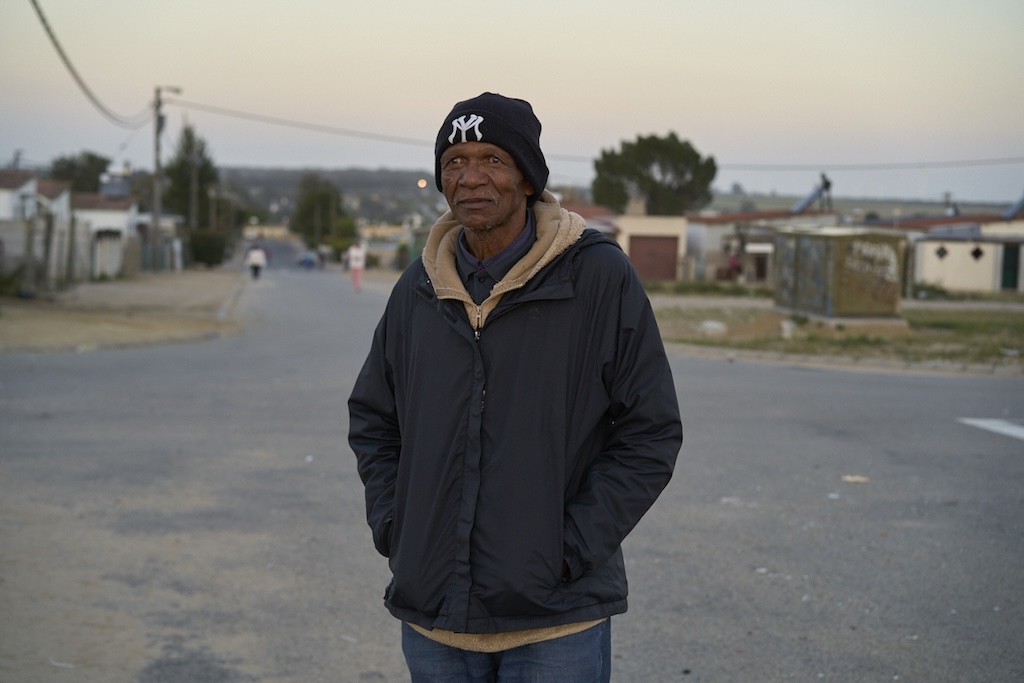
George April, a former builder, is concerned that the proposed development will lure people from the Oudekraal community with the promise of jobs, and that in his experience, unless the details are down in writing, big companies tend to hire people from elsewhere. Photo: Barry Christianson
False hope
The project is expected to create about 2,500 jobs over a period of more than five years, and 500 permanent operations and maintenance jobs when fully operational, according to Abraham. Training and skills development processes will aim to support longer-term employment opportunities, she said.
Resident and community worker George April, now in his 70s, said while there is high unemployment in his community he is concerned that the talk of job creation might bring false hope among his neighbours, and that the new development might negatively impact existing employment.
April pointed out that each day buses collect workers employed at Arnelia, a flower farm near Hopefield, and during the harvesting season even more people are employed there.
“We understand that there will be a lot of construction work and many people will get work, but after a year or two there will be no work. They need skilled people [for the permanent jobs],” he said.
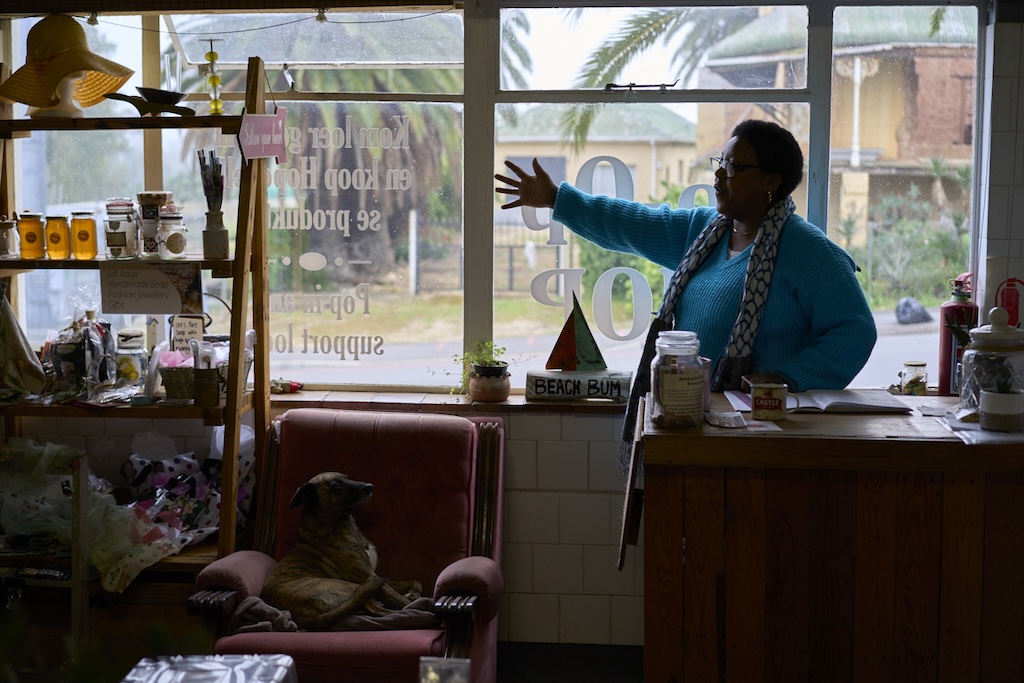
Sense of place: Bonita Marcus, who manages the co-op shop on the main street, moved to Hopefield from Mitchells Plain in search of a quieter and safer life. She worries that a major construction project, followed by an industrial facility and thousands of hectares of associated infrastructure, could change the character of the town. Photo: Barry Christianson
Track green hydrogen, renewable and coal-based energy sources on our #PowerTracker tool here. Phosphate mining data collated for the investigation is shared in the Oxpeckers Get the Data section
This investigation is part of the Oxpeckers #PowerTracker programme, supported by the New Economy Hub and Ford Foundation