
04 Aug Cold play: Inside South Africa’s illegal coolant trade
An undercover Oxpeckers investigation by Tulani Ngwenya reveals how a regulated climate-control industry is being undermined by informal dealers, weak enforcement and gaps in the supply chain
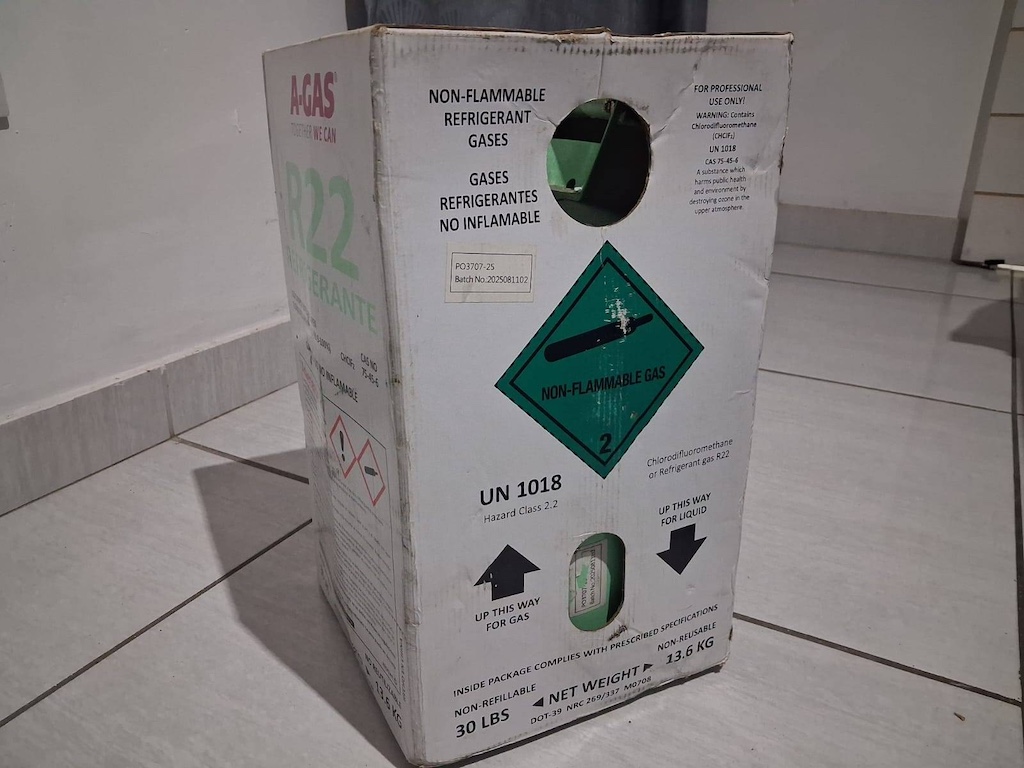
With cash in hand, our investigator bought a cylinder of R22 gas from an unregistered dealer in Durban. Photo: Tulani Ngwenya
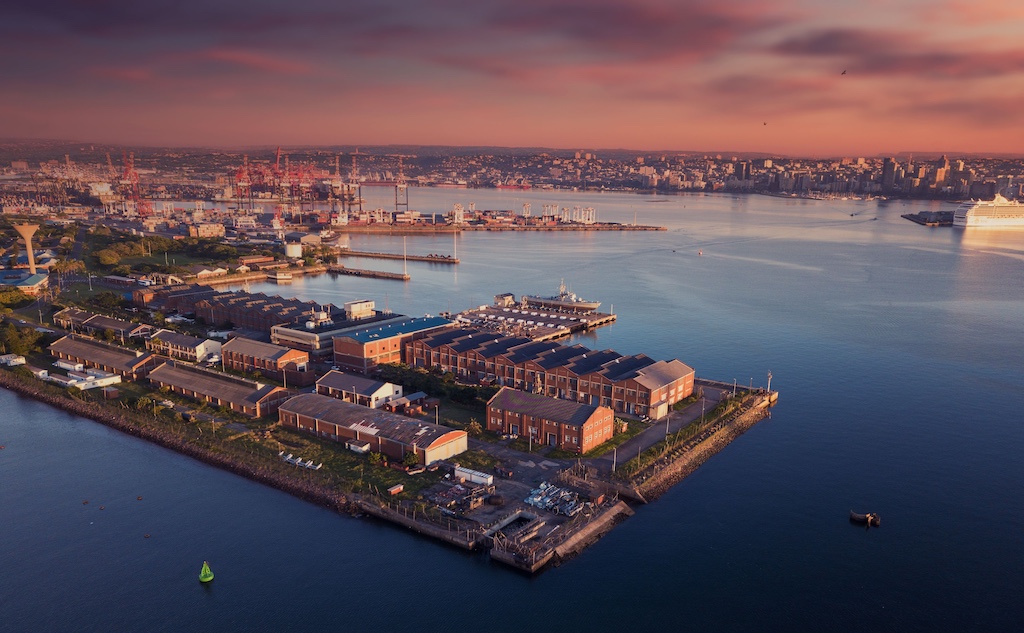
The location was significant: Durban harbour is one of South Africa’s busiest entry points for imported goods, including refrigeration equipment and gases. Photo: Ojas Narappanawar/Pexels
Every day, containers carrying refrigerant gases enter South Africa through Durban harbour, supplying the cooling systems that keep supermarkets, hospitals, mines and businesses operating.
Most of that trade is legal. But beyond the regulated market, a parallel economy appears to be operating.
For R2,000, Oxpeckers bought a sealed cylinder of R22 coolant from an unregistered dealer in Isipingo, Durban. R22 is a refrigerant that South Africa has committed to phase out because of its damage to the ozone layer and because it has a global warming potential hundreds to thousands of times higher than carbon dioxide (CO₂).
No licence was requested, no paperwork changed hands and no receipt was issued.
The seller, who identified himself only as “Gas-Man”, claimed he could source different refrigerants, arrange cross-border deliveries into Southern Africa and connect buyers to suppliers linked to a “huge company” operating through Durban harbour.
He did not know his customer was an undercover Oxpeckers investigator wearing a hidden camera.
The three-day investigation traced a chain that began with informal traders on Gauteng’s East Rand and led to Durban, where claims of unregistered technicians, cross-border movement and gaps in enforcement raised questions about how controlled refrigerants continue circulating despite strict regulations.
The investigation asked a simple question: if South Africa has committed to eliminating harmful refrigerants, how easy is it to buy them?

The lead
Posing as a regional buyer looking to supply customers in Botswana and Zimbabwe, the investigator approached a dealer known locally for trading refrigerant gases and asked about R22 stock.
The dealer had none. Instead, he provided a contact identified as Onious.
“Do you need refilled tanks?” Onious asked. “The refrigerant gas I use comes from Pretoria. That’s where it’s cheap. Let me send you the number of a guy in Durban who sells refrigerants cheaply.”
The number belonged to Gas-Man.
Before following the lead, Oxpeckers checked South Africa’s official accreditation databases, including the 2026 HEVAC&R directory and the South African Refrigeration and Air Conditioning Contractors Association (SARACCA) register. Neither the East Rand dealer, Onious, nor Gas-Man appeared on the registers of approved technicians or companies authorised to handle refrigerants.
That raised the next question: where was the gas coming from?
To find out, Oxpeckers travelled to Isipingo in KwaZulu-Natal with cash in hand and a hidden camera.
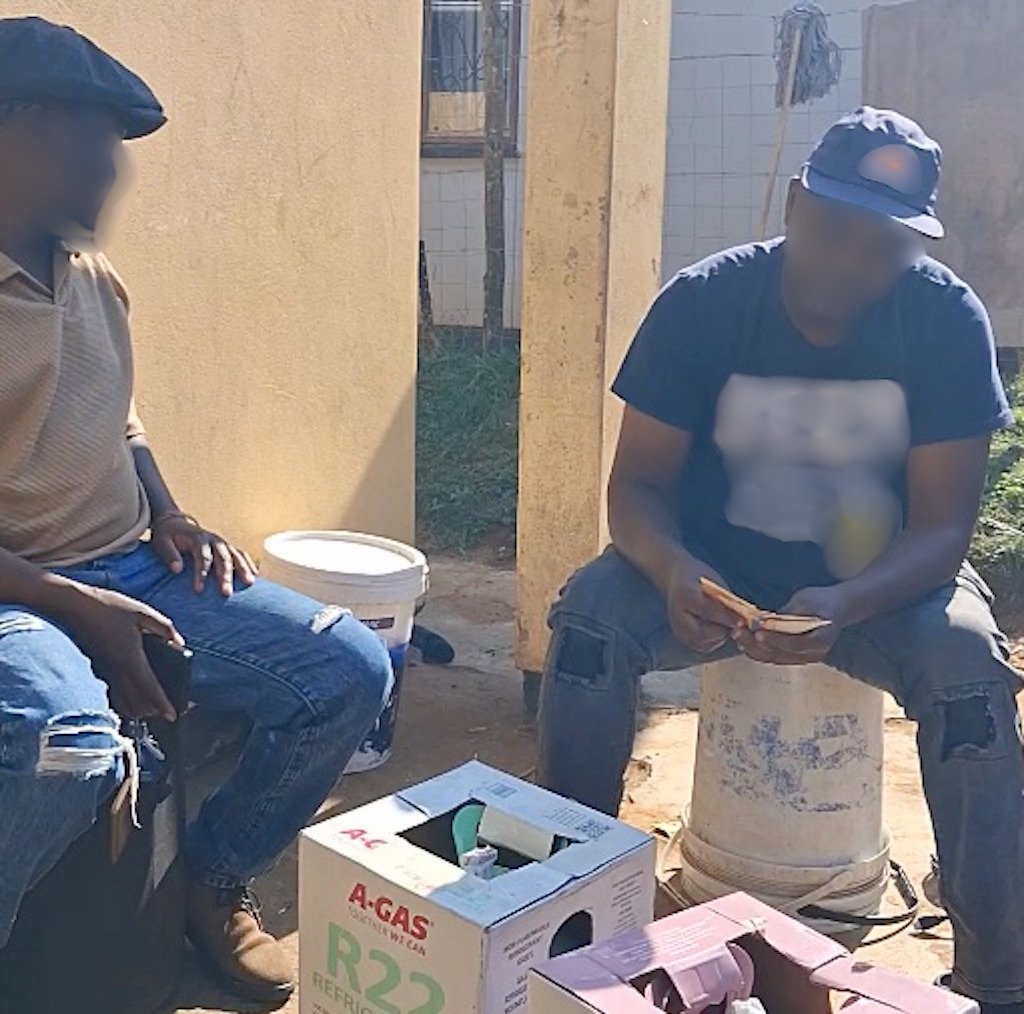
An unregistered dealer counts the cash after selling an R22 refrigerant cylinder to an undercover Oxpeckers investigator. No receipt was issued, no licence was requested and no questions were asked. Photo: Tulani Ngwenya

The sting
Gas-Man chose the meeting place. He was waiting outside a modest RDP house in Isipingo.
He appeared relaxed, standing with his hands in his pockets. He wore a faded navy-blue T-shirt, a cap pulled low over his face, dark grey jeans and black Crocs.
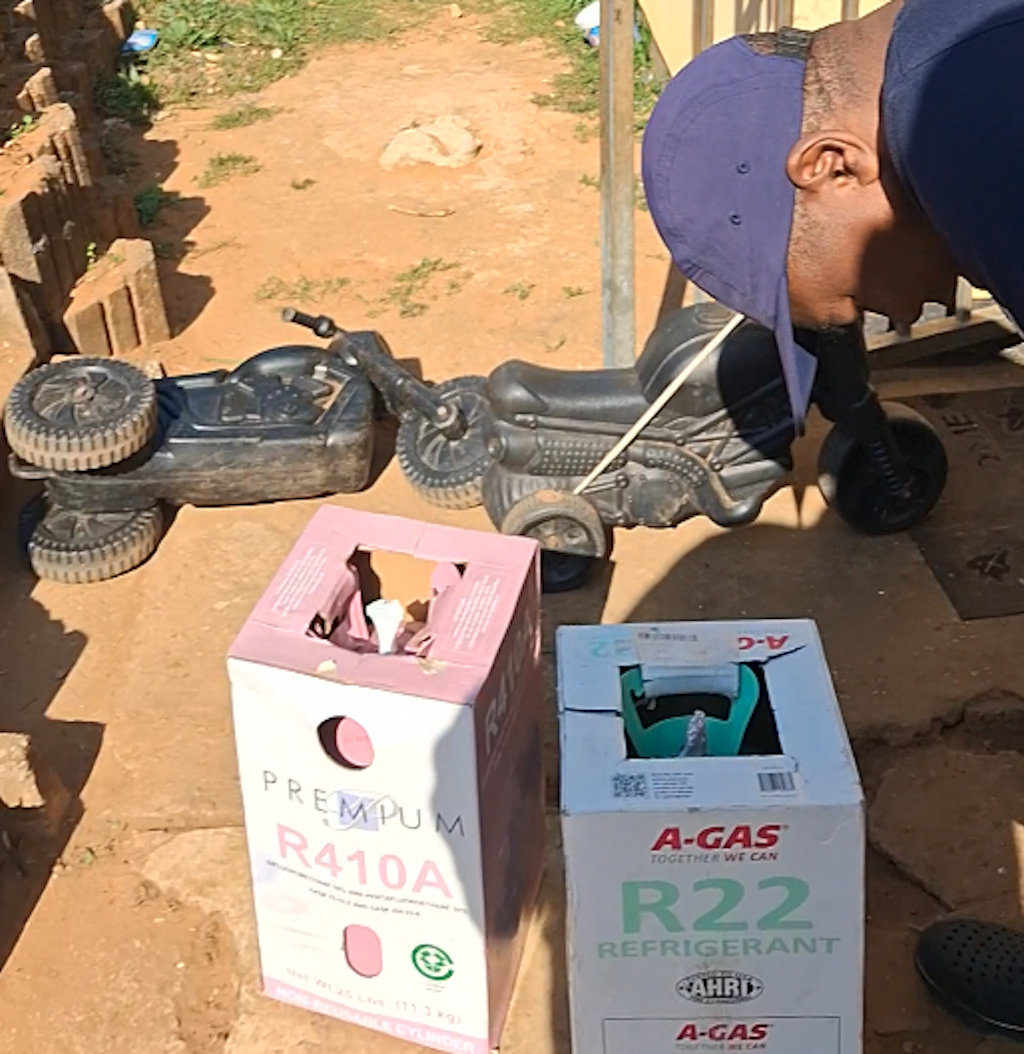
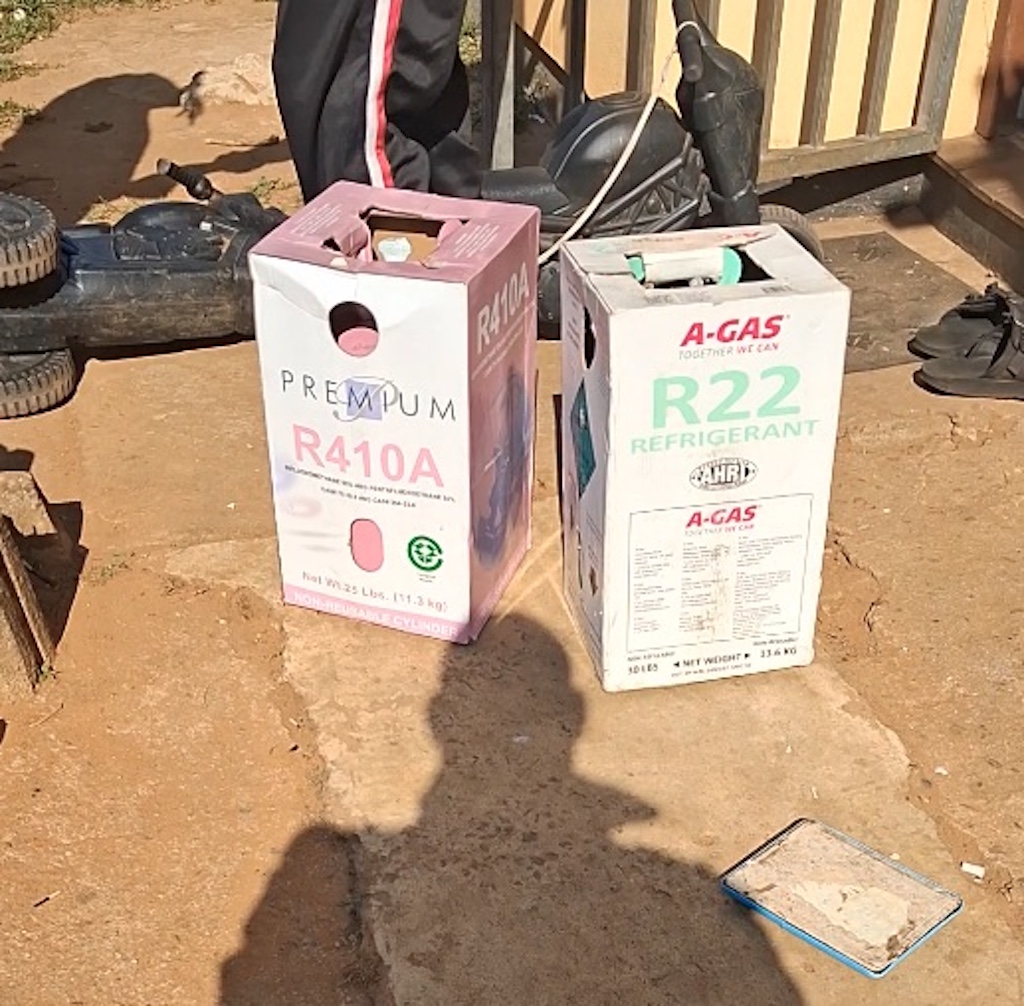
On the doorstep beside him were two refrigerant cylinders. One contained R22 manufactured by A-Gas. The other contained R410A.
“R2,000 each,” he said. The price was significantly lower than the normal retail cost, which ranges between R2,900 and R3,300.
Gas-Man offered to sell additional cylinders, but the investigator declined. Instead, Oxpeckers bought one non-returnable cylinder of R22.
The cylinder remained sealed inside its branded A-Gas box, with the manufacturer’s protective cling wrap still intact around the nozzle.
Our investigator brought R1,600 in cash and obtained the remaining R400 from a nearby ATM.
Gas-Man took the money and put it in his pocket. No receipt was issued. No invoice was provided. No questions were asked about certification, licensing or intended use.
For most buyers, it would have ended there. For Oxpeckers, the transaction raised a bigger question: how had a refrigerant that South Africa has committed to phasing out become so easy to purchase from an unregistered trader?
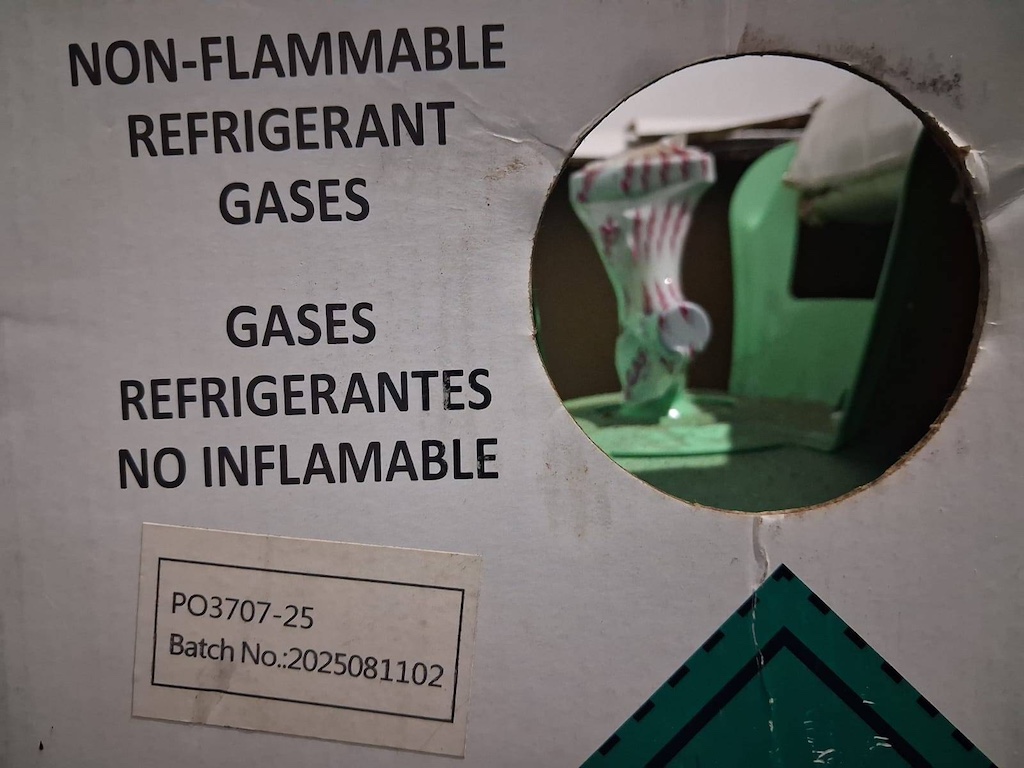
Although South Africa has committed to phase out R22 under the Montreal Protocol, we found that the ozone-depleting refrigerant remains readily available through unregistered traders. Photo: Tulani Ngwenya
Why R22 matters
South Africa has committed to eliminate R22 coolant under the Montreal Protocol and its Kigali Amendment. These international agreements require countries to reduce ozone-depleting substances and phase down high global-warming refrigerants. Under South Africa’s commitments, R22 imports must steadily decline before reaching zero by 2040.
Yet the commitments appeared distant in Isipingo.
“Refrigerants can be toxic and carry significant global-warming potential,” said Professor Jaco Dirker of the University of Pretoria. “They should only ever be handled by trained personnel.”
Gas-Man did not provide any evidence that he was trained, registered or authorised to trade in refrigerants.
Modern fridges and air conditioning systems use hydrofluorocarbons (HFCs), man-made synthetic gases which replaced older ozone-depleting gases known as chlorofluorocarbons (CFCs). Because they cause severe damage to the earth’s ozone layer – a protective shield of gas in the stratosphere that absorbs the sun’s harmful ultraviolet rays – CFCs have been largely phased out worldwide.
According to the United Nations Ozone Secretariat’s data, South Africa consumes seven to 15 million tonnes of CO₂‑equivalent HFCs annually. Already, HFCs account for about 2% of global greenhouse gas emissions, figures from the Environmental Investigation Agency show.
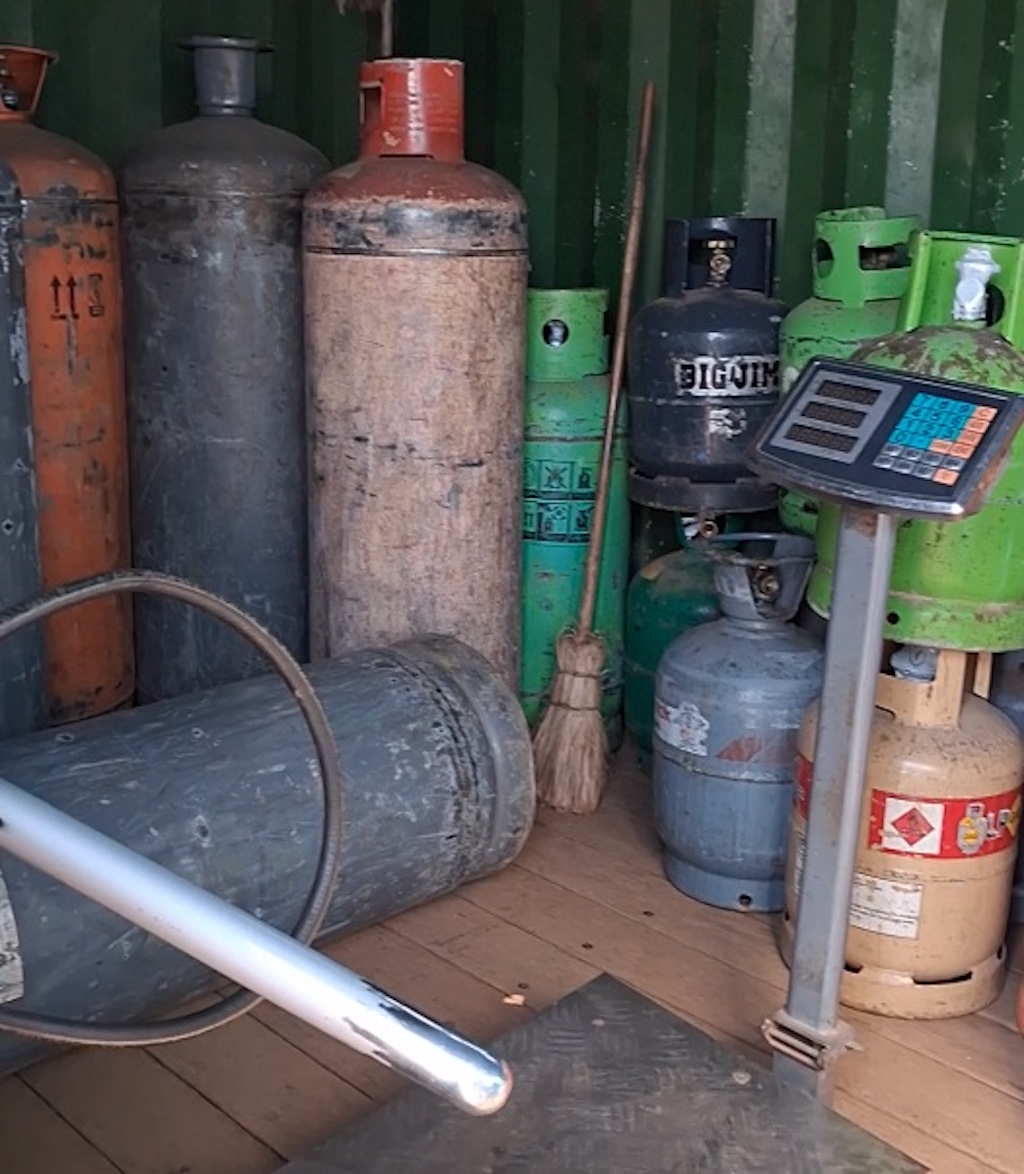
Gas cylinders stored inside an informal refrigerant outlet. Photo: Tulani Ngwenya
More than a street dealer
As the conversation continued, Gas-Man suggested that he was not operating alone.
“I work with cross-border truckers,” he told the investigator. “They operate across [the] SADC. They can smuggle cylinders into any country at a low cost.”
He then mentioned what he described as a “huge company” connected to Durban harbour that could source refrigerants through established channels.
Oxpeckers pressed him for the name of the supplier and the company. He did not answer.
To test his claims, Oxpeckers managed to obtain the supplier’s phone number from another contact and arrange a meeting. Information gathered during the investigation suggested that the supplier was a refrigeration technician who had previously worked for a big air conditioning company and was now servicing shopping malls.
This technician allegedly used Gas-Man as a middleman to avoid drawing attention to his involvement in selling refrigerants outside formal channels.
A meeting with the technician was arranged at a filling station near Durban harbour.
The location was significant. Durban harbour is one of South Africa’s busiest entry points for imported goods, including refrigeration equipment and gases. Every day, trucks move between the port, warehouses and distribution centres, creating a complex network where legitimate trade and illegal activity can potentially overlap.
When the investigator arrived, however, the meeting quickly changed direction. A South African Police Service (SAPS) patrol vehicle pulled alongside the investigator’s unmarked white car and officers asked why the vehicle had made a sudden turn as they approached.
After the investigator explained that he had stopped to refuel, the officers conducted a routine check, requesting identification documents and a driver’s licence before allowing the vehicle to leave.
The interaction lasted only a few minutes. But it was enough to spook the technician, who decided not to proceed with the meeting. By the time the investigator returned to the agreed location, he had disappeared and the opportunity to identify the next link in the supply chain was lost.
However, the failed meeting reinforced a key finding from the investigation: Gas-Man was not simply an isolated trader selling a single cylinder from his doorstep.
Behind him appeared to be a network involving other individuals operating within or close to South Africa’s formal refrigeration sector. The extent of that network remains unclear, but the investigation had uncovered enough evidence to suggest that the informal refrigerant market extends beyond small-scale dealers.
The next question was whether the cylinder itself could reveal more about where it came from.
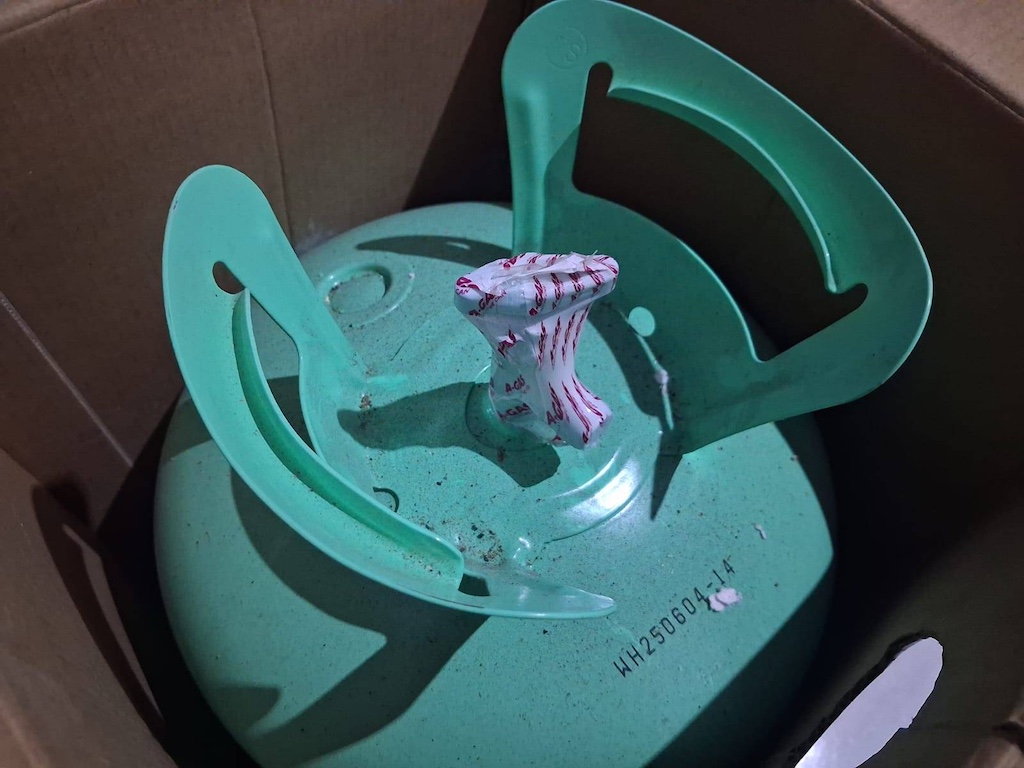
The protective cling wrap around the cylinder’s nozzle helped verify it as genuine A-Gas stock. According to the supplier, the packaging is difficult to replicate, raising questions about how an authentic cylinder reached the informal market. Photo: Tulani Ngwenya
Verifying the cylinder
The investigation turned to the R22 cylinder purchased in Isipingo. Was it counterfeit? Had it been illegally refilled? Or was it genuine stock that had somehow moved from the formal supply chain into an informal market?
The morning after the purchase, Oxpeckers contacted Michael Labacher, business development manager at A-Gas South Africa, an accredited supplier of refrigerants and associated products.
Photographs of the cylinder were sent to him, including images of the nozzle, the protective cling wrap and the A-Gas branding.
His response was immediate. “That’s ours,” Labacher said. “The cling wrap is hard to replicate. It’s genuine A-Gas stock.”
The question was no longer whether Gas-Man had sold a counterfeit product. Instead, it became how genuine refrigerant imported through authorised channels had ended up being sold by an unregistered trader for cash.
At Labacher’s request, the sealed cylinder was delivered to an A-Gas distribution hub in Durban.
From there, it was transported to Cape Town for laboratory testing, including gas chromatography and pressure and purity assessments.
The analysis would determine whether the contents matched the product specifications and whether the refrigerant had been contaminated or altered after leaving the formal supply chain.
To trace the refrigerant supply chain, Oxpeckers submitted PAIA requests to key regulators seeking import permits, seizure records and enforcement data to identify where gaps in oversight may exist. Photo: Tulani Ngwenya
Following the paper trail
To understand how refrigerants enter South Africa, who is authorised to handle them and where enforcement gaps may exist, Oxpeckers submitted several requests under the Promotion of Access to Information Act (PAIA).
The requests were sent to the Department of Forestry, Fisheries and the Environment (DFFE), the International Trade Administration Commission (ITAC), SAQCC Gas and the South African Revenue Service (SARS).
Oxpeckers requested import permits, seizure records, technician registration information and correspondence between regulators responsible for monitoring refrigerant trade.
The country’s refrigerant market is regulated through several different institutions, each responsible for a different part of the supply chain. DFFE oversees South Africa’s international obligations under the Montreal Protocol and Kigali Amendment; ITAC manages import permits and quota allocations; SARS controls goods entering through the country’s borders; and SAQCC Gas and industry bodies such as SARACCA oversee technician certification and professional standards.
Only the DFFE responded to the Oxpeckers PAIA requests, while SARS, ITAC and SAQCC Gas remained silent. In its reply, DFFE confirmed that while it holds some records, the bulk of import and export permits for refrigerants such as R22 and R410A fall under the control of SARS and ITAC.
It said requests for these details would be transferred “in terms of section 20(1) of PAIA”, and noted that importers and exporters have been notified and given 21 days to object to disclosure. DFFE cautioned that certain recommendations it issues may be withheld under provisions protecting third‑party trade secrets and confidential commercial information.
Together, these institutions are expected to prevent illegal refrigerants from entering and circulating in the economy. But industry representatives say the gaps between these mandates create opportunities for abuse.
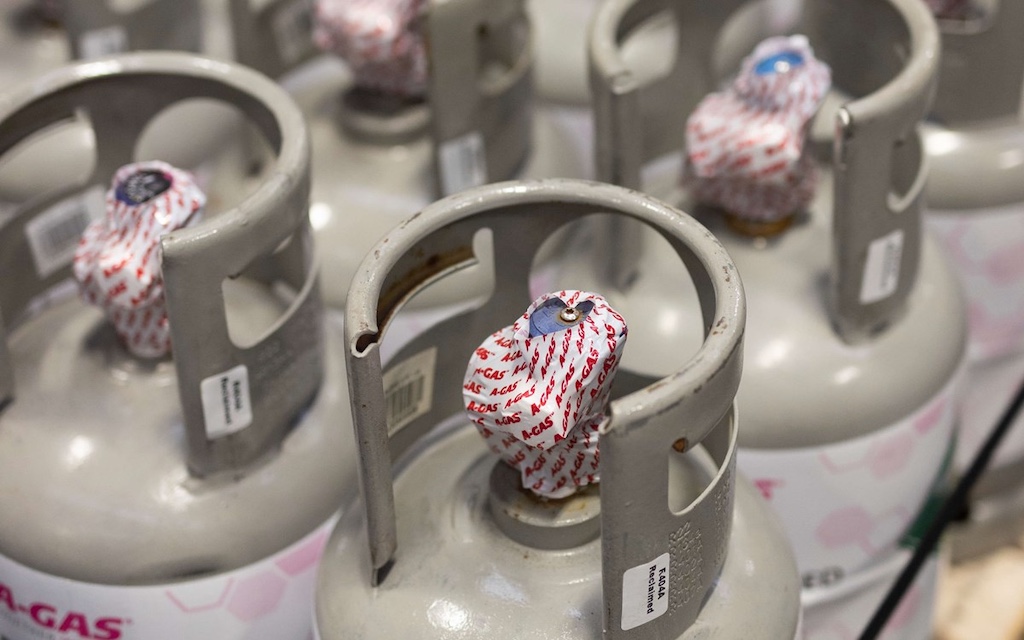
Industry experts say South Africa’s refrigerant regulations are strong on paper, but weak enforcement and poor oversight allow genuine and illegal products alike to slip into the informal market. Photo: A-Gas
Inside the industry
“We have all the regulations in place, but without enforcement they mean nothing,” Labacher told Oxpeckers.
Labacher confirmed that the cylinder purchased by Oxpeckers in Isipingo was genuine A-Gas stock: “That refrigerant was imported by us and we’ve distributed it through our channel, and it’s landed up into the market. I don’t know where you’ve picked that refrigerant up from, how it landed up in their hands.”
For Labacher, that uncertainty demonstrates the weakness in the current system. A product can enter through legitimate channels, but once it moves beyond authorised distributors, tracking becomes difficult.
He warned that illegal imports and informal trading are undermining companies that comply with South Africa’s environmental obligations: “They’ll import a container of air-conditioning systems, but at the back sit the refrigerant cylinders. Customs thinks it’s just air cons, and by the time it reaches the site, the gas is inside the country.”
Labacher said some companies are importing refrigerants without the required approvals, undermining South Africa’s international commitments and feeding an informal market where safety standards cannot be guaranteed.
He recalled a deadly incident in the refrigeration industry: “In 2012, boxes marked R134A were mixed with R40. When that gas leaked and reacted with copper, it ignited and exploded. Several technicians died.”
The incident, he said, showed the dangers of buying refrigerants from unsecured sources.
Inferior refrigerants can also fail international purity standards, including AHRI Standard 700, the benchmark used to assess refrigerant quality. Poor-quality gases can reduce system performance, increase electricity consumption, damage equipment and create additional environmental harm when released into the atmosphere.
“Refrigerants released into the air cause global warming and ozone depletion. If they’re inferior, they also damage systems and put lives at risk,” Labacher said.
He believes the biggest weakness lies in the disconnect between technical expertise and enforcement: “The government has the teeth, but not the know-how. HVAC inspectors have the knowledge, but not the clout. They should be teaming up. Right now, unscrupulous importers exploit that gap.”
Bradley Bock, a senior lecturer at the University of Pretoria’s department of mechanical and aeronautical engineering who has researched cooling systems, said South Africa may need a stronger verification system for refrigerants entering the country.
“It’s plausible that South African units act as an independent refrigerant verification authority, but the South African Bureau of Standards is the more natural fit for that type of problem,” he said.
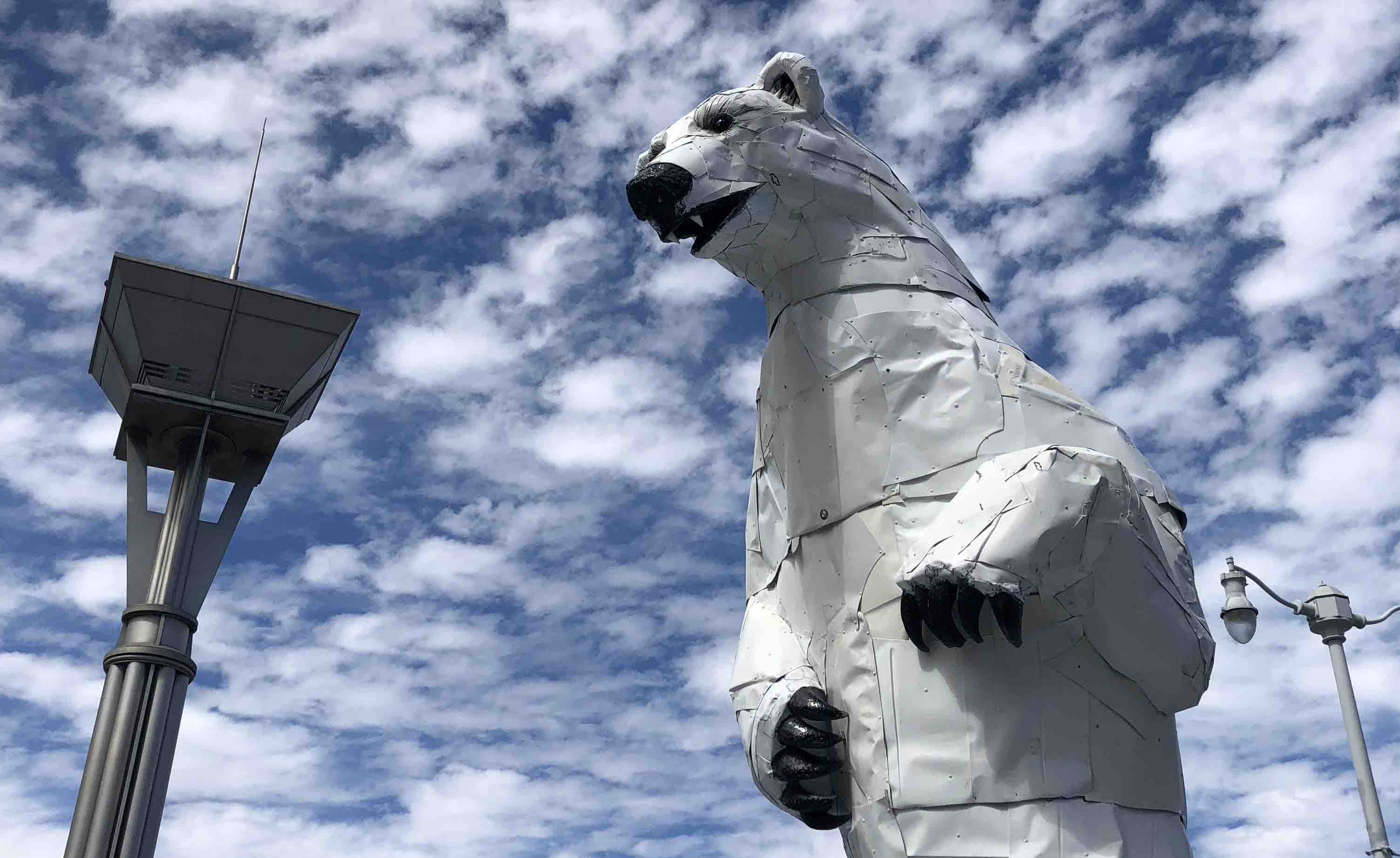
South Africa’s laws impose strict controls and heavy penalties for the illegal trade in refrigerants, yet the investigation found harmful gases remain readily available through the informal market. Photo: Yolandi Groenewald
What the law says
South Africa’s refrigerant controls are based on international commitments and domestic regulations.
Under the Montreal Protocol and its Kigali Amendment, countries are required to reduce ozone-depleting substances and phase down high global warming refrigerants.
R22, the gas purchased by Oxpeckers in Isipingo, falls within those controls and is expected to be completely phased out by 2040.
South Africa’s Ozone-Depleting Substances Regulations of 2014 prohibit the unlawful production, import, export and stockpiling of controlled substances such as CFCs, halons and carbon tetrachloride. HFCs are regulated under the Kigali Amendment due to their high global-warming potential.
Penalties are severe: up to R5-million or five years’ imprisonment for a first offence, with stronger penalties for repeat offenders.
In a February 2025 workshop presentation titled Control and management of ozone-depleting substances in South Africa, the DFFE acknowledged many of the challenges facing the country’s refrigeration sector.
Pointing to a growing informal refrigeration industry, unsafe handling of gases, persistent leaks, inadequate recovery practices and a lack of training and awareness among technicians, the presentation said these problems create conditions where controlled refrigerants can continue circulating outside the systems designed to monitor them.
The findings reflected what Oxpeckers encountered during its investigation.
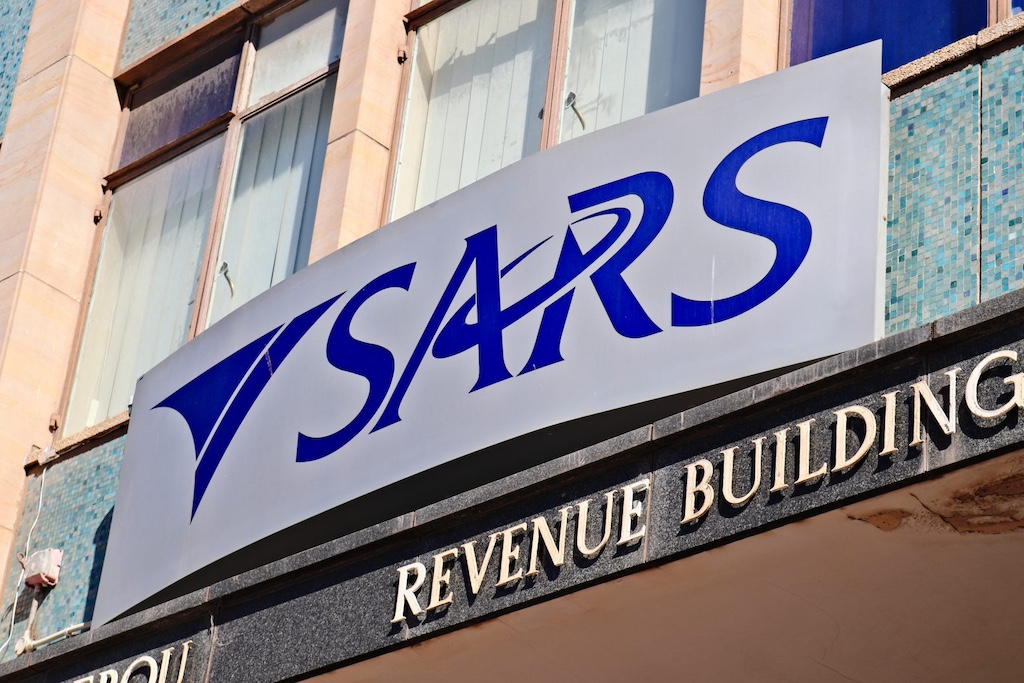
SARS says it monitors refrigerant imports using customs controls and risk profiling, but declined to disclose seizure statistics, common entry points or the indicators used to detect suspicious shipments. Photo: Shutterstock
Silence on seizures
SARS told Oxpeckers it monitors refrigerant imports through customs declarations, tariff classifications, permit controls and risk-based profiling.
The agency’s media desk said import patterns are assessed in line with South Africa’s environmental obligations and customs requirements.
But when Oxpeckers asked for seizure statistics, common entry points and information about suspected illegal brands, SARS declined to provide details.
“For operational reasons, SARS is not able to disclose detailed seizure statistics or identify common points of entry,” the agency said.
SARS also declined to identify brands, cylinder markings or indicators used by customs officials to identify suspicious shipments. “We do not publicly disclose specific brands, markings, risk indicators or operational selection criteria, as doing so may alert non-compliant traders,” the media desk said.
Industry bodies certify thousands of qualified refrigeration technicians, but acknowledge that unregistered operators working outside the formal system remain a significant challenge. Photo: Tulani Ngwenya
Registration without enforcement
David Botha of the South African Refrigeration and Air Conditioning Contractors Association (SARACCA) said the organisation’s role is to support professional standards and register practitioners, not to manage refrigerant quotas or police imports.
Reports of non-compliance are referred through the South African Qualification and Certification Committee for Gas Installers and Gas Practitioners (SAQCC Gas) platform, he said.
Botha said SARACCA is updating its certificates of compliance to strengthen monitoring of refrigerant recovery and recycling. More than 4,000 practitioners are certified to safely handle flammable refrigerants, he said.
But the bigger challenge remains the unknown number of technicians operating outside the formal system.
On illegal refrigerants and counterfeit products, Botha pointed back to the country’s borders. “Prevention is at the border/customs,” he said. “In the past, we helped train officials to recognise illegal refrigerants.”
His comments echoed concerns raised by other industry players: the formal sector has systems for certification and compliance, but those systems do not always extend into the informal market.

Climate resilience specialist Kiara Rampaul says illegal refrigerant trading threatens more than the environment, undermining the cooling systems that support healthcare, food security and climate adaptation. Photo: University of KwaZulu-Natal
The hidden cost
The consequences of illegal refrigerant trading extend beyond the industry itself.
Kiara Rampaul, a specialist in climate resilience, said refrigerant trafficking is not only an environmental issue. When cooling systems fail, the consequences can affect access to healthcare, education and economic opportunities.
“It is a direct threat to South Africa’s urban adaptation efforts,” she said.
Cooling systems are increasingly becoming essential infrastructure as temperatures rise, she explained. Hospitals rely on refrigeration to store medicines. Schools and public facilities depend on reliable cooling during extreme heat events. Food systems rely on refrigeration to prevent waste and protect public health.
Counterfeit or poor-quality refrigerants can reduce system efficiency, increase electricity consumption and shorten the lifespan of equipment. “Illegal flows compromise climate adaptation investments and place pressure on already constrained municipal resources,” Rampaul said.
The impacts are not evenly distributed, she added. “The burden is disproportionately experienced by women, young girls, young children, older persons and individuals with pre-existing health conditions.”
UPDATES:
On August 25 2026, SARS responded to the Oxpeckers PAIA request regarding seizures of A-Gas cylinders. Customs officials recorded that between 2019 and 2026 there were no seizure or forfeiture records under its sea or air modalities. However, the Land Modality unit reported that cylinders had been detained at the Lebombo border post with Mozambique. The importer was penalised and instructed to return the goods to Mozambique due to health and safety concerns. SARS further noted that the importer did not hold an import permit, and the goods were not warehoused or formally seized.
On August 12 2026 A‑Gas confirmed, via a Certificate of Analysis shared with Oxpeckers, that the R22 cylinder tested was a genuine, legally imported product meeting AHRI 700 specifications. The offence lies in its sale to uncertified handlers, which contravenes South Africa’s Occupational Health and Safety Act (Act 85 of 1993) and the Pressure Equipment Regulations (2009), requiring refrigerants to be handled only by SAQCC‑registered “Authorised Persons”.
This investigation by Oxpeckers associate Tulani Ngwenya is part of a series that exposes the human cost of energy, supported by the Oxpeckers #PowerTracker programme, New Economy Hub and Ford Foundation
.