
28 Apr Locked into coal: South Africa’s broken transition
Delayed coal closures are keeping ageing power stations online – raising questions about who is shaping the energy transition, and at what cost. Tulani Ngwenya investigates for #PowerTracker.
Photos & videos: Ihsaan Haffejee. Data&viz: Roxanne Joseph

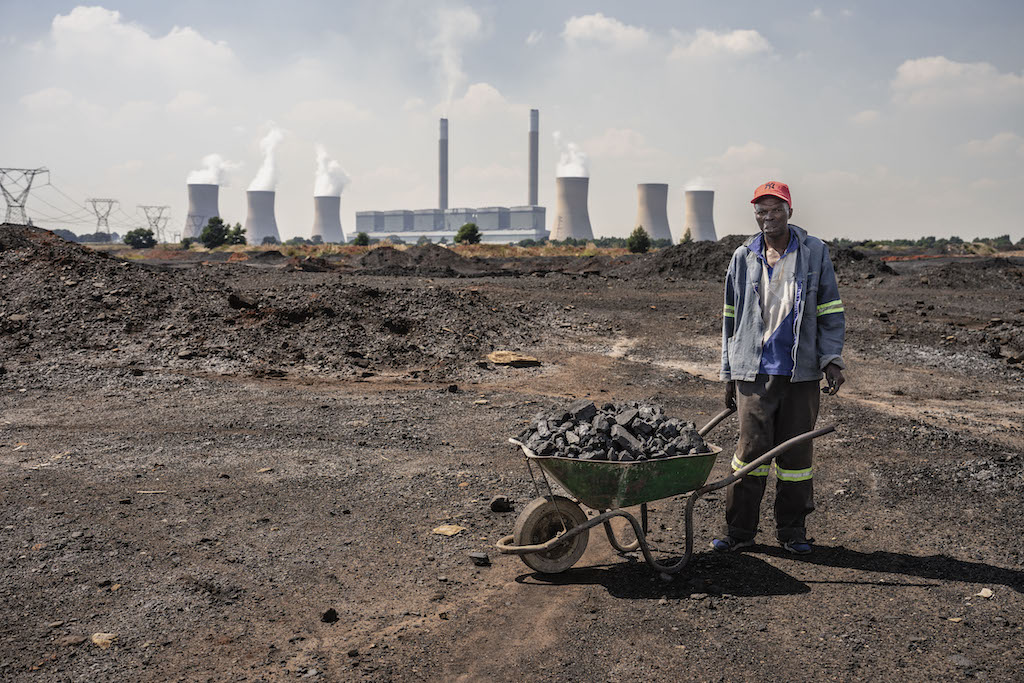
Communities living in the shadow of ageing power stations depend on coal for basic household energy needs. Pictured here, a local resident collects coal from an unrehabilitated coal mine near the Duvha Power Station. Photo: Ihsaan Haffejee
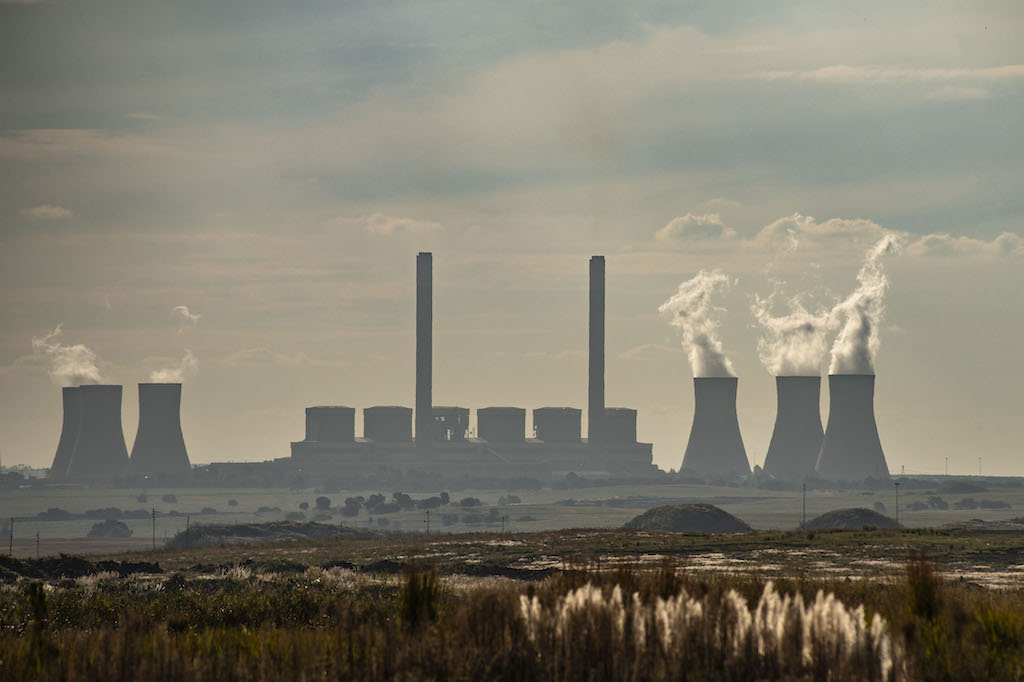
Decommissioning of Duvha, one of 14 coal-fired power stations still anchoring the national grid, has been delayed to at least 2035. Photo: Ihsaan Haffejee
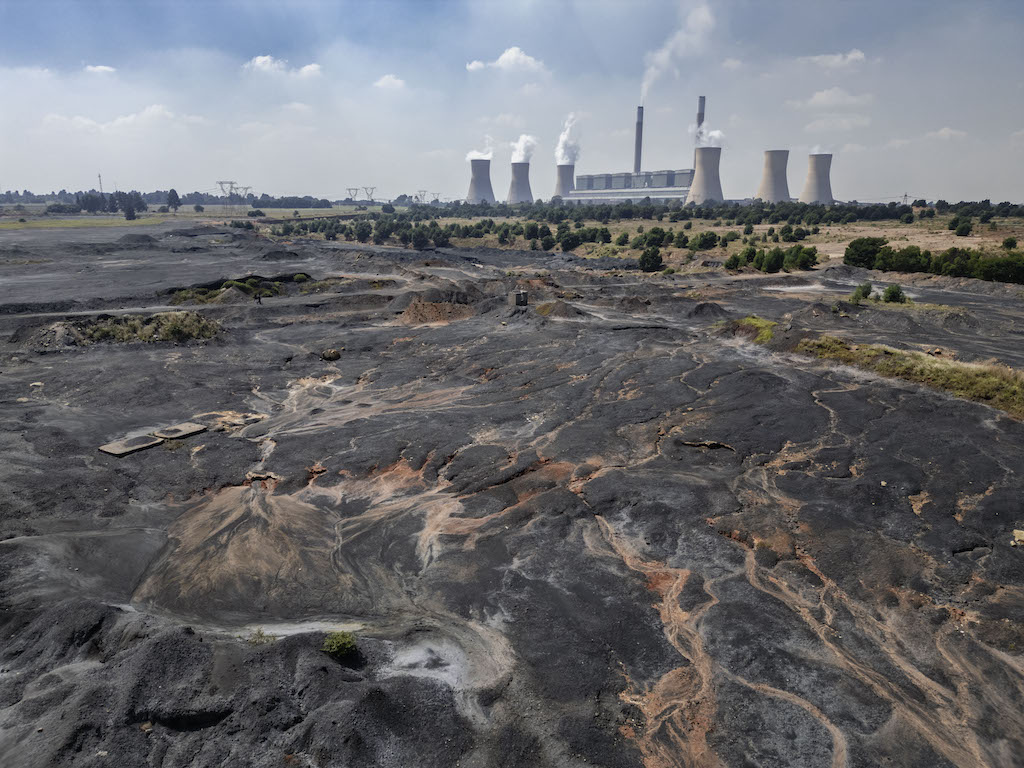
An unrehabilitated coal mine near the Duvha Power Station. Photo: Ihsaan Haffejee
South Africa’s latest coal-fired power station, Kusile, took decades to finish building, cost hundreds of billions of rands, and became one of the most controversial infrastructure projects in the country’s energy history.
Now, finally fully operational, it is being celebrated as a solution to a power crisis – even as the country has formally committed to ending its dependence on coal, the fossil fuel that powers it.
The completion of Kusile’s sixth and final unit in 2025 marked the end of a construction programme that began in 2008, ballooned from an initial budget of around R80-billion to an estimated R161-billion, and became a byword for state capture, contractor corruption and engineering failure. For years, partially built units sat idle and completion dates were missed repeatedly.
When it entered commercial operation in September 2025, national utility Eskom declared the end of its multi-decade build programme. Load shedding – the rolling blackouts that blighted homes and businesses for more than a decade – had already eased significantly, and Kusile was held up as proof that the country had turned a corner.
During an April 2026 visit to the power station, based near Witbank / Emalahleni in the Nkangala District of Mpumalanga, President Cyril Ramaphosa described it as “the backbone of South Africa’s electricity supply”, together with Medupi power station in Limpopo. Both stations are designed for an operational lifespan of 50 years.
This means that Kusile will only retire in 2060, three decades beyond government commitments to phase down coal by 2030 in order to contribute to international efforts to reduce harmful greenhouse gas emissions.
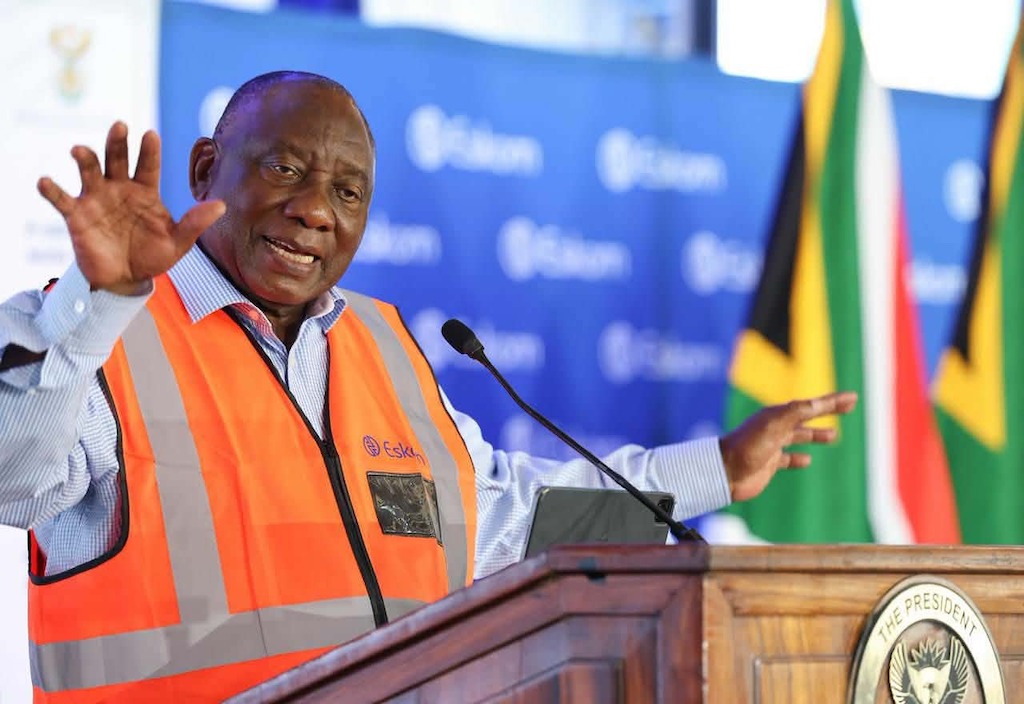
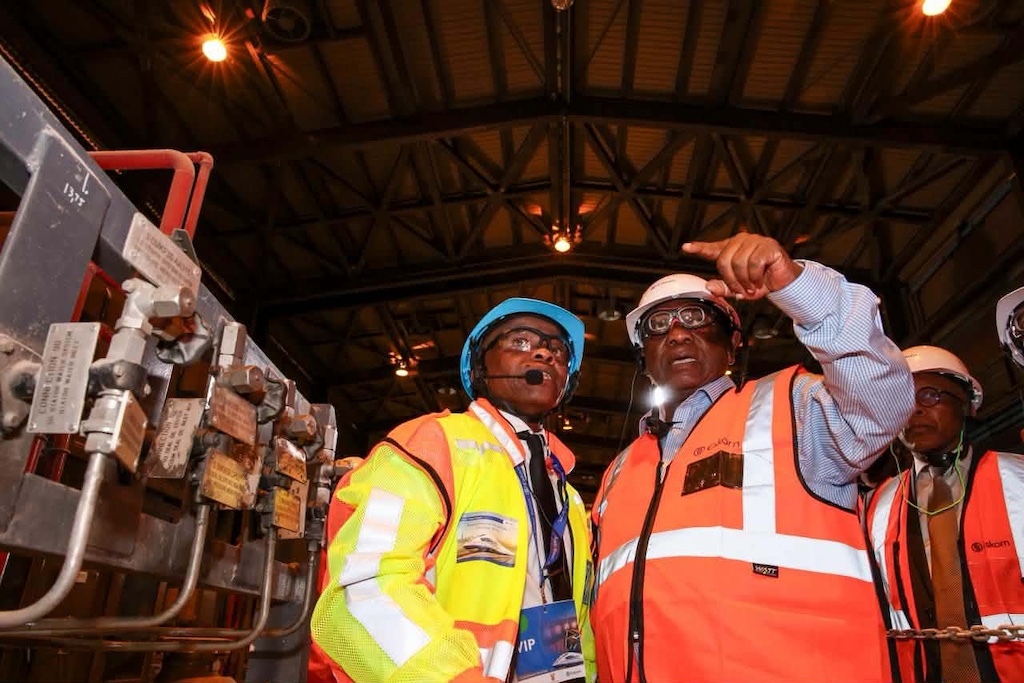
President Cyril Ramaphosa during an oversight visit at Kusile Power Station on April 10 2026. Photos: Government Communications Information System
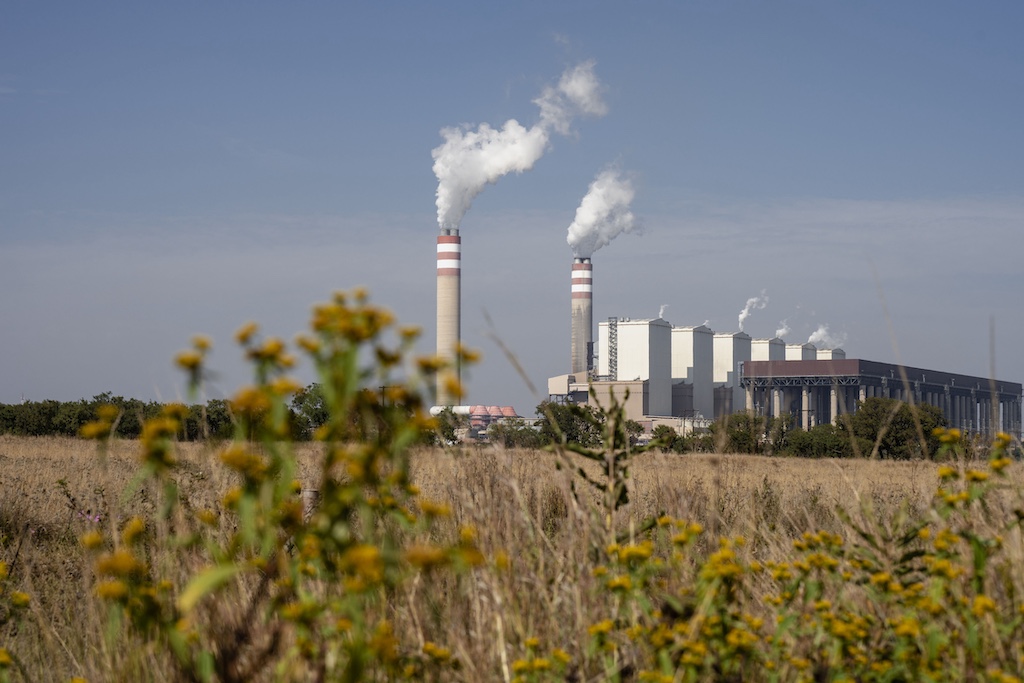
Kusile Power Station is expected to be decommissioned in 2060. Photo: Ihsaan Haffejee
Coal is still king
The president’s visit to Kusile in April signalled that the country’s ambitions to wind down coal are slipping.
As the latest data collated and shared by the Oxpeckers #PowerTracker mapping tool shows, 14 coal-fired power stations in Mpumalanga and Limpopo still anchor the national grid, with nearly 38,000MW of installed capacity. The tool also identifies 16 coal mines in both provinces, producing about 125-million tonnes of coal annually.
According to the Integrated Resource Plan of 2019, which set out the country’s energy mix and procure generation capacity, more than 11,000MW of coal capacity was expected to be retired by 2030. However, Eskom has delayed the shutdown of several ageing stations due to electricity supply risks.
Only one power station has been closed so far. As of April 2026, only Komati near Bethal had been retired, ending its generating capacity of 1,140MW. According to #PowerTracker, “Eskom envisions that the Komati site will eventually provide 370MW of solar, wind and battery storage power to the grid”.
Other power stations including Hendrina, Camden and Grootvlei are now expected to operate beyond previously determined timelines, with some units likely to remain online beyond 2030. Duvha, Kendal, Kriel and Matimba power stations will only be decommissioned between 2035 and 2040.
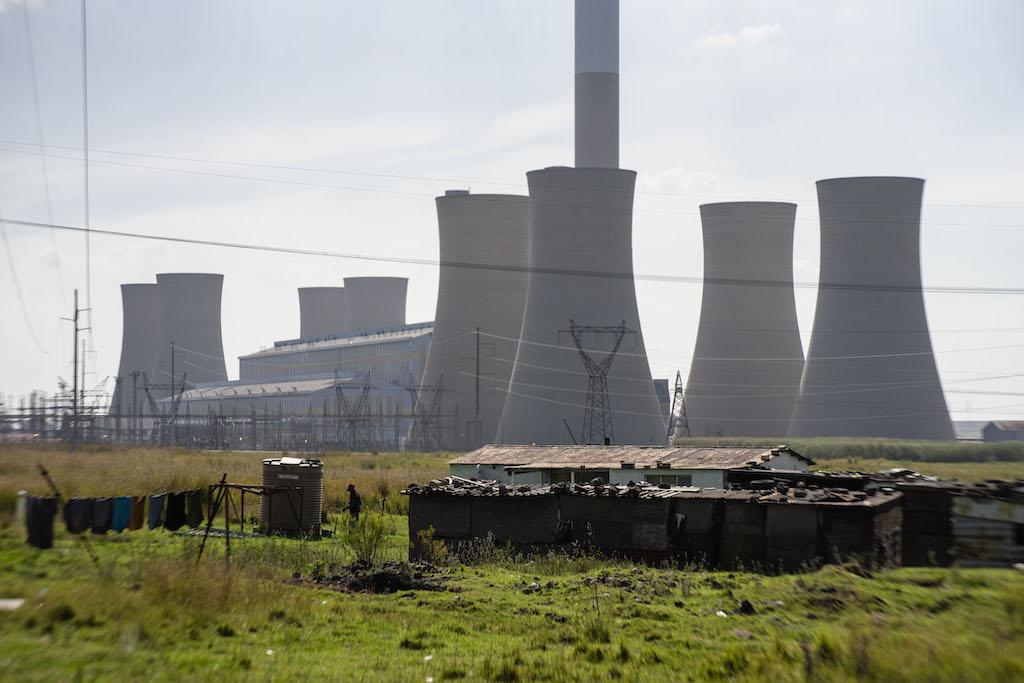
South Africa’s only closed coal plant, Komati Power Station, had a generating capacity of 1,140MW. Photo: Ihsaan Haffejee
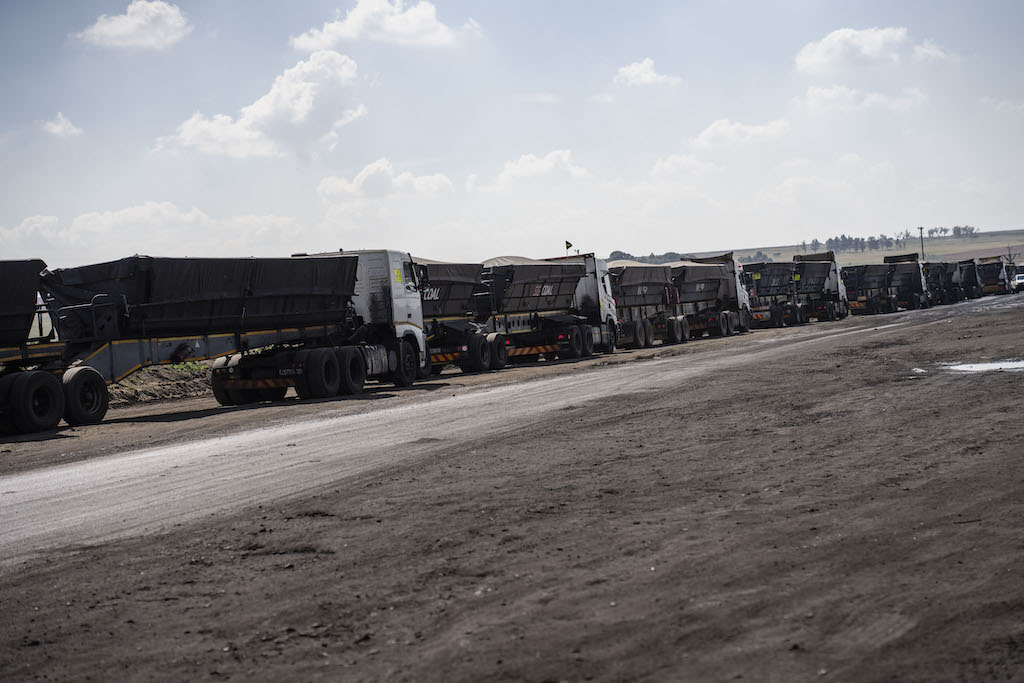
Coal trucks queue to pick up coal at a colliery near Komati town. Photo: Ihsaan Haffejee
Politics, policy and mistrust
Researchers say the slowdown is not only technical – it is also political.
Julia Taylor, a researcher at the Southern Centre for Inequality Studies at the University of the Witwatersrand, said the Just Energy Transition (JET) introduced new tensions into South Africa’s policy environment.
“In a paradoxical way, the JET agreement with global north countries created suspicion locally,” she said. “It shifted priorities and reduced buy-in from some domestic actors.”
Taylor said consultation failures have deepened mistrust: “People were informed, not engaged. Eskom should be going to communities and asking what the transition means for them.”
She also raised concerns about whether the transition to renewables is delivering on its core promise.
“I am concerned that the transition is proceeding in an unjust way,” Taylor said. “We should be tracking electricity prices, energy poverty, unemployment and inequality to understand whether it is working.”
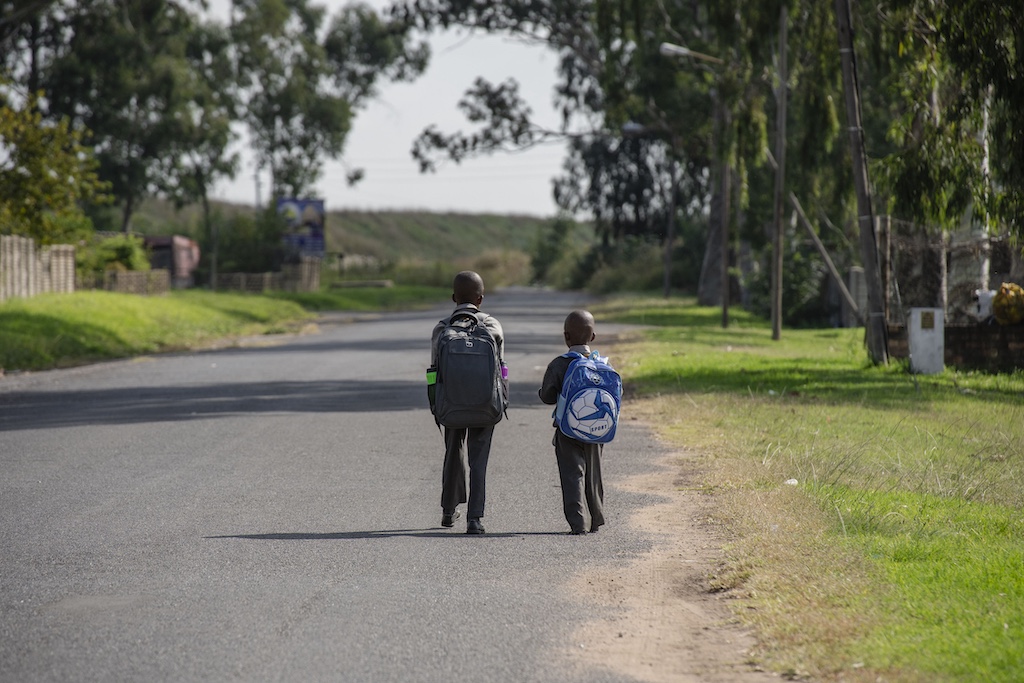
Two young boys returning from school walk down the road in the town of Blinkpan near Komati. Photo: Ihsaan Haffejee
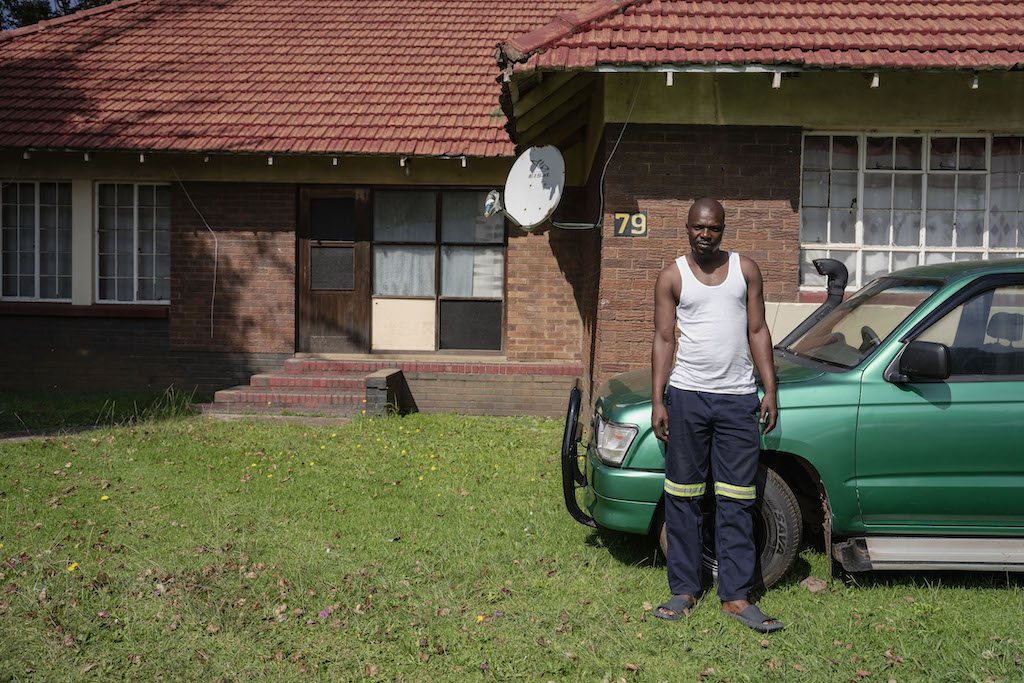
Vusi Sibiya, a former worker at Komati Power Station, is now unemployed. Photo: Ihsaan Haffejee
International debt
Debt tied to fossil fuel infrastructure keeps coal plants alive to repay loans, said Alia Kajee of civil society grouping Fair Finance Coalition: “This locks South Africa into the mineral-energy complex,” she said.
Kajee explained that public finance institutions act as guarantors, “ensuring profits are realised by private actors while vulnerable communities carry the lived reality of extraction”.
She said lack of transparency around JET processes leaves workers and households least likely to know how funds are realised. “Without radical transparency, we risk a transition of murky deals where a few benefit at the expense of those most vulnerable.”
She called for independent monitoring, community‑led oversight and non‑debt creating finance such as grants. “Accountability must be ensured through practical, justice‑centred mechanisms,” she said, warning that without them, funds pledged under the JET will bypass workers and households.
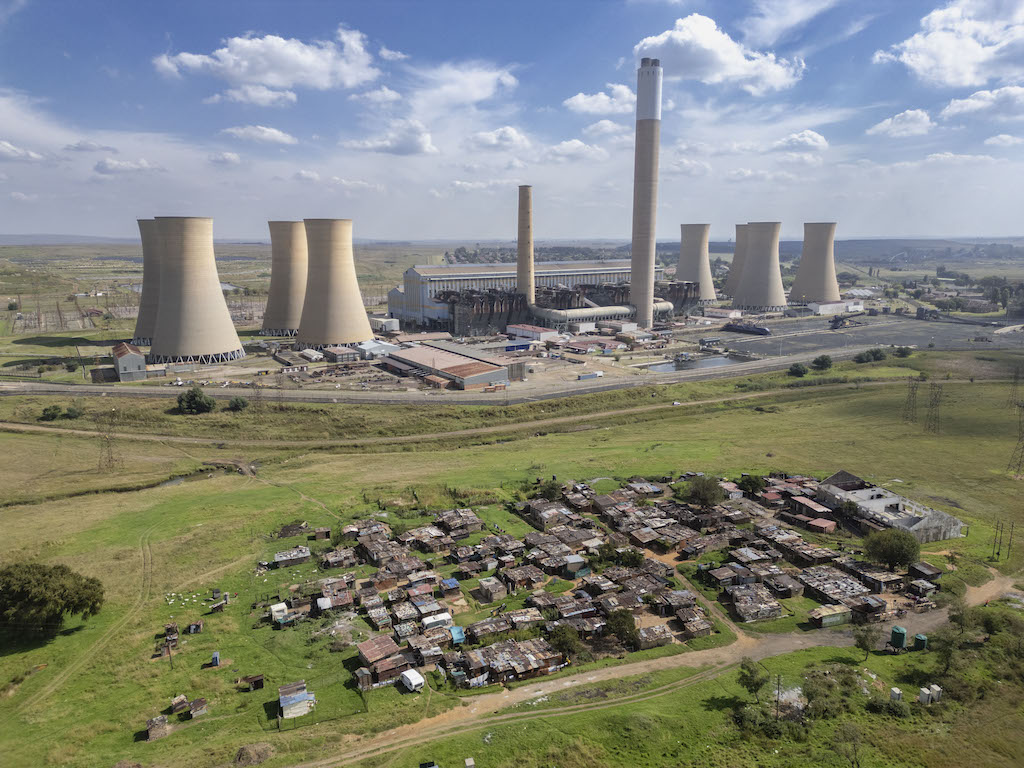
An informal settlement called ‘Big House’ situated just outside the decommissioned Komati Power Station. Photo: Ihsaan Haffejee
Climate targets under pressure
South Africa’s international climate commitments are tied, in part, to the coal phase-down.
The country’s nationally determined contributions (NDCs) – commitments made under the Paris Agreement to cut greenhouse gas emissions – set limits on how much the country can emit by 2025 and 2030. These targets were developed alongside the Integrated Resource Plan 2019, which assumed that a significant share of coal-fired power would be phased out over time.
Energy-sector emissions accounted for about 78% of national greenhouse gas emissions in 2022, making electricity generation the central lever for reducing emissions.
There is also a timing risk. South Africa’s emissions trajectory assumes a shift from a plateau into a decline in the 2030s. Delayed coal closures compress this transition window, increasing the likelihood of a more abrupt and potentially disruptive transition in later years.
Cynthia Moyo, climate and energy campaigner at activist group Greenpeace Africa, said the current trajectory raises serious concerns about whether South Africa can still meet its NDC commitments without significant policy reversal.
“South Africa’s NDC targets were designed around a planned decline in coal use,” she said.
“Every extension of a coal plant moves the country further away from that pathway and increases the scale of cuts required later. What we are seeing is not just delay – it is a structural widening of the gap between policy commitments and implementation.”
She added that this gap is already reshaping the country’s emissions outlook.
“If coal remains online longer than planned, the 2030 targets become significantly harder to achieve, and the transition after that point becomes far more abrupt and economically disruptive.”
As President Ramaphosa left Kusile Power Station on April 10, journalists fired questions at him. Oxpeckers asked, “Is the country’s climate commitment slipping out of reach?”
Ramaphosa answered the group collectively and sidestepped the climate query entirely. His broad response echoed his speech minutes earlier at Kusile, with no mention of emissions targets or Paris Agreement timelines. Instead, he folded the answer back into the government’s core message: securing electricity supply, stabilising the grid, and sustaining economic growth.

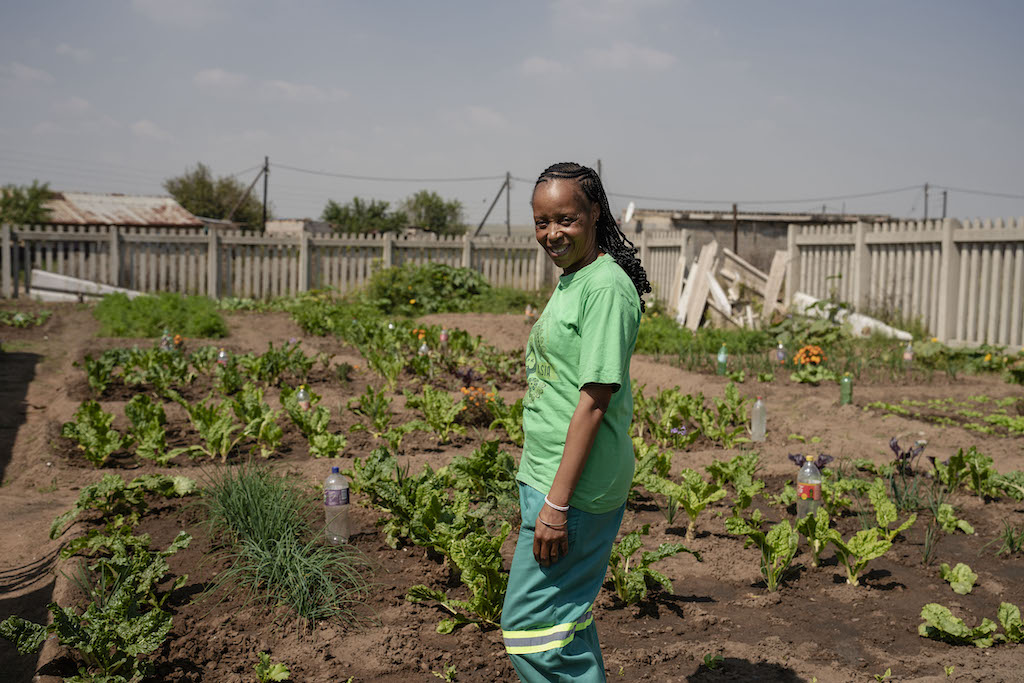
Communities neighbouring coal infrastructure bear the most direct health consequences of delayed emission compliance. Pictured here is activist Elizabeth Motloung in Masakhane, close to Duvha station. Photo: Ihsaan Haffejee
Pollution and public health
The consequences are not only global – they are local.
South Africa’s minimum emission standards regulate pollutants such as sulphur dioxide and particulate matter. Many older coal plants cannot meet these standards without costly retrofits.
In 2025, the government granted time-limited exemptions that allow several plants to continue operating beyond compliance deadlines.
Environmental organisations argue that this prolongs exposure to harmful air pollution.
A report released on April 22 2026 by Greenpeace Africa, the Centre for Research on Energy and Clean Air, and non-profit organisation groundWork estimates that delaying the phase-out of coal could result in 32,000 additional premature deaths between 2026 and 2050.
“Our analysis shows that the health impacts of coal pollution are severe, widespread, and entirely preventable,” said Daniel Nesan, an analyst at the Centre for Research on Energy and Clean Air.
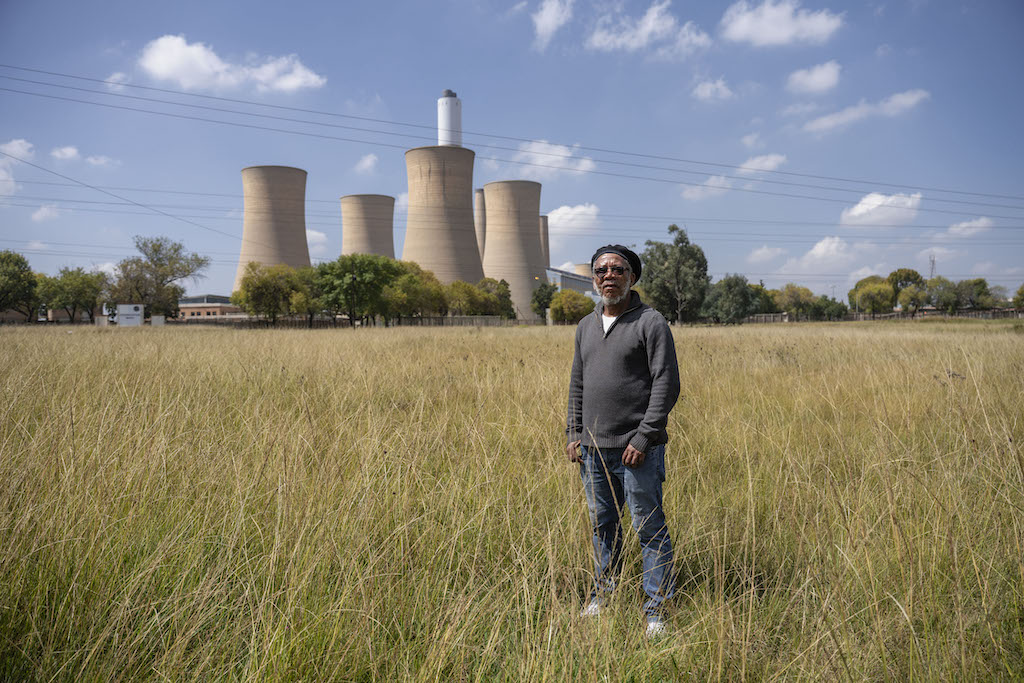
Martin Sefawa, community leader and Komati town resident, represents the Mining Affected Communities United in Action (MACUA). Photo: Ihsaan Haffejee
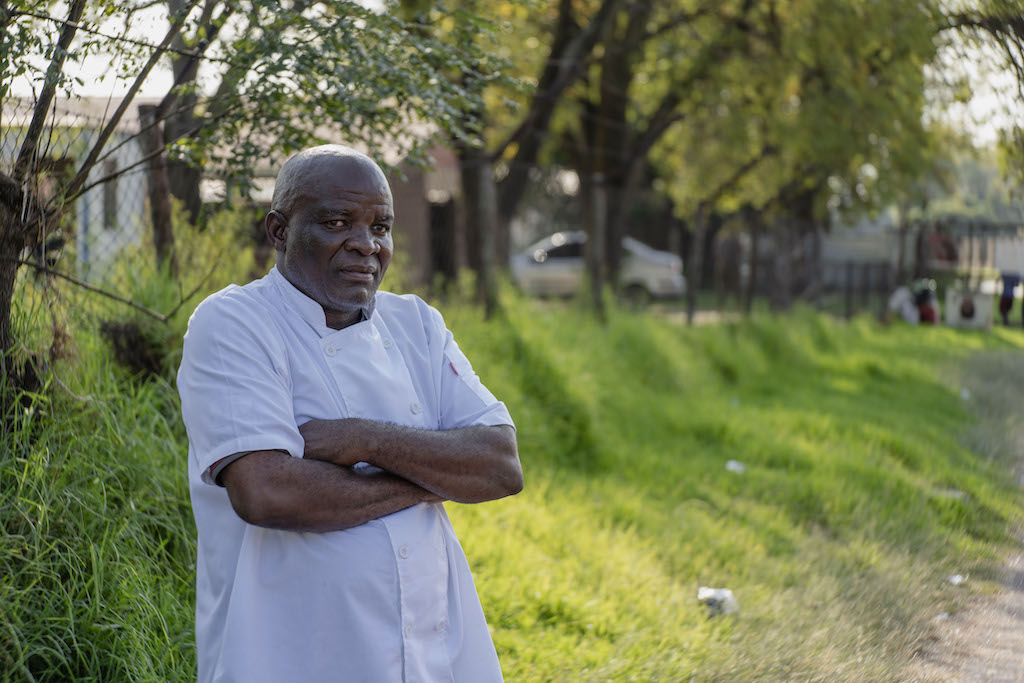
Buti Rakgetse, a former coal mine worker, now works at a local butchery in Komati town. Photo: Ihsaan Haffejee
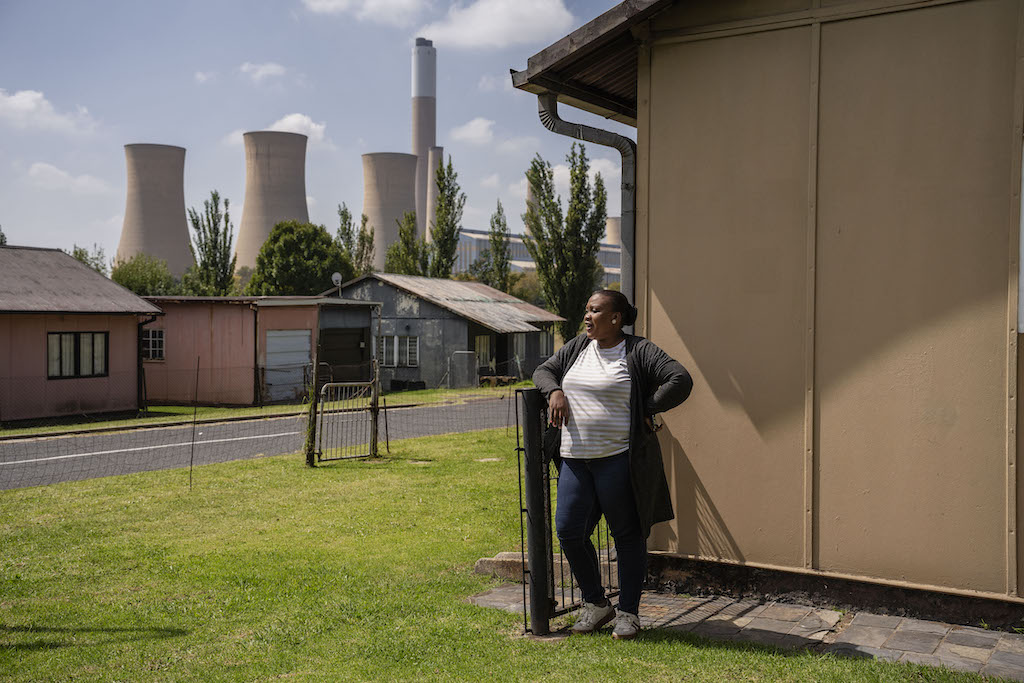
Gloria Modise, a Komati resident, says the energy transition remains an abstraction for her. Photo: Ihsaan Haffejee
Communities left behind
In Komati and surrounding areas, residents describe a transition that has already happened, but without support.
“There’s a massive information gap between the community and stakeholders,” said Martin Sefawa, a community leader from the Mining Affected Communities United in Action (Macua). “The closure of Komati happened without proper consultation. Massive job losses followed.”
Residents say the economic effects have been immediate.
“It’s a coal area. When you shut down the power, you shut down the people,” said Buti Rakgetse, a former coal mine worker. “Komati was alive. Now it’s dead.”
For others, the issue is exclusion.
“We were never properly informed,” said Gloria Modise, a local resident. “I don’t know what the just transition is. People come, take names, and leave.”
In Emalahleni, similar concerns persist.
“We are not included in any planning,” said Elizabeth Motloung, a resident from Masakhane informal settlement. “You just hear that opportunities exist – and they’re already taken.”
Environmental activist Zanele Msibi said the burden of the transition is falling unevenly.
“When Komati closed, it brought a lot of burden to women,” she said. “There is no trust. For many years there have only been empty promises.”
With 32,000 additional premature deaths projected if coal phase-out is further delayed, and international climate finance tied to a transition that is stalling, the gap between South Africa’s stated commitments and the reality on the ground continues to widen.
Find the data collated for this investigation under the Oxpeckers Get the Data section here.
You can also track the closure of coal stations and coal-based energy sources on our #PowerTracker tool here
This investigation was supported by the New Economy Hub and Ford Foundation