
08 Apr The fence that isn’t: Wildlife, disease and neglect on the SA-Eswatini border
A veterinary cordon fence meant to stop disease is failing – allowing wildlife from a South African private reserve to devastate crops, kill livestock and heighten foot-and-mouth disease risks for rural communities in Eswatini. Vuyisile Hlatshwayo investigates
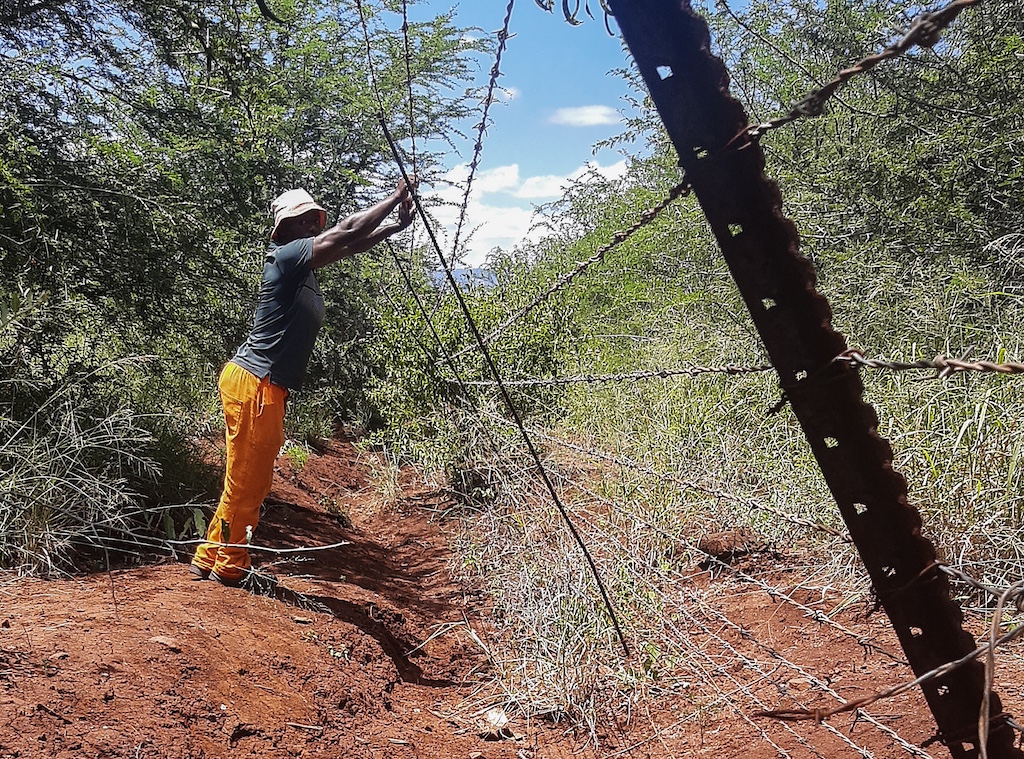
Local resident Senzo Dlamini holds up the leaning Eswatini-South Africa international boundary fence in Lavumisa in the southern Shiselweni region on February 7 2026. Photo: Vuyisile Hlatshwayo/SA|AJP
A cross-border human-wildlife conflict along the southern Eswatini–South Africa border is exacting a heavy toll on rural communities on the Eswatini side – yet authorities continue to neglect the crisis.
At the centre of the problem is Harloo Private Reserve, a wildlife and hunting reserve situated in the Pongola area of South Africa’s KwaZulu-Natal province, which uses a veterinary cordon fence as its game fence. Harloo borders Chibini, Mgampondo and Vuvu settlements under the Lavumisa chiefdom in southern Eswatini.
Wildlife escaping through or under the barrier has led to persistent crop raids and livestock losses, deepening food insecurity, poverty, and the risk of foot-and-mouth disease (FMD) outbreaks in neighbouring Eswatini communities.
The veterinary cordon fence was constructed during the colonial era to control the spread of animal diseases by limiting livestock movement between the two countries. Archived records from 1960s agreements on Swaziland territorial boundaries, reviewed by this reporter, confirm that the fence primarily served disease-control purposes, while also marking the international boundary.
Dr Thembi Ndlangamandla, national focal person for the FMD Unit in Eswatini’s Ministry of Agriculture, confirms that these historical arrangements remain in force. Under a shared-responsibility agreement, South Africa is tasked with constructing and maintaining the fence, while Eswatini is responsible for patrolling it.
“South Africa is tasked with the construction and maintenance of the border fence from Lavumisa westwards to Hebron, while Eswatini must patrol this stretch of land,” she explains.
However, an investigation by this reporter, supported by the Southern Africa Accountability Journalism Project (SA/AJP), revealed that this arrangement largely exists only on paper.
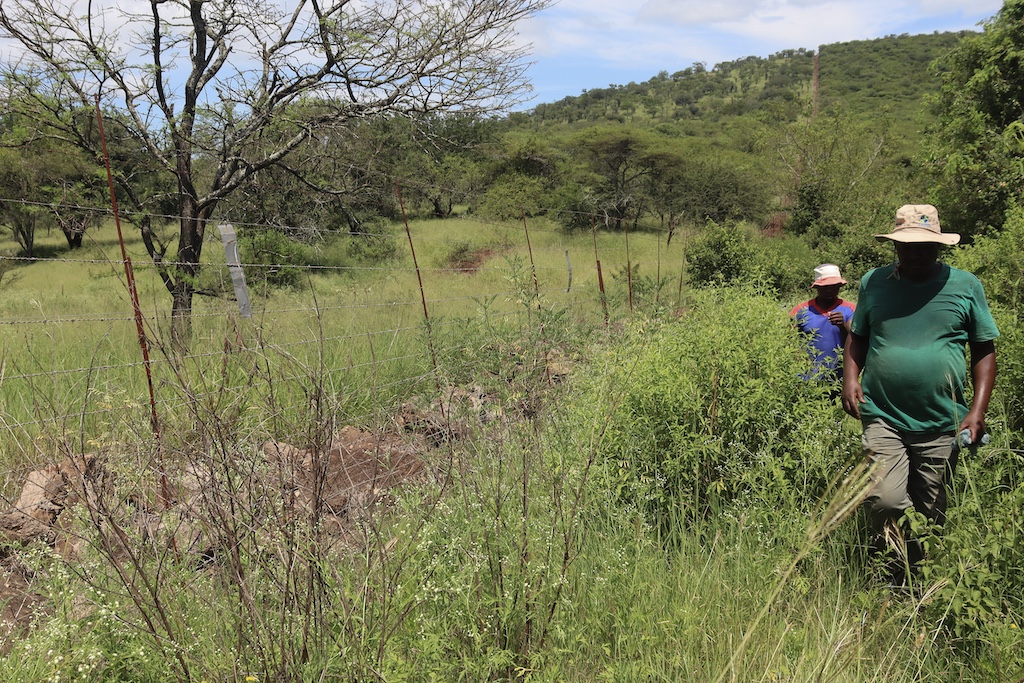
A community member from Somntongo in Lavumisa, in Eswatini’s southern region, walks along the fence searching for gaps where animals from Harloo Private Reserve escape to raid and destroy the fields of neighbouring families, on January 31 2026. Photo: Mefika Ndlangamandla/SA|AJP
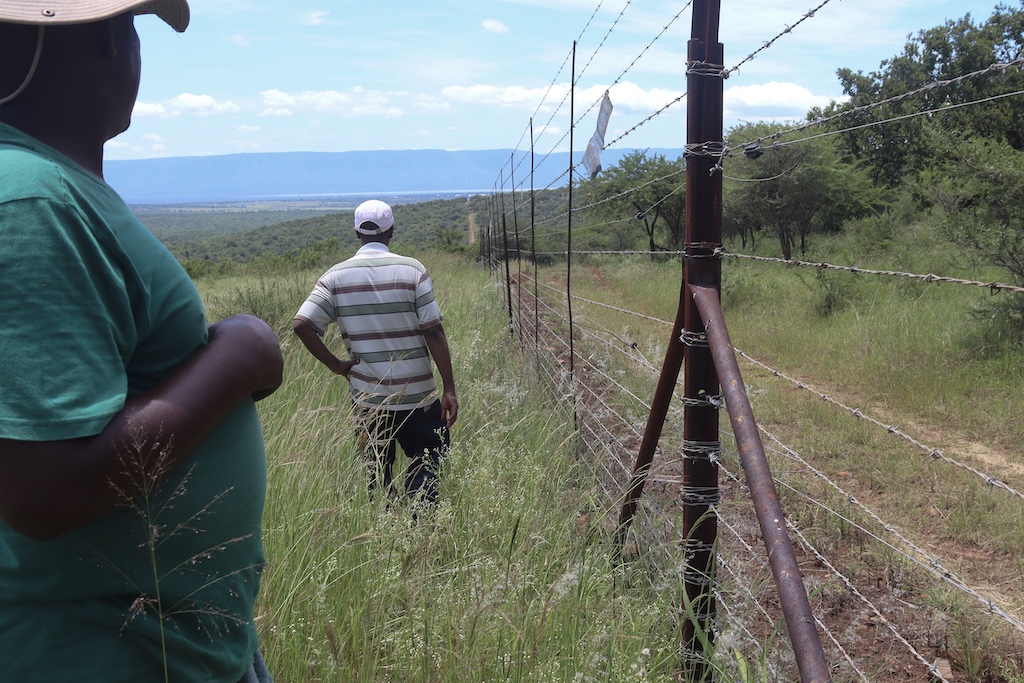
The journalist inspecting the perimeter fence separating Harloo Private Reserve in South Africa and Eswatini on January 31 2026. Photo: Mefika Ndlangamandla/SA|AJP
International boundary fence
Harloo Private Reserve appears to be in contravention of the Animal Diseases Act (No. 35 of 1984) by altering and using the international boundary fence as a game fence. Section 18(1)(a) of the Act empowers only the director-general of agriculture to erect, alter, or use such a fence to control the movement of livestock and wildlife.
Subsection 7(a) further states that no person may, without written authority from the director-general, remove, alter, or impair the effectiveness of any such fence. Subsection 8 stipulates that any fence erected along international boundaries is deemed to have been established for controlled purposes under the Act.
By repurposing the boundary fence, Harloo Private Reserve has rendered it ineffective for disease control. Wildlife incursions into Lavumisa communities continue unabated, intensifying cross-border human-wildlife conflict and increasing the risk of FMD outbreaks in Eswatini. Bush pigs, jackals and hyenas – linked to crop destruction and livestock losses – have established a presence in the Lavumisa–Nquthu forests along the border.
Manzini-based veterinarian Dr Isaac Magagula explains that bush pigs, which come into contact with buffaloes – the primary carriers of FMD – can transmit the disease to livestock. Hyenas and jackals, although not cloven-hoofed, may contract the virus by feeding on infected carcasses.
“These wild animals must be contained within a secure reserve using a game-proof fence,” Magagula said.
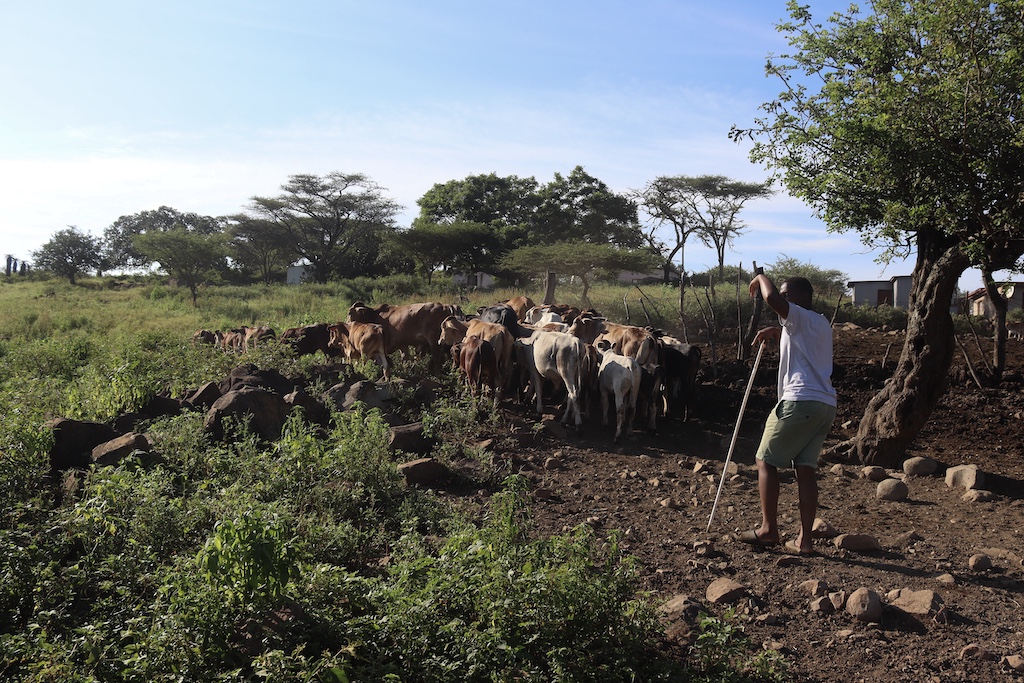
A member of the Mbhamali family in Somntongo community in Lavumisa, in Eswatini’s southern region, tending to calves which have been separated from the cows to protect them from wild animals that have escaped from Harloo Private Reserve, on January 31 2026 Photo: Mefika Ndlangamandla/SA|AJP
Endemic FMD
Ndlangamandla added that cattle from the Lavumisa–Hluthi subregion tested positive for the Southern African Territories (SAT 2) strain of FMD, which is endemic to the Pongola area across the border from Harloo Private Reserve.
“We tested many dip tanks in Lavumisa during the outbreak. The first infected animal was detected in this subregion,” she said – evidence, she argued, of the fence’s failure as a disease-control measure.
Somntongo MP Sandile Nxumalo believes the source of infection is clear: wildlife escaping from Harloo Private Reserve in KwaZulu-Natal, an FMD hotspot. He questions why Eswatini’s agriculture minister has not engaged South African authorities over the altered and ineffective boundary fence.
“Our agriculture minister hasn’t visited the area to identify the gaps used by wildlife crossing into Lavumisa. He hasn’t raised the issue of the private reserve as a source of FMD – yet he knows South Africa is the epicentre,” Nxumalo said.
Field visits by this reporter confirmed that Harloo Private Reserve uses the international boundary fence as its game fence. Accompanied by local guides Senzo Dlamini, Thokozani Mbhamali and Thembinkosi Gina, observations revealed a horizontal barbed-wire fence, supplemented only by two strands of electric wire. It lacks the high-tensile structure and jackal-proof netting required to prevent animals from burrowing underneath.
Yet the Ezemvelo KwaZulu-Natal Wildlife fencing requirement for game reserves with buffaloes is a minimum of three strands of electrified fencing running on offsets off the main fencing facing inwards, with a minimum of 5,000 volts throughout the system – no cable or buffer fence required.
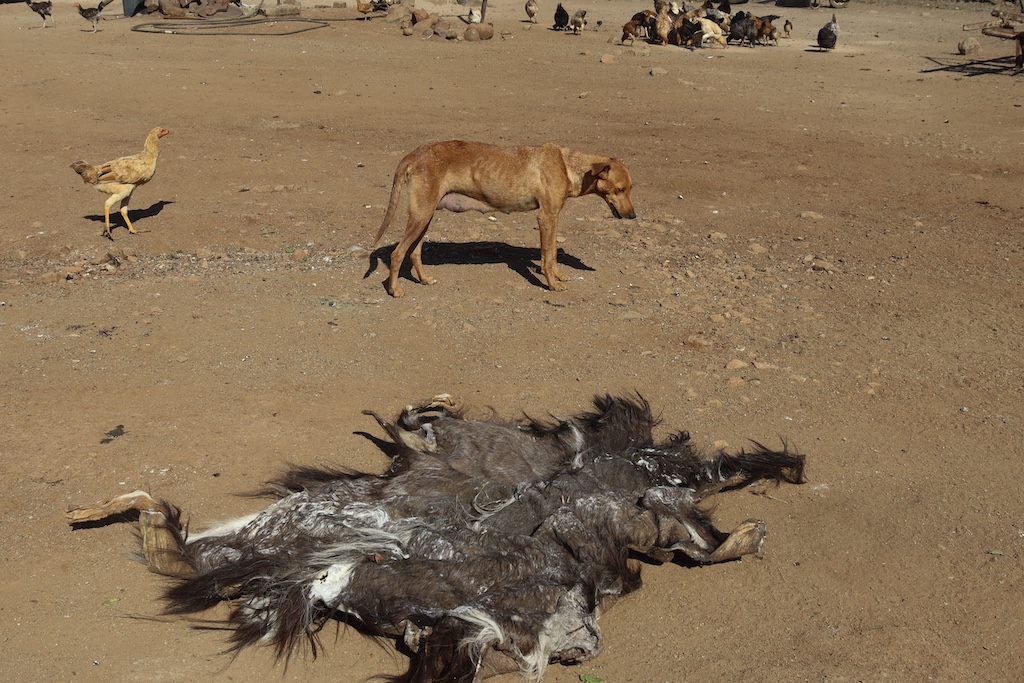
The skin of an nyala, shot by a member of the Mbhamali family after the animal strayed into their fields. The family said the nyala had escaped from the Harloo Private Reserve. Photograph Mefika Ndlangamandla/SAAJP
Wildlife incursions
Somntongo resident Thokozani Mbhamali questions whether the fence is consistently electrified, citing ongoing incursions by bush pigs, jackals and hyenas.
“The owner only added two electric wires and extra barbed strands. The fence doesn’t stop bush pigs – their thick skin and fat protect them,” he said.
The reserve may also be contravening the Fencing Act (No. 31 of 1963), which recognises jackal-proof fencing as the standard for boundary fences. The law obliges landowners to upgrade inadequate fencing to prevent predator movement.
In addition, Section 17(1) requires landowners to clear vegetation up to 1,524m on either side of the fence line. At Harloo, bushes remain overgrown, obscuring the fence and providing cover for wildlife and illegal hunters.
On human protection, the Ezemvelo KwaZulu-Natal Wildlife fencing guidelines emphasise the need for the protection of people living on the outskirts of game reserves with dangerous game to mitigate human-wildlife conflict.
When asked to comment on the written authority of Harloo Private Reserve to use the international boundary fence and compliance with the provincial guidelines, Ezemvelo KZN Wildlife manager: communications, Musa Mntambo, declined to comment but advised this reporter to forward his questions to Rudzani Mudau, national coordinator for Lubombo Transfrontier Conservation Area, because the matter involves an international boundary.
Efforts to get comment from Mudau on whether the Harloo Private Reserve has written authority to use the international boundary as its game fence remained unanswered by the time of publication.
The Principal Secretary in the Eswatini Ministry of Agriculture, Sydney Simelane, criticises the reserve’s fencing practices, noting the absence of a double-fence system with a buffer zone.
“The owner should have constructed a double fence with a passage between them to prevent animals from crossing directly. This is a serious issue – it is causing hunger and undermining food security for emaSwati trying to improve their livelihoods,” said Simelane.
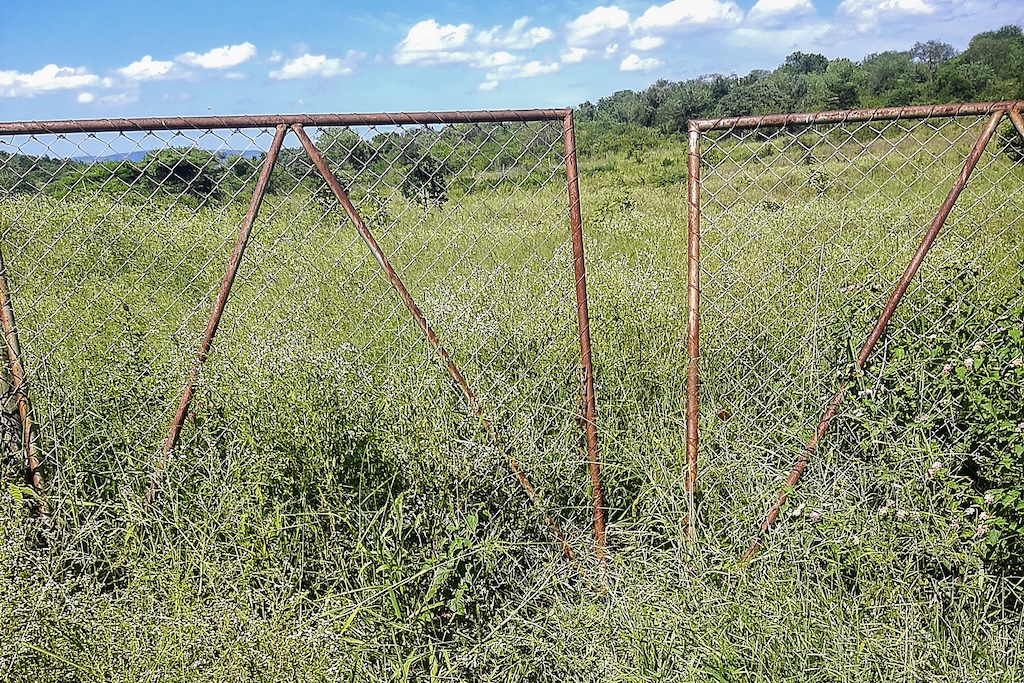
A gate left open into the abandoned and overgrown Phakamani Bomake Community Garden in Lavumisa in the southern Shiselweni region on February 7 2026. Photo: Vuyisile Hlatshwayo/SA|AJP
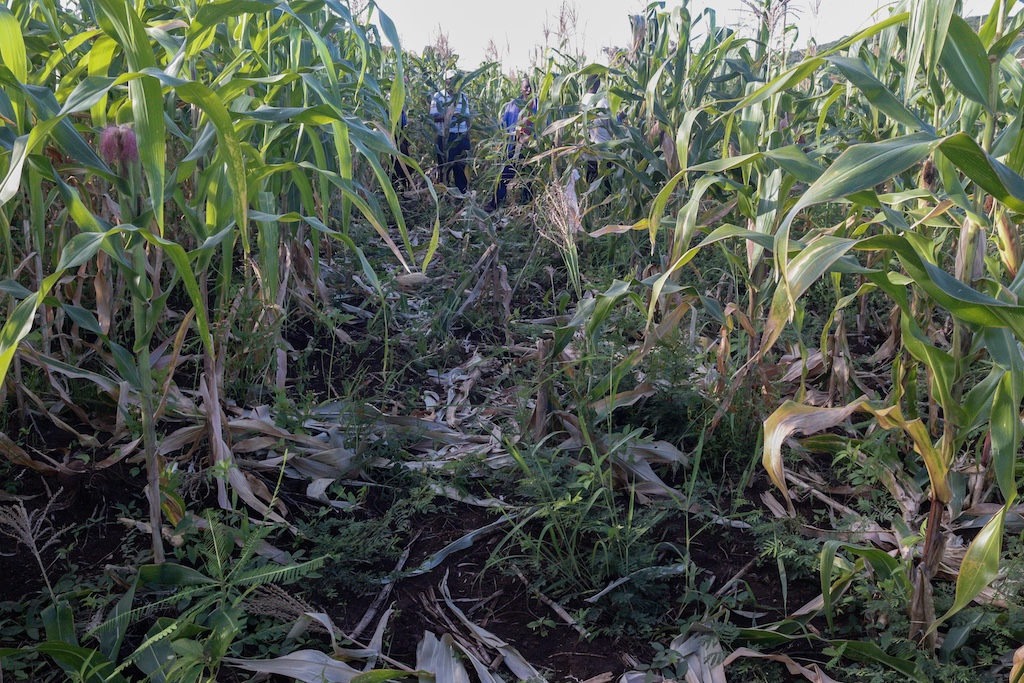
A maize field in the Somntongo community on January 30 2026, after being damaged by warthogs. Photo: Mefika Ndlangamandla/SA|AJP
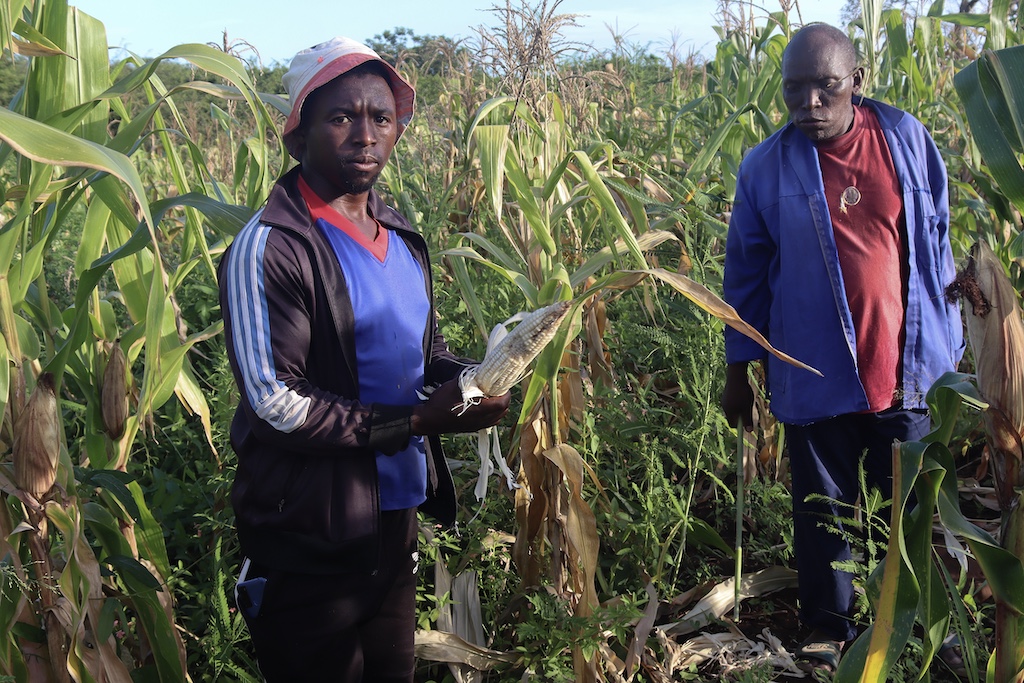
Senzo Dlamini shows a fresh bite mark left by a warthog on his maize crop in the Shiselweni region of southern Eswatini on January 30 2026, as fellow affected farmer Masentini Gina looks on. Photo: Mefika Ndlangamandla/SA|AJP
Affected communities
As government response stalls, affected communities say they feel helpless. In Chibini, Senzo Dlamini showed patches of maize destroyed by bush pigs, pointing to freshly trampled stalks and stripped cobs.
“One wonders whether there will be enough food for my family, given these daily losses. I fear guarding my fields at night,” he said.
Thokozani Mbhamali echoed this distress, describing heavy livestock losses. “I’ve lost 11 calves. Now I separate them from their mothers when grazing. This is devastating – livestock is our food and income,” he said.
Siphiwe Gina, a member of the now-abandoned Phakamani Bomake Community Garden, says women in the area stopped farming after repeated crop raids.
“We used to grow vegetables and maize to feed our families and pay school fees. But the destruction became so frequent it no longer made sense to continue,” she said, gesturing at the overgrown garden.
Efforts by Somntongo MPs Sandile Nxumalo and Dumisani Mbhamali to raise the issue in the 10th and 11th Parliaments have yielded no results.
Interviews with the Minister of Agriculture, Mandla Tshawuka, and Principal Secretary Simelane reveal contradictory positions.
The minister claimed ignorance: “Diplomatic issues are handled through the ministry of foreign affairs. We’ve raised issues like porous fences and livestock theft – but crop raids by South African wildlife have not reached my office,” he said.
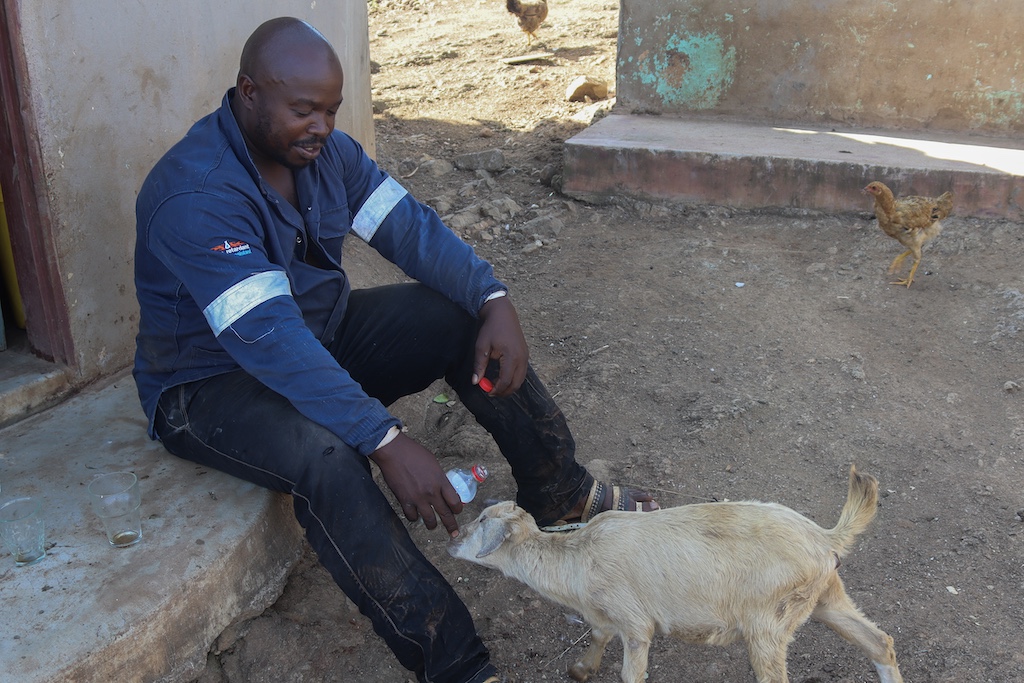
Sithembiso Mbhamali from Somntongo feeding an orphaned goat whose mother was killed by a jackal which he believes escaped from Harloo Private Reserve. Photo: Mefika Ndlangamandla/SA|AJP
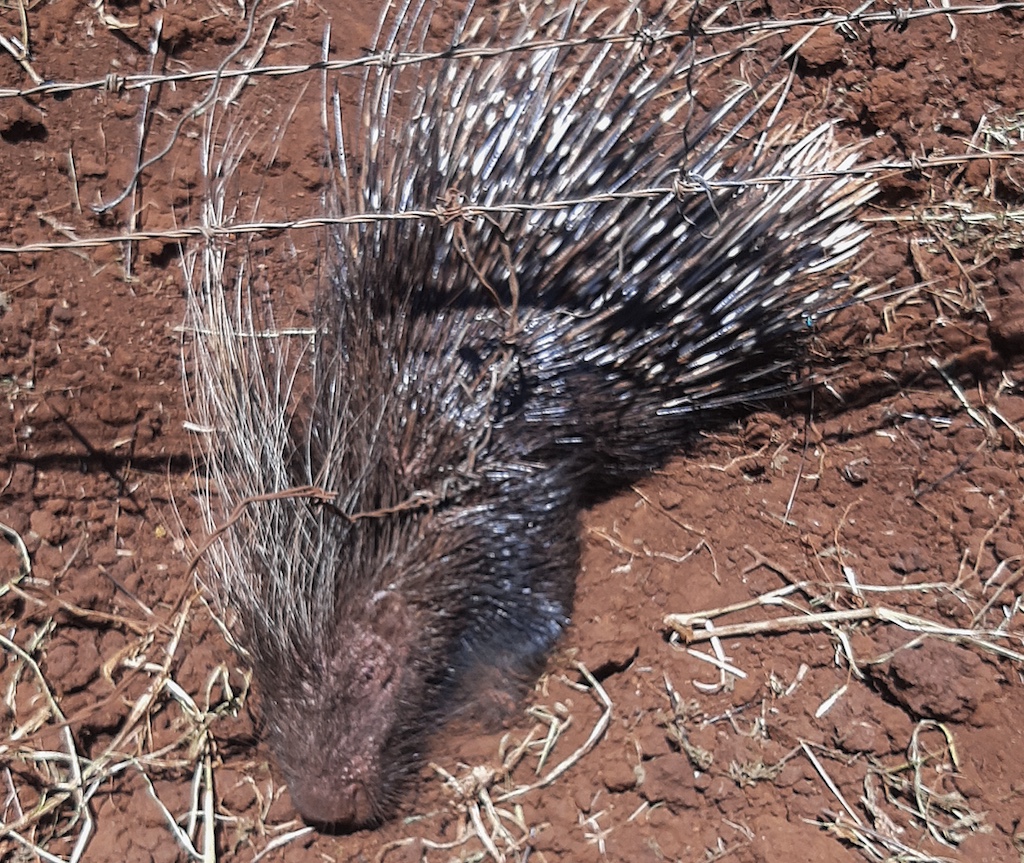
A trapped porcupine found along the southern Eswatini-South Africa border in Lavumisa in the Shiselweni region, a few metres away from the adjoining Harloo Private Reserve, on February 7 2026. Photo: Vuyisile Hlatshwayo/SA|AJP
Diplomatic constraints
Simelane, however, acknowledged awareness, but cited diplomatic constraints.
“We know wildlife from Harloo crosses into Lavumisa and destroys crops and livestock. But this requires engagement through diplomatic channels, which is a slow process,” he said.
Shiselweni regional administrator, Themba Masuku, a former deputy prime minister and United Nations diplomat, disagrees with the ministry of agriculture’s decision to follow diplomatic channels, because the wild invasions do not only destroy livelihoods but also the economy. He argues that it is wrong to prioritise wildlife over the citizens.
“The country cannot depend on diplomacy when the wildlife poses a serious threat to food security. EmaSwati have a duty to protect the country from wild animals spreading diseases such as FMD, which originates from across the border, destroying our economy. We can’t let our people die of hunger because of the diplomatic ties with Pretoria. We must look for medium to long-term mitigation strategies to the wildlife invasion,” he said.
As bureaucratic delays persist, communities living along the altered boundary fence continue to bear the brunt of the crisis.
MP Nxumalo attributes the situation to a failure of leadership. “The reserve owner is responsible for significant damage, but he operates within a vacuum of leadership. We are facing a leadership crisis,” he said.
Xolile Shongwe, conservation secretary at Eswatini’s Big Game Parks National Wildlife Authority, maintains that reserves using boundary fences must ensure they are properly maintained and game-proof.
“It is in the interest of any reserve to keep its fence in good condition—to prevent losses and respect neighbouring communities,” she said.
Attempts to get comment from Harloo Private Reserve owner, Edmond Rouillard, proved futile as he failed to respond to questions emailed on February 9 2026, and a follow-up message on March 4 2026. He was given more than a month to give clarity on the game reserve’s boundary management, wildlife incursions, impact on livelihoods, community engagement and mitigation strategies.
This report has been produced by the Southern Africa Accountability Journalism Project (SA | AJP), an initiative of the Henry Nxumalo Foundation in partnership with Oxpeckers Investigative Environmental Journalism, with the financial assistance of the European Union. It can under no circumstances be regarded as reflecting the position of the European Union.