
17 Mar When wind turns deadly
Dubbed South Africa’s ‘wind province’, the Eastern Cape is home to the country’s largest wind farm and provides favourable conditions for more wind energy development – but at a cost to its native Cape vulture population. Andiswa Matikinca investigates
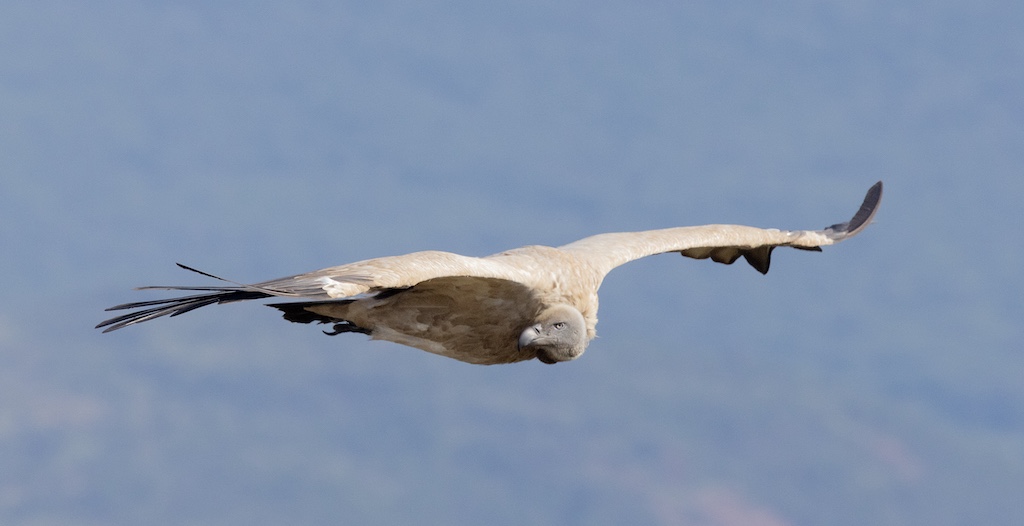
The Cape vulture is endemic to Southern Africa and has a significant population in the Eastern Cape, but is classified as ‘vulnerable’ in South Africa, Lesotho and Eswatini. Photo © Mark D. Anderson/BirdLife South Africa
More than 70 Cape vultures have died at South African wind energy facilities and the majority of these fatalities are recorded in the Cookhouse region in the Eastern Cape, according to data collected by BirdLife South Africa since 2015.
“The actual number of fatalities is likely higher due to a lack of reporting from some facilities, reporting lags, and carcasses missed during surveys,” said Samantha Ralston-Paton, BirdLife’s birds and renewable energy project manager.
The Cookhouse renewable energy development zone (REDZ) was proclaimed in 2018 after the identification of the Eastern Cape as a strategic area for the development of renewable energy projects due to its strong coastal wind current and grid availability.
Data collated by the Oxpeckers #PowerTracker mapping project shows that the Cookhouse REDZ, located about 170km north of Gqeberha, currently has five wind energy facilities with operations and capacity of just over 500MW. These are the Cookhouse Windfarm – South Africa’s largest – Amakhala Emoyeni, Nojoli Wind Farm, Golden Valley Wind Farm and Nxuba Wind Farm.
The area is earmarked for more wind farm developments. The BirdLife South Africa report, released in February 2025, on the operational-phase monitoring and mitigation of wind energy impacts from 2015 to 2023 cautions that despite the benefits of wind energy, the adverse effects of the construction and operating of wind energy facilities on biodiversity should not be overlooked.
The average estimated fatality rate across all wind farms and all years was 4.25 birds per turbine per year, according to the report. Recorded incidents were due to turbine collisions, powerline electrocution and other impacts.
The Cape vulture is endemic to Southern Africa and has a significant population in the Eastern Cape, but is classified as “vulnerable” in South Africa, Lesotho and Eswatini. They form an important part of the ecological system by preventing contamination and the spread of disease from carcasses in rural and agricultural communities.
“What we can expect to see if vultures are removed from an ecosystem is a disruption of nutrient cycling, prolonged carrion persistence and an associated increase in mammalian scavengers, increasing biohazard risks,” said Ralston-Paton.
Emphasising that BirdLife South Africa is not anti-wind energy, despite the negative impacts of wind farms on birds, Ralston-Paton said: “It is important that turbines are located in the correct place – away from areas where there is a high risk of bird collisions – and managed appropriately.”
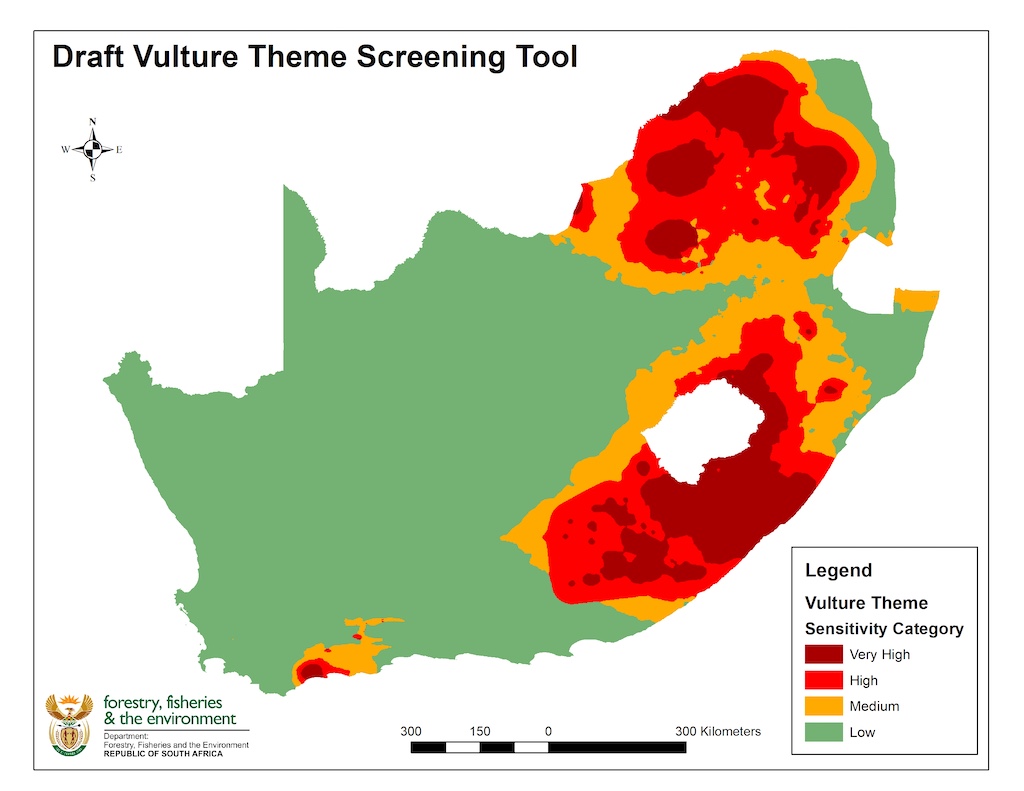
The DFFE’s National Web-Based Environmental Screening Tool’s results for vulture sensitivity areas in South Africa. Map courtesy DFFE
Vulture protocol
The Department of Fisheries, Forestry and the Environment (DFFE) has developed a guide known as “the Vulture Protocol” to be used when applying for an environmental authorisation that will determine the impacts of onshore wind energy generation facilities with an electricity output of 20MW or more on Cape vultures.
DFFE’s Acting Chief Director of Communications and Advocacy, Dr Nomxolisi Mashiyi, told Oxpeckers that a revised version of the protocol has been published twice for public comments and the last of the public consultations was held in July 2024 with various stakeholders, including the Eastern Cape province.
“The finalisation of the protocol is pending the Eastern Cape wind farm and Cape vultures adaptive management framework, which is undertaken by the Department of Economic Development, Environmental Affairs and Tourism.
“The department is confident that when the instrument is adopted for implementation, it will provide a better sense of how to account for fatalities, and better mitigation outcomes will be realised,” Mashiyi said.
Oxpeckers sent an interview request via email to officials at the Eastern Cape Department of Economic Development, Environmental Affairs and Tourism, and also reached out to Ncedo Lisani, Communications Deputy Director, but no response was received at the time of publication.
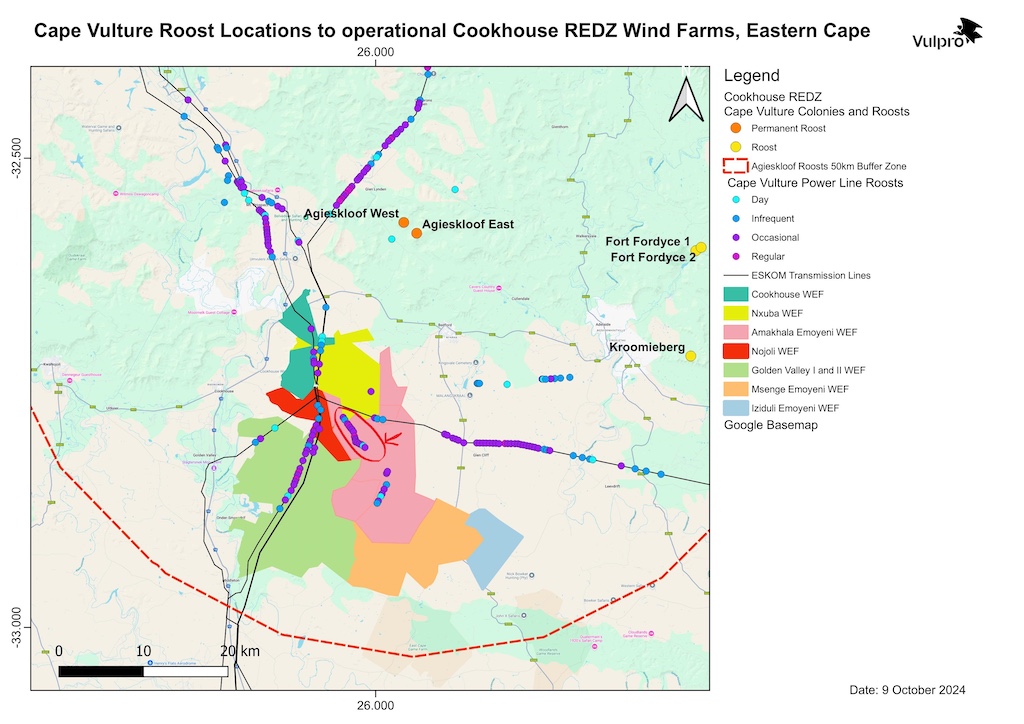
A graphic mapping potential areas of regular Cape vulture roosting activity in the Eastern Cape. The powerline roosting behaviour is from GPS-tracked Cape vultures by VulPro as part of their ongoing research. Graphic courtesy Megan Bromfield/VulPro
High sensitivity area
In an interview with Oxpeckers, Agri Eastern Cape’s Kate Webster said more research into the threats to vulture species should have been done prior to the development of the initial wind farms in Cookhouse.
“We should have done a lot more work with the first wind farm before we actually allowed development just to run rampant – and it did run rampant. It actually went like wildfire, so much so that there weren’t enough checks and balances until now and it’s almost like we’re shutting the stable door when the horse has bolted already,” she said.
Cookhouse is identified as a high sensitivity area for vulture turbine collisions, powerline collisions and electrocutions by the DFFE’s National Web-Based Environmental Screening Tool. The tool was officially gazetted as mandatory for all environmental impact assessment (EIA) applications in 2019 and empowers developers to assess proposed project sites for environmental sensitivity.
Megan Bromfield, renewable energy consultation associate at Vulpro, a vulture conservation and rehabilitation organisation, told Oxpeckers that the tool has some limitations and that Vulpro has made requests to the DFFE and the Council for Scientific Innovation and Research to update their maps more regularly to reflect the most current information.
“The data used to generate the map is quite dated. Vulpro and other NGOs continue to gain more coverage and new insights into vulture movements through GPS tracking,” she said.
The BirdLife report recommended that more comprehensive research on vulture behaviour around turbines is needed. Ralston-Paton told Oxpeckers that using GPS-tracked vultures to follow and understand vulture behaviour and interactions with wind turbines and wind farms could be part of this research.
“Further studies to predict when and where vultures are likely to be in an area and at risk of collisions would also be valuable as this can help identify where turbines should and shouldn’t be built, and mitigation strategies for operational facilities,” she said.
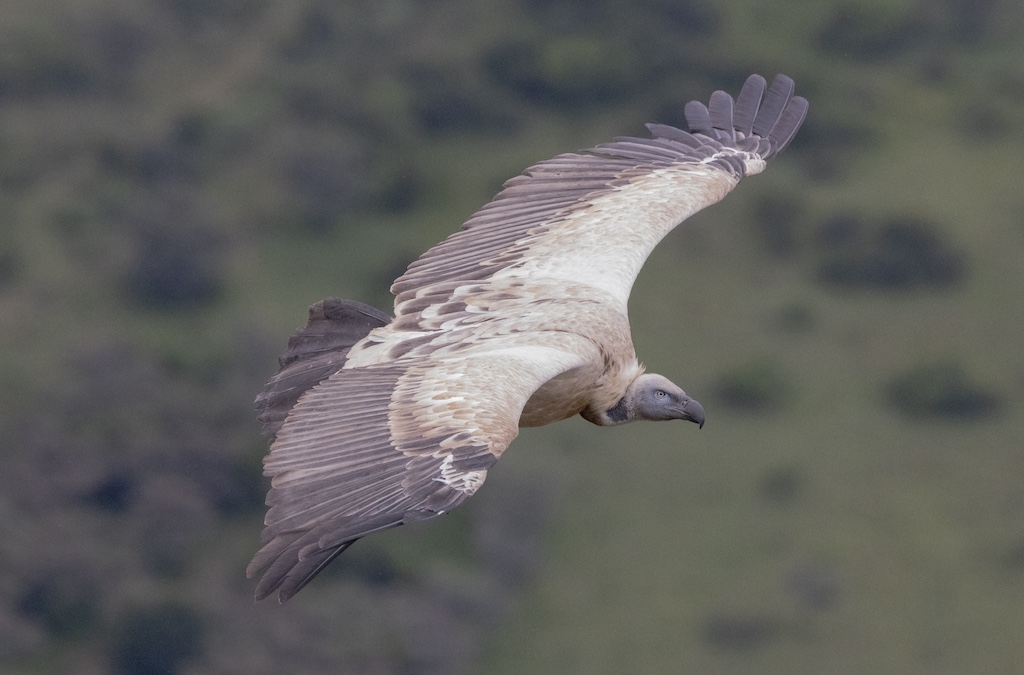
Cape vultures are vulnerable to turbine collisions because of their their build and behavioural characteristics. Photo © Mark D. Anderson/BirdLife South Africa
Big birds
Cape vultures’ vulnerability to turbine collisions is due to their build and behavioural characteristics. These big birds have limited agility, which makes it difficult for them to change direction when they come across obstacles, as well as difficulties gauging their distance to objects because of their restricted frontal binocular field of vision.
Webster said it is because of their size that these vultures are most vulnerable to collisions with energy infrastructure.
“A good healthy Cape vulture can weigh up to eight or nine kilos and their wingspan is 2.6 metres, which is much taller than any human being. They rely on the thermals, and of course the best thermals are always where you get the wind uplift against an escarpment. There’s a conflict of airspace between the birds and the turbines,” she said.
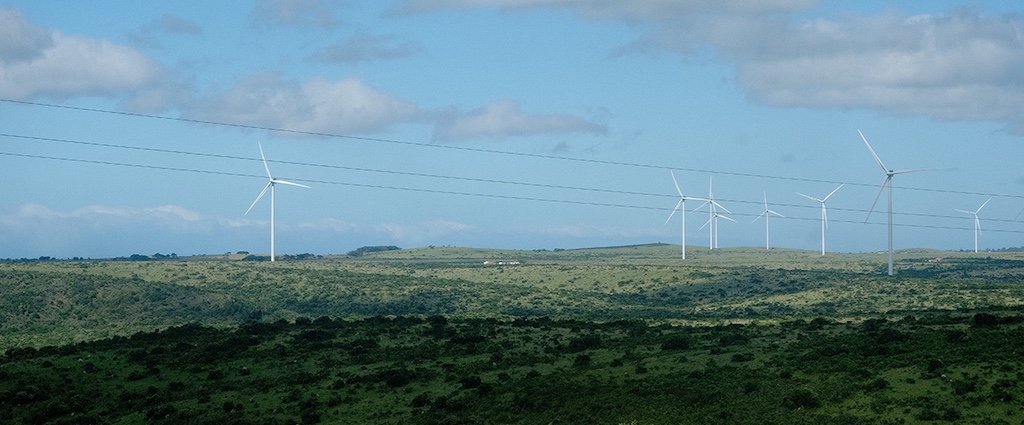
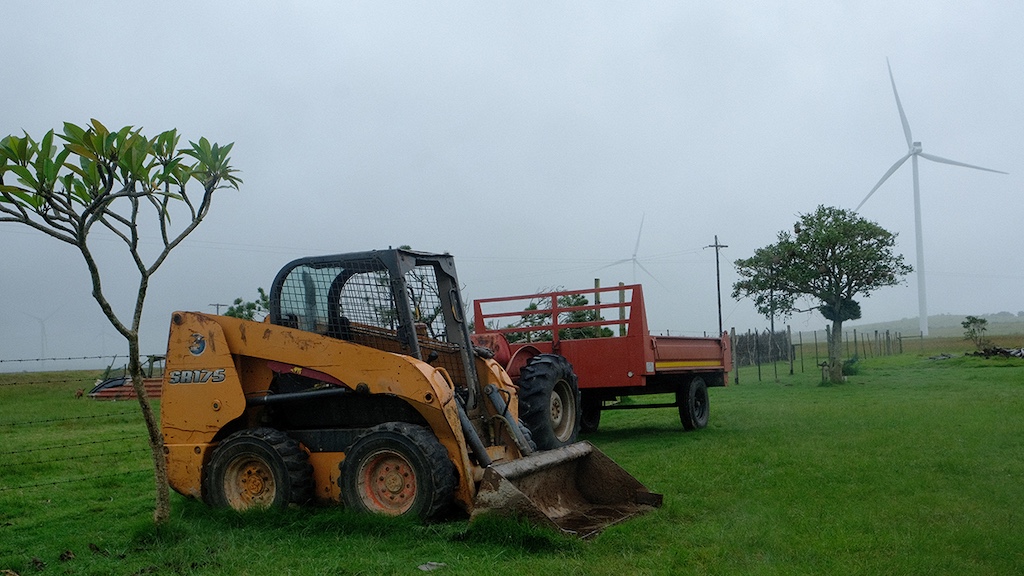
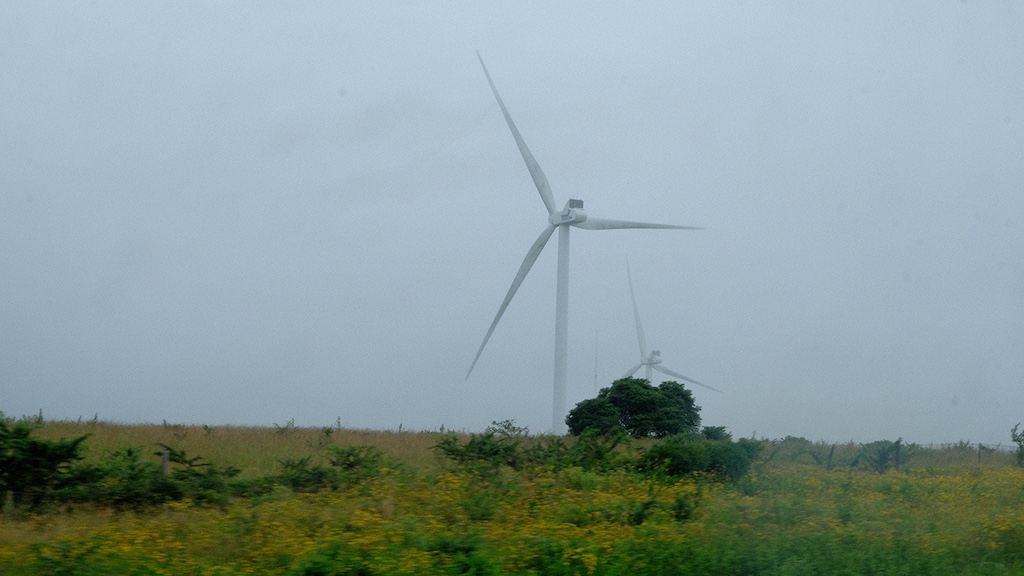
‘Wind province’: The Eastern Cape provides favourable conditions for wind energy development. These photos by Oxpeckers Associate Dianah Chiyangwa were taken at the Wesley-Ciskei Wind Farm, where Oxpeckers investigated land deals in Whose land? Whose power?
New leadership, new priorities
National Minister Willie Aucamp took a strong stand on the protection of vultures over fast-tracking renewable energy without following proper impact assessment procedures when he recently upheld a decision to halt a proposed 100MW solar development in Limpopo in a highly sensitive area for endangered vulture species.
However, in the Eastern Cape a different precedent was set by his predecessor, Dion George, in May 2025 when he welcomed a Supreme Court of Appeal ruling that reinstated contested environmental permits for three wind facilities by the Highlands Group near Cookhouse. While George hailed the decision as a landmark victory for clean energy, the ruling highlights an ongoing tension between the urgent push for renewables and the survival of the Eastern Cape’s endangered vulture populations.
Mashiyi in her correspondence with Oxpeckers confirmed that there are currently no new active applications for wind farm developments in the Cookhouse REDZ, but that this does not mean new applications will not be lodged and that the DFFE has no way of forecasting the number of applications that are to be submitted.
As a condition of their environmental authorisation, wind farms are required to monitor their impacts on birds. Bromfield told Oxpeckers that earlier environmental authorisations often contained minimal reporting requirements.
Since wind farms in the Cookhouse area were among the first established in South Africa and were largely approved before the current level of scrutiny around bird fatalities, some companies still don’t report fatalities and incidents involving vultures.
“The standard guideline allows for only two years of bird fatality monitoring, after which, unless significant issues are identified, monitoring can cease. Consequently, if/when environmental conditions and bird movement patterns change over time, we are effectively ‘flying blind’ regarding what is currently occurring on these farms,” said Bromfield.
Webster also told Oxpeckers that some of the facilities lack transparency by hiding their fatalities and refusing access to their properties. She suggested that the DFFE should be enforcing stricter monitoring. “The DFFE should actually demand post monitoring results and those post monitoring results should be made public to everybody,” she said.
Oxpeckers reached out to Cookhouse Wind Farm and Amakhala Emoyeni owned by Seriti Green requesting site visits, but received no response from both companies.
A Golden Valley Wind Farm representative communicated via email that they had referred an Oxpeckers media request to a “relevant internal department” where no response was received.
Mashiyi told Oxpeckers that the environmental management programme (EMPr), which is one of the primary reporting instruments for operational wind farms, mandates regular carcass searches and annual specialist reports, supplemented by statutory environmental audit reports that must be made public to ensure compliance with permit conditions. These operational reports are measured against a 12-month pre-construction baseline known as the avifaunal monitoring programme to track changes in bird populations.
“Operational sites such as the Nxuba Wind Farm engage bird and bat monitoring specialists as part of ongoing activities, with the specialist undertaking carcass search campaigns, identifying species, reporting findings, and informing the operator of relevant impacts, all in line with the conditions of the authorised EMPr,” she said.
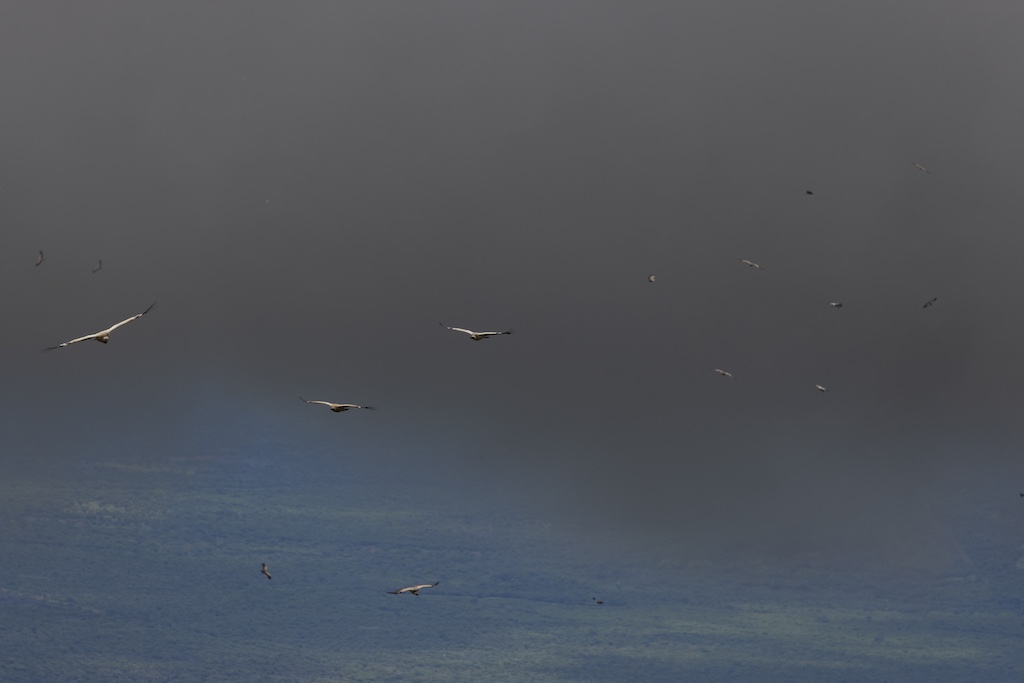
Conflict for airspace: Cape vultures are known to move unpredictably across the landscape, often through the same airspace as wind turbines. Photo © Mark D. Anderson/BirdLife South Africa
Nojoli Wind Farm
Nojoli Wind Farm’s site manager, Siyanda Nyawuza, referred an Oxpeckers request for a site visit and interviews to Enel Green Power’s head of communications who did not revert with a response.
Oxpeckers however managed to obtain Nojoli’s Year 5 Bird and Bat Operational Monitoring Report from May 2024, which details the outcomes of monitoring carried out from January 2023 to December 2023.
The overall number of recorded Cape vulture incidents at Nojoli was 20 at the time of publication of the report, with 19 vultures killed by turbines, and one vulture injured on a powerline. This vulture was subsequently rehabilitated.
To prevent further fatalities of Cape vultures at Nojoli, the report suggested that Enel must immediately stop all turbines from operating during daylight hours in the southern section of their operation which is where most fatalities were concentrated. This would be a daily mitigation strategy until a technology-based or observer-led turbine shutdown on demand has been adequately and properly implemented and tested as fully operational at the facility.
#PowerTracker data shows that Red Rocket’s Brandvalley Wind Farm in Sutherland in the Northern Cape recently installed an automated avian detection and deterrent system at the project. The system uses detection technology to track bird movements near the turbines and on detecting birds in close proximity, activates visual and audio deterrents and, if necessary, initiates a temporary turbine shutdown. The data collected provides real-time insights into bird behaviour and turbine response.
Responding to whether this kind of technology would be useful in mitigating Cape vulture fatalities in the Eastern Cape, Webster said this works best in areas where vulture or bird behaviour is more predictable and where birds migrate between seasons, but the behaviour of Cape vultures make these patterns sporadic.
“I can’t say that it won’t work effectively or it can work to a certain extent effectively because our birds are different, they’re foraging for food and are not looking to follow a specific passage to get from winter to summer or summer to winter. There is movement but it’s not in a specific path. The automatic shutdown works effectively if there’s a migration of birds coming through,” she said.
This investigation by Oxpeckers Associate Andiswa Matikinca was sponsored by Ford Foundation.
• Find details on these wind farms and other renewable energy projects on the #PowerTracker platform