
02 Mar Connected, but still in the dark
Thabo Molelekwa investigates how prepaid electricity meters – now common in many municipalities — are encouraging a new form of energy poverty
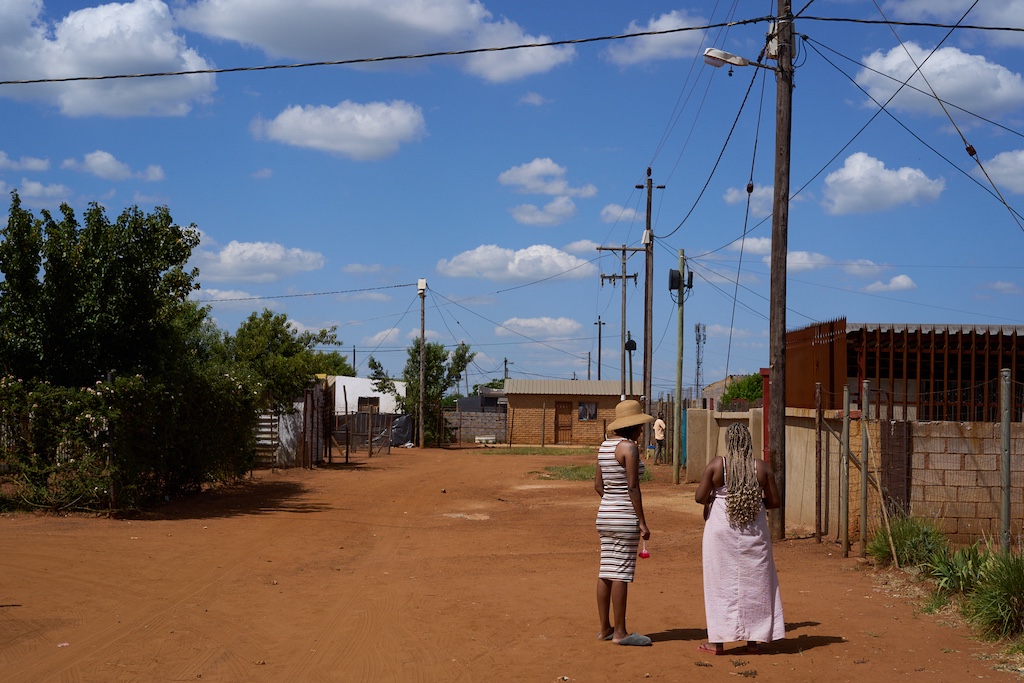
Power lines run overhead, electricity meters are fixed to homes, and official records list households as electrified. Yet inside many homes, the lights were off. Photo: Barry Christianson
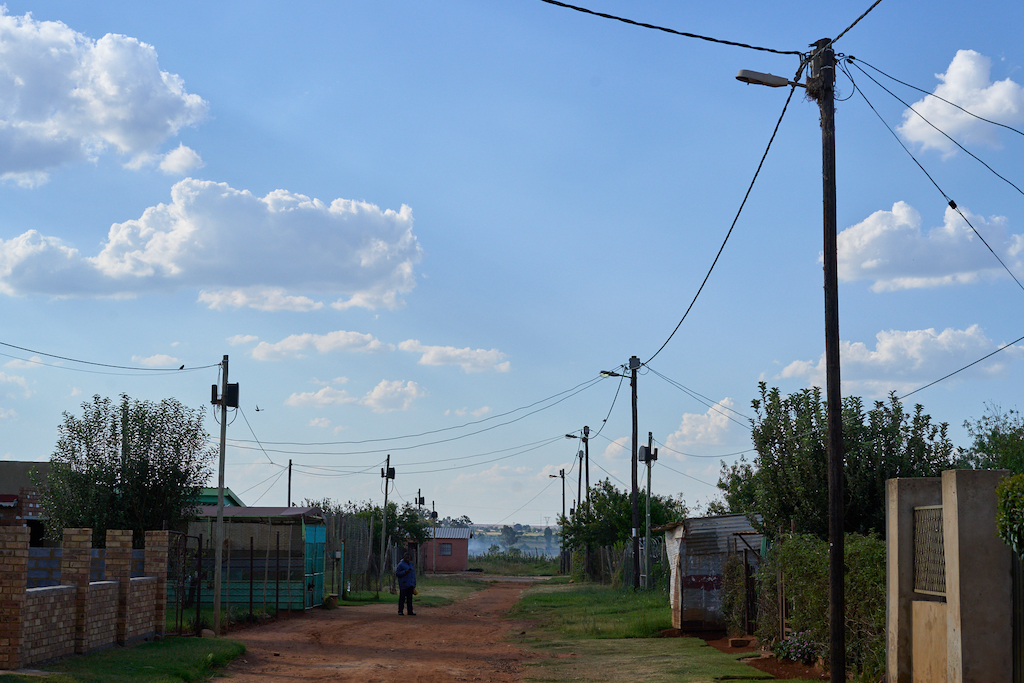
For some households, rising costs and prepaid metering systems have effectively turned municipal electricity into a backup source, rather than a reliable, primary source of energy. Photo: Barry Christianson
In Merafong Local Municipality on Gauteng’s West Rand, households are connected to the national grid but cannot afford electricity, revealing how prepaid power, municipal debt and gaps in oversight are pushing communities into energy poverty.
Power lines run overhead, electricity meters are fixed to homes, and official records list households as electrified. Yet inside many homes Oxpeckers recently observed, the lights were off. For a growing number of residents, the question is no longer whether electricity is available, but whether it is affordable enough to use.
Across Carletonville and Khutsong, communities shaped by gold mining within Merafong municipality, households described long periods without power after their free basic electricity allocations and prepaid electricity units run out. Homes remain physically connected to the grid, but electricity use becomes sporadic or disappears entirely – a phenomenon researchers and civil-society groups describe as “self-disconnection”.
For some households, rising costs and prepaid metering systems have effectively turned municipal electricity into a backup source, used only when money allows, rather than a reliable, primary source of energy. This pattern emerged consistently in interviews conducted by Oxpeckers with residents in the area.
According to Eskom, Merafong Local Municipality owes R1,82-billion in electricity-related debt accumulated since 2015, and is among the municipalities most indebted to Eskom nationally. Photo: Barry Christianson
Municipality under strain
This energy crisis is unfolding in a municipality facing deep financial distress.
According to Eskom, Merafong Local Municipality owes R1,82-billion in electricity-related debt accumulated since 2015. The arrears have placed Merafong among the municipalities most indebted to Eskom nationally.
Eskom says municipalities are responsible for billing and revenue collection within their licensed supply areas, including prepaid metering systems. When municipalities fail to pay Eskom for bulk electricity supply, the consequences extend well beyond municipal finances.
Municipalities also play a critical role in shaping how – and whether – households transition away from grid electricity, through decisions on tariffs, prepaid systems, indigent support and the approval or restriction of alternative energy options such as rooftop solar.
“Non-payment by municipalities places significant strain on the electricity value chain and ultimately affects Eskom’s ability to invest in infrastructure, maintain networks and ensure reliable supply,” said Eskom’s media desk.
The utility acknowledged that residents who pay for electricity are often caught in the middle of this breakdown.
“Eskom acknowledges the concern of residents who meet their payment obligations but are affected by municipal non-payment,” it said. “Municipalities remain responsible for billing and revenue collection from customers within their licensed areas, including prepaid environments.”
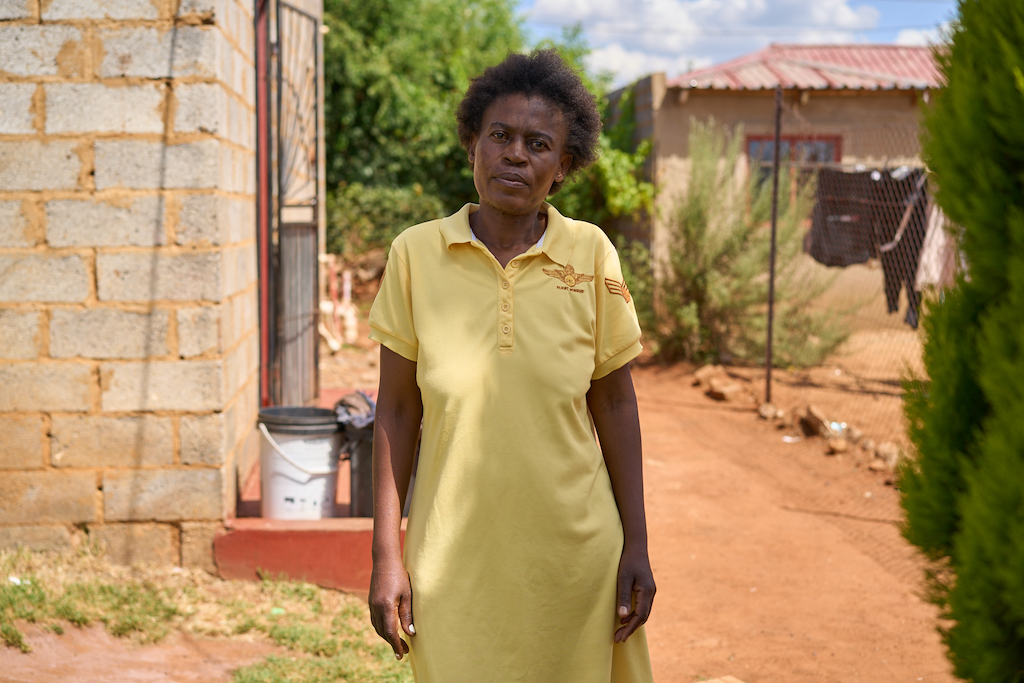
Eskom provides low-income households registered on municipal indigent lists with 50kW of electricity each month, at no cost. However, some residents, including Daphney Letswamotsi – who survives off a child care grant – remain without power. Photo: Barry Christianson
Eskom steps in
In response to Merafong’s mounting arrears, Eskom entered into a distribution agency agreement with the municipality. Under the arrangement, electricity billing and revenue collection are ring-fenced and administered through Eskom, with customers paying Eskom directly for electricity. The municipality retains its electricity distribution licence.
Eskom said the agreement is intended to stabilise revenue flows and protect the electricity value chain. Billing and revenue collection, the utility said, “will be ring-fenced and administered through Eskom systems”.
The agreement, Eskom said, would not affect indigent households or the administration of free basic electricity, which provides qualifying low-income households registered on municipal indigent lists with 50 kilowatt-hours of electricity per month at no cost.
“There will be no change as to how free basic electricity is administered and therefore the indigent households will not be affected by the agreement,” Eskom said.
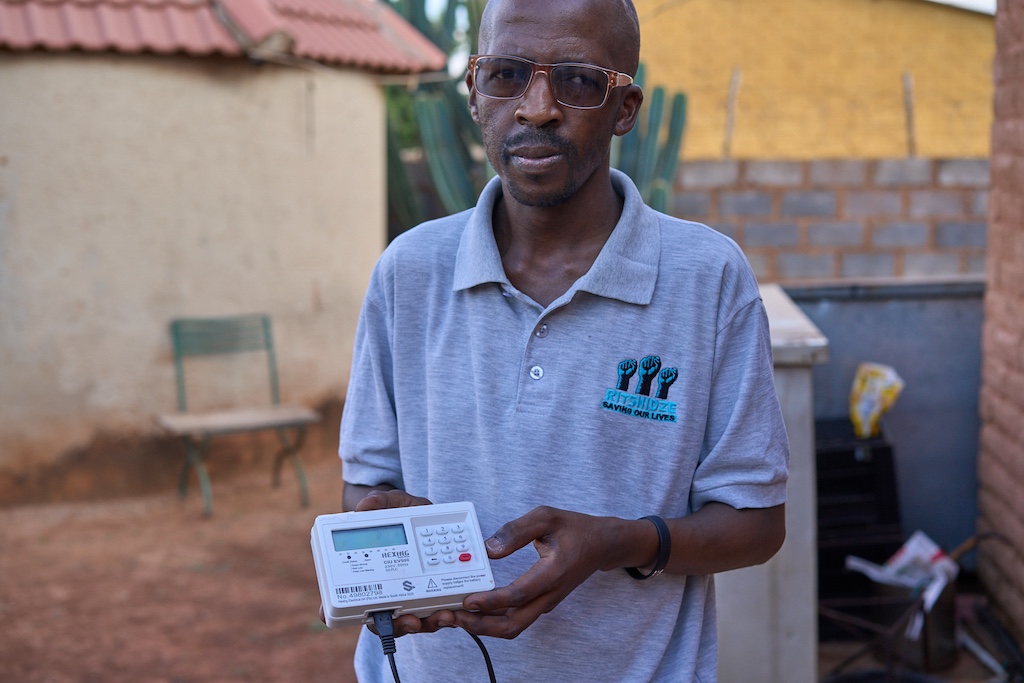
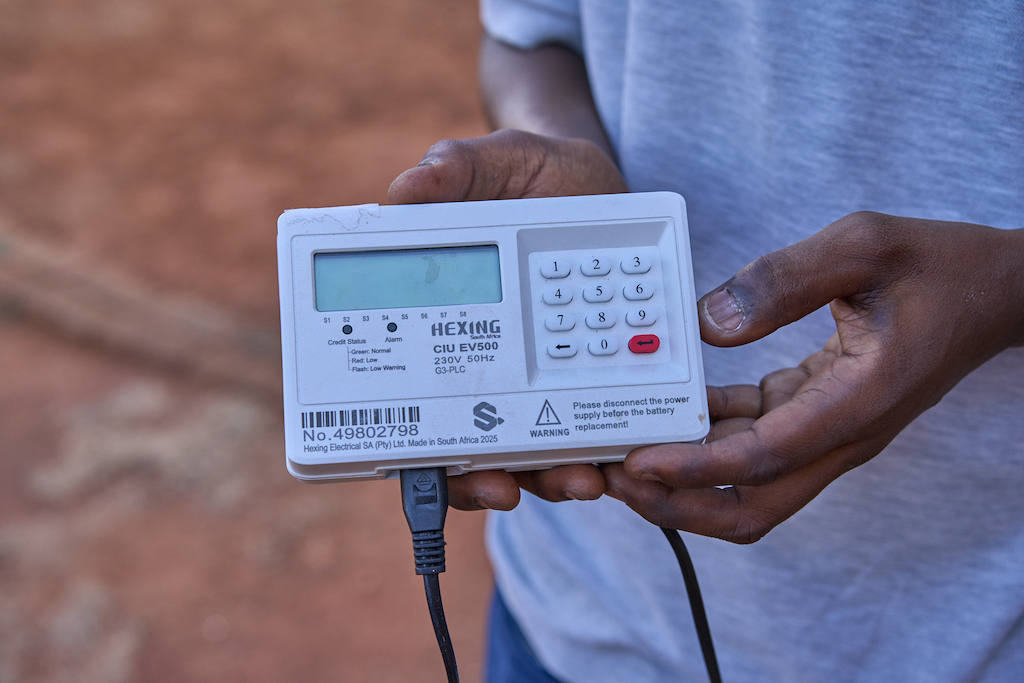
Prepaid meters such as this one displayed by Tebogo Koboyankwe ‘shift financial risk away from municipalities and utilities, and place it directly on to households,’ according to OUTA. Photo: Barry Christianson
Prepaid power
In Merafong, as in many South African municipalities, prepaid electricity dominates household supply. Under prepaid metering systems, customers must pay upfront for electricity before they can use it.
For utilities and municipalities, prepaid meters reduce debt accumulation and improve revenue certainty. For households, they shift financial risk directly on to already constrained incomes.
According to the Organisation Undoing Tax Abuse (OUTA), a non-profit civil rights organisation, this shift lies at the heart of the affordability crisis.
“Prepaid electricity shifts financial risk away from municipalities and utilities, and places it directly on to households,” an OUTA spokesperson said. “For low-income families, this often results in ‘self-disconnection’, not because electricity is unavailable but because it is unaffordable. When income runs out, electricity simply stops.”
The spokesperson said the problem is compounded when municipalities fall behind on payments to Eskom: “OUTA has consistently observed that when municipalities fall behind on payments to Eskom, pressure is often shifted downstream to households. This includes higher tariffs, stricter enforcement, aggressive prepaid roll-outs and limited flexibility for consumers.”
Even households that pay for electricity, OUTA said, are affected.
“Households that are paying for electricity are effectively subsidising municipal financial mismanagement,” the spokesperson said. “Even compliant residents experience rising costs, reduced service quality and increased insecurity while the underlying governance failures remain unaddressed.”

When electricity becomes unaffordable, households turn to alternatives — often with serious health and safety consequences. Photo: Barry Christianson
Free basic electricity
Free basic electricity (FBE) is intended to protect indigent households by providing a minimum allocation of 50 kilowatt-hours per month. In practice, its ability to prevent exclusion is limited.
OUTA describes FBE as unevenly implemented and often insufficient, particularly in municipalities heavily reliant on prepaid revenue.
“While the policy is well intentioned, the allocation is typically too small to meet basic household needs, especially when electricity prices continue to rise,” the organisation said. “In prepaid-dependent municipalities, FBE can also be inconsistently credited, poorly communicated, or lost entirely due to administrative failures.”
“For many households, FBE does not prevent exclusion — it merely delays it,” OUTA’s spokesperson said.
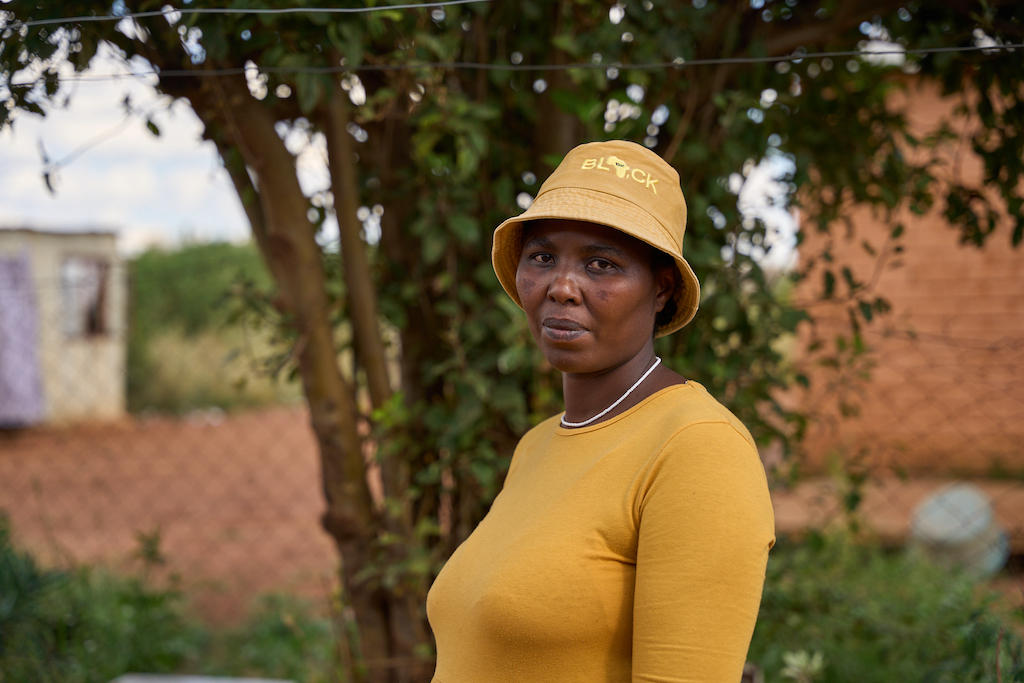
Free basic electricity does not sufficiently prevent households who cannot afford to pay electricity tariffs from being cut off, according to OUTA. Pictured here is Nokuzola Khansi, a Khutsong South resident. Photo: Barry Christianson
Electricity prices
While municipalities and Eskom manage electricity supply on the ground, the prices households ultimately pay are shaped upstream by tariff decisions approved by the National Energy Regulator of South Africa (Nersa).
According to its head of communications, Charles Hlebela, Nersa’s role is to perform a statutory approval and oversight function under the Electricity Regulation Act.
“Municipalities are required to submit proposed tariff structures and increases to Nersa annually for review and approval prior to implementation,” Hlebela said. “In assessing these applications, the regulator evaluates whether proposed tariffs are cost-reflective, reasonable, and aligned with approved regulatory frameworks and cost-of-supply principles.”
Hlebela said Nersa considers the impact of tariffs on low-income households through mechanisms such as FBE rates, lifeline and subsidised tariffs, cross-subsidisation and public consultation processes.
“The regulator’s role is to balance financial sustainability with consumer protection within the limits of its legislative mandate,” Hlebela said.
However, Nersa’s oversight has limits. While the regulator considers consumption trends, sales volumes and customer profile data submitted by municipalities and utilities, it does not monitor household-level electricity use.
“These inputs inform Nersa’s overall assessment, but do not constitute a comprehensive monitoring system for individual household behaviour,” Hlebela said.
Nersa also does not treat municipal debt as a standalone basis for approving higher tariffs. “Tariff approvals remain subject to efficiency, affordability and regulatory benchmarks, rather than debt recovery alone,” Hlebela said.
Responsibility for identifying qualifying households and administering FBE lies primarily with municipalities and national government, he added.

Life in the dark
Tebogo Koboyankwe, a community member from Khutsong South, told Oxpeckers that unaffordable electricity tariffs and failing municipal systems have pushed many households into unsafe and informal coping mechanisms.
“The electricity issue here is mostly the high tariffs,” Koboyankwe said. “People simply cannot afford to pay anymore.”
According to Koboyankwe, residents initially complied with prepaid electricity systems when payments translated directly into usable power. That changed, he said, about a decade ago when the municipality decided to begin dividing prepaid purchases between electricity, water and other services.
“In the beginning, if you bought electricity, you got electricity,” he said. “Then out of the blue the municipality decided to cut it. First it was 50–50, then 60–40, then 70–30 — where 70% of your money goes to water and only 30% to electricity.”
He said this shift left households paying for services they could not track or afford, and marked a turning point for many residents.
“That’s when people said, ‘No way, we’re going to stop paying,’” Koboyankwe said. “That’s when the bypassing started.”
He stressed that electricity bypassing in the area is driven by survival rather than criminal intent. “People are not bypassing because they want free electricity,” he said. “They are bypassing because they are not working and the electricity is too expensive.”
According to Koboyankwe, even households that had tried to comply were eventually pulled into non-payment.
“My mother was the only one paying for electricity in our street,” Koboyankwe said. “But electricity became too much for her. People told her, ‘You’re the only one paying — we’re bypassing.’ Eventually she also stopped paying.”
He said many residents are unaware of their entitlement to free basic electricity and water.
“The municipality is not telling people the truth,” Koboyankwe said. “People don’t even know they are entitled to these basic services.”
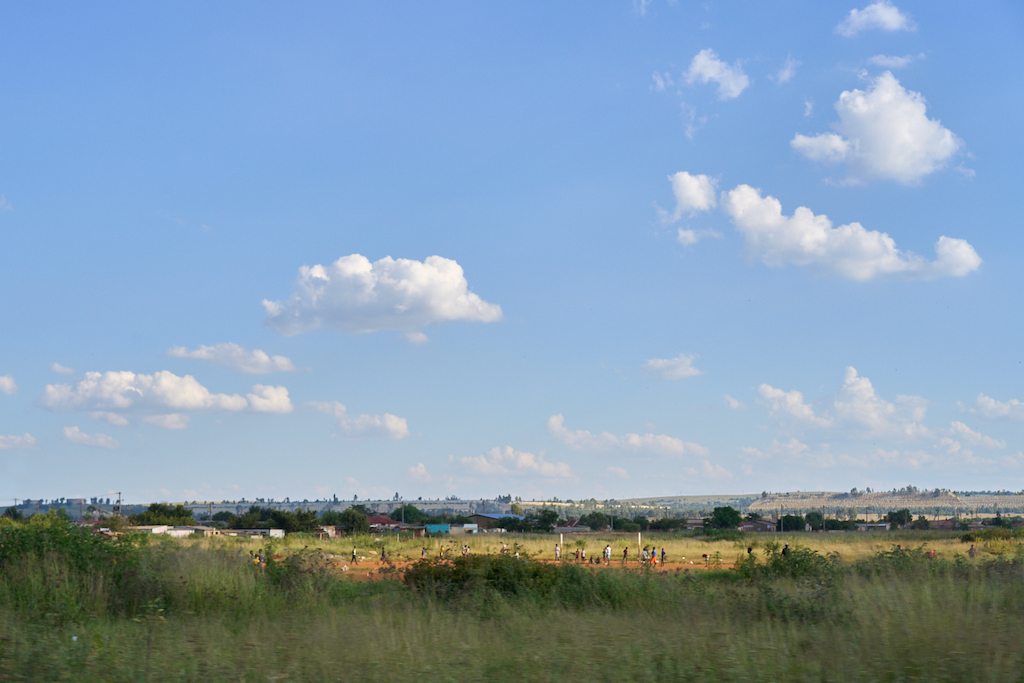
The Merafong Solar Park is one of 94 solar developments in Gauteng being tracked by the #PowerTracker tool, but local residents we spoke to said they had not heard about it. Photo: Barry Christianson
Solar park
Merafong municipality is the site of an 800MW solar photovoltaic park, promoted as part of broader efforts to strengthen energy security and reduce reliance on Eskom. Currently in development, it is a private-public partnership with the Gauteng provincial government. (See details on the #PowerTracker mapping tool here.)
However, Koboyankwe said local communities have not been informed about the development: “People here don’t know anything about it,” he said. “There is no awareness.”
OUTA warned that such large-scale renewable energy projects risk bypassing local households.
“Large-scale renewable energy projects should deliver clear benefits to the local community, not just power to the national grid,” the OUTA spokesperson said. “Without measures to improve affordability and access, renewable projects risk repeating inequalities — where electricity is generated locally but remains unaffordable to nearby households.”
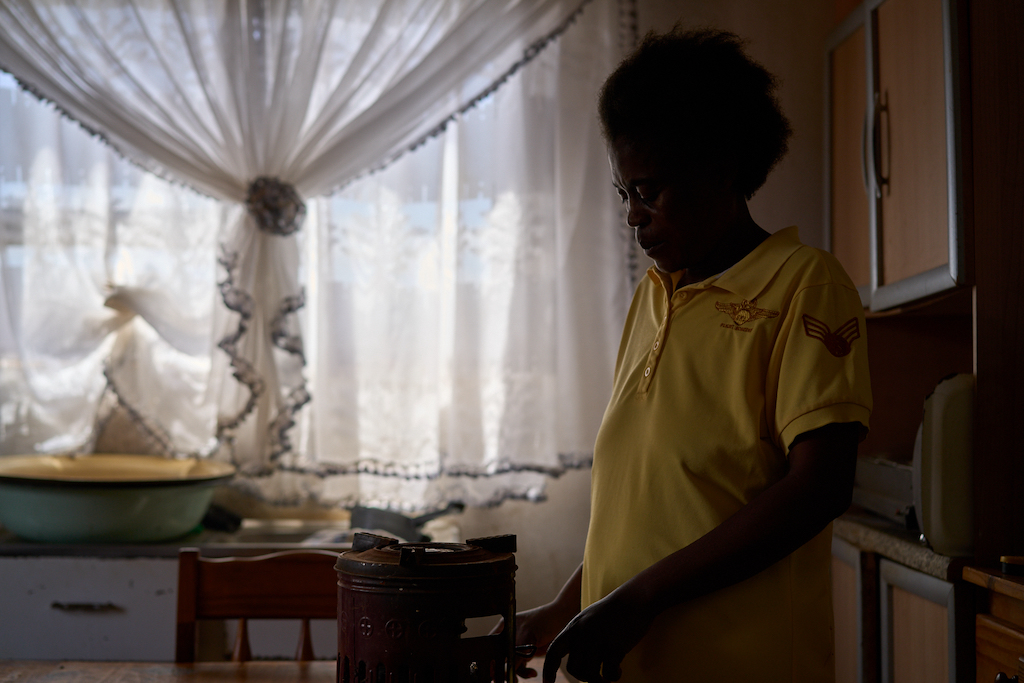
Resident Daphney Letswamotsi described how she cannot even afford paraffin for the flaming stove, her only alternative to unaffordable electricity prices. Photo: Barry Christianson

Health and safety
When electricity becomes unaffordable, households turn to alternatives — often with serious health and safety consequences.
“We use a flaming stove and it’s very dangerous,” Khutsong resident Julia Kolodi said. “It smells, and the smell stays in the house. I contracted tuberculosis because of the flaming stove. Gas is also expensive — yet we have electricity that we cannot use.”
Daphney Letswamotsi, also from Khutsong, said residents have repeatedly raised electricity issues with ward councillors.
“We had meetings with the councillor and were promised that electricity issues would be sorted,” she said. “After that we heard the municipality owes huge amounts to Eskom. But people in town and the mines are paying — so where is that money going?”
She said rising electricity prices have pushed many residents into bypassing meters.
“When you buy electricity for R20 they give you five units, which is nothing,” she said. “That’s why people end up bypassing the meters.”
Dependent on a child support grant, she said there are few alternatives.
“I’m not coping with this situation,” Letswamotsi said. “I can’t even afford paraffin for the flaming stove.”
Oxpeckers sent a detailed set of questions to Merafong Local Municipality on February 5 regarding electricity affordability, prepaid systems, FBE, municipal debt to Eskom and the planned Merafong Solar Park. Oxpeckers also had telephonic discussion with the municipality’s communications manager, Thabo Moloja, during which receipt of the questions was confirmed.
This was followed by several follow-ups. The final follow-up was sent on February 18. At the time of publication, no response had been received. Oxpeckers will update this article should the municipality respond.
Track renewable and coal-based energy sources on our #PowerTracker tool here
This investigation was supported by the New Economy Hub and Ford Foundation