

01 Oct Hot on the PAIA trail of SA’s illegal coolants
Oxpeckers associate Tulani Ngwenya documents his months-long exercise in accessing official information on the trade in banned, global-warming gases
Tulani Ngwenya (above) spent months submitting and following up on PAIA requests, to get to the bottom of how illegal coolants are entering South Africa. Photo: Supplied
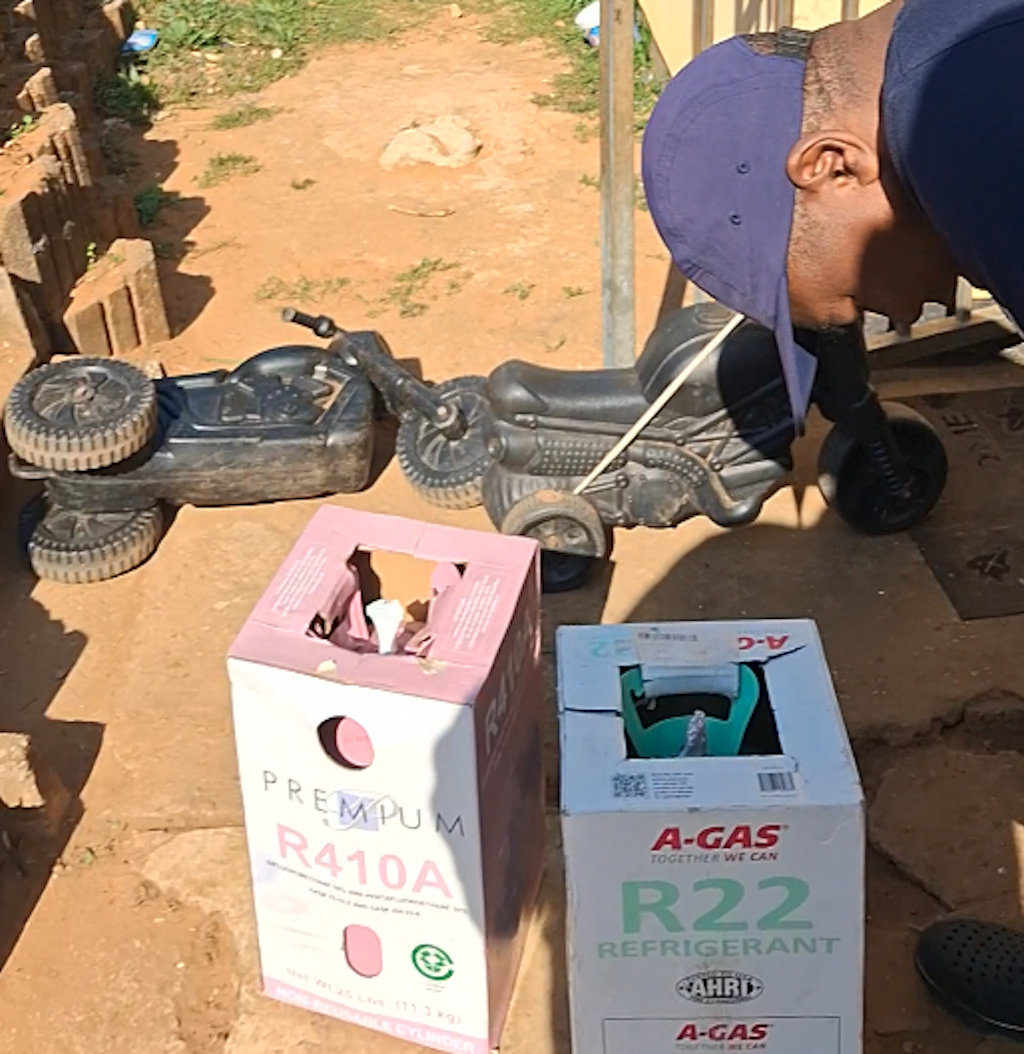
Our hidden camera captured just how easy it is to buy banned R22 refrigerant on South Africa’s informal market. Photo: Tulani Ngwenya
When we went undercover in Isipingo, KwaZulu-Natal, cash in hand and a hidden camera running, buying an illicit cylinder of R22 ozone-depleting refrigerant gas took less than 20 minutes. For R2,000, we walked away with genuine A-Gas stock, protective cling wrap still intact around the nozzle, sold without a licence, receipt, or any questions asked.
The investigation, Cold play: Inside South Africa’s illegal coolant trade, provided an insider’s look into how easily banned, global warming gases flow through South Africa’s informal economy. But buying a cylinder on the street only showed the end of the line.
To understand how refrigerants slip past border checkpoints, custom checks and environmental regulators, the investigation also stepped away from the informal stalls and dived into state archives.
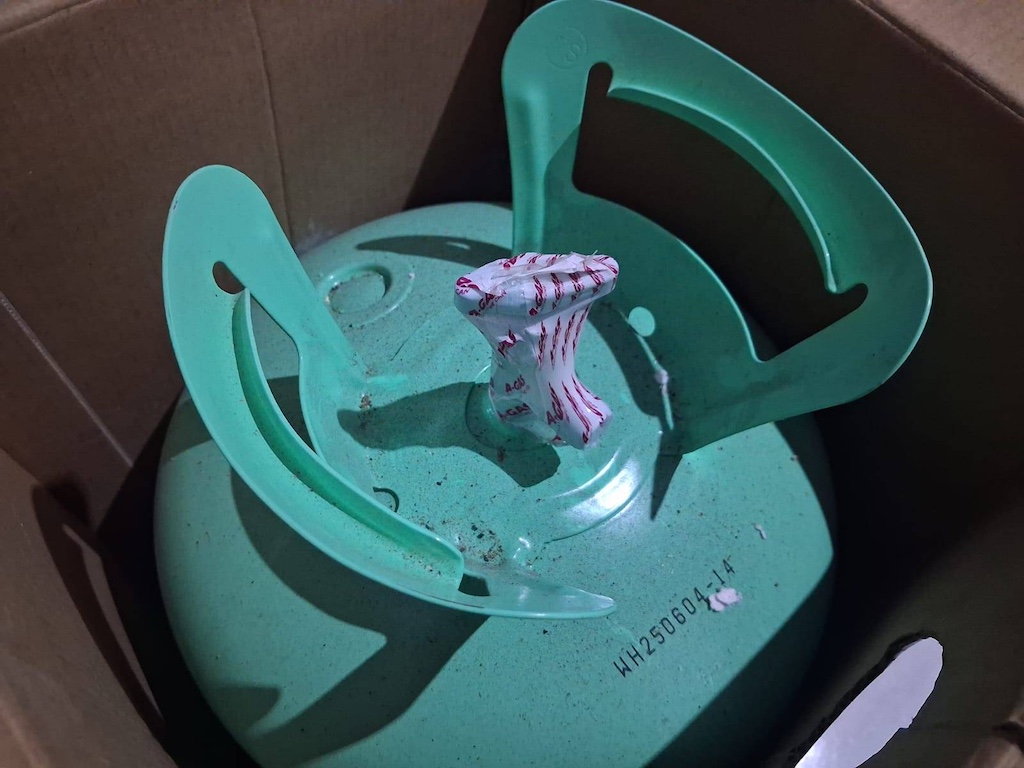
We submitted four separate PAIA requests, trying to understand refrigerant supply chains, through official documentation, seizure logs and import permits. Photo: Tulani Ngwenya
Environmental crime
Investigating environmental crime requires testing the institutions tasked with stopping it. Under South Africa’s Promotion of Access to Information Act (PAIA), public and private entities are legally obligated to provide access to records that hold them accountable.
On July 1 2026, through the #PowerTracker programme, Oxpeckers submitted formal PAIA requests to key regulatory bodies, including the South African Revenue Service (SARS) and the Department of Forestry, Fisheries and the Environment (DFFE).
The requests sought comprehensive documentation regarding hydrochlorofluorocarbon (HCFC) and hydrofluorocarbon (HFC) supply chains. We asked for import and export permits, official recommendations, approvals and detailed seizure logs covering the period from 2019 to 2026. We targeted data on approved quantities, names of importers and distributors, countries of origin, handling locations and ports of entry.
We also submitted an information request to the International Trade Administration Commission (ITAC). We requested full access to import permits and documentation processed by ITAC for HCFCs like R-22 and HFCs like R-410A, alongside correspondence with the DFFE.

After submitting access to information requests, reporter Tulani Ngwenya (left) received mixed responses and was referred from one department to the next, all while seeking concrete answers and accountability. Photo: Supplied
State machinery
What followed was a months-long exercise in patience, red tape and procedural deflection across state machinery. The paper trail quickly turned into an intricate maze of inter-departmental referrals and administrative hurdles.
On July 24 the DFFE responded regarding request reference PAIA274612, stating that the department was not in possession or control of actual import and export permits, or ITAC correspondence. DFFE deputy information officer K. Elias confirmed that these specific permit records were being transferred to SARS and ITAC under section 20(1) of PAIA for their direct handling.
For the recommendation records that the DFFE did hold in its possession, access was immediately stalled by commercial confidentiality provisions. The department noted that releasing importer and exporter details could expose trade secrets, financial details, or confidential commercial information protected under sections 34(1), 36(1), and 37(1) of PAIA. Consequently, under section 47(1) of PAIA, the DFFE was required to inform third-party commercial importers and grant them a 21-day window to object or consent to public disclosure.
More than two months after first reaching out to SARS, we learnt that there were no recorded seizures of the refrigerant brand we were sold, illegally. Photo: Shutterstock
Revenue authority
While the environmental ministry was busy notifying private corporate entities, the revenue authority was conducting its own internal search. On August 25 SARS deputy information officer Oscar Mosito formally issued a refusal notice under section 23(1) of PAIA. Attached to his determination was an official affidavit detailing the searches undertaken across the revenue service’s air, sea and land operational modalities to locate the requested enforcement records.
The internal findings contained in the SARS affidavit revealed a stark disconnect between border operations and public accountability. The SARS enforcement lead for Customs Sea Modality, Ravell Roberts, confirmed on August 20 that there were zero detention, seizure or enforcement records relating to A-Gas Cylinders between 2019 and 2026. Similarly, Customs & Excise Air Modality officials at OR Tambo International Airport reported no seizure records for the entity during the same seven-year period.
However, internal correspondence from Land Modality operational managers told a more complex story about what happens on the ground. On August 20 2026, Delisile Mabuza, operations manager for Land Modality, confirmed that gas cylinders lacking an import permit had indeed been intercepted at the Lebombo border post. Yet, these cylinders were neither formally seized nor deposited into a state customs warehouse.
Mabuza explained that due to severe health and safety concerns regarding the physical storage of pressurized gas cylinders, customs officers chose not to take custody of the goods. Cluster 3 operations manager Marchelle van den Heever supported this approach, noting that no formal release process was applicable because the goods were never formally detained. Instead, the non-compliant importer was simply issued a financial penalty and instructed to turn around and take the illegal gas back into Mozambique.
Because the illicit shipment was turned away at the border rather than formally confiscated, SARS maintained that no official seizure logs or origin records exist beyond the initial detention notice. This creates a massive enforcement blind spot within South Africa’s trade controls. When border authorities issue penalties and turn back unpermitted super-pollutants without entering them into a central database, critical data on illicit supply lines and repeat offenders disappears.
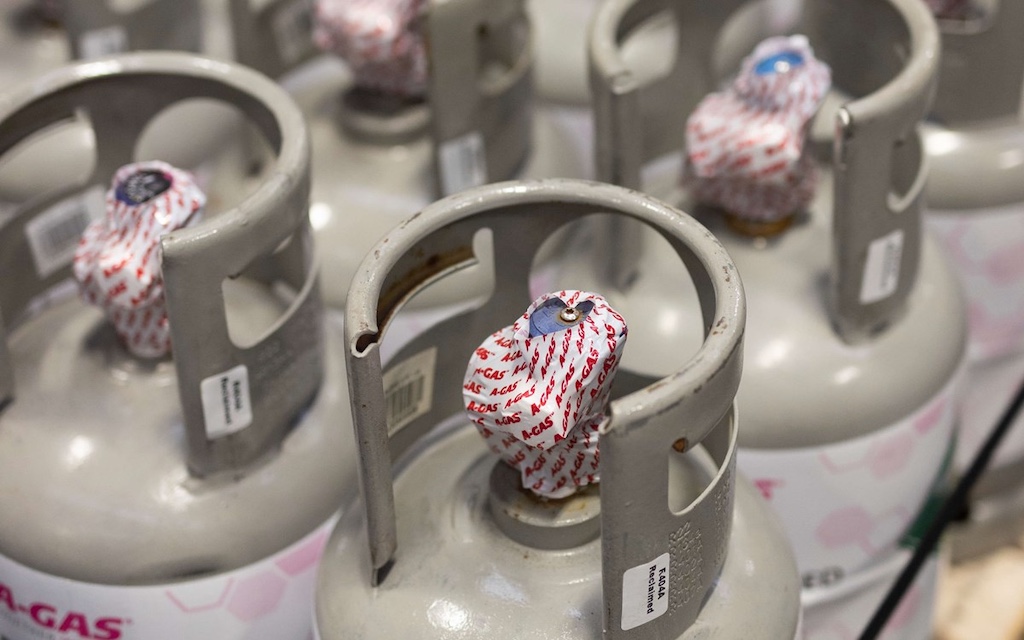
South Africa’s gas controls may look strict on paper, but fragmented border records leave gaps that illegal traders can exploit. Photo: A-Gas
Environmental risks
This procedural shuffle highlights a fundamental breakdown in how environmental risks are governed across state borders. When government departments transfer requests back and forth, invoke commercial confidentiality, or turn back illegal shipments without formal logging, traders operate with impunity.
South Africa has committed under international treaties like the Montreal Protocol and the Kigali Amendment to phase out ozone-depleting substances and reduce super-pollutant emissions.
Yet, the Oxpeckers paper trail shows that while strict quota systems look impressive on paper, practical cross-border enforcement relies on ad-hoc turn-backs and fragmented record-keeping. Illegal traders turned away at one border post can simply attempt entry at another point, knowing their previous violation was never logged in a central customs registry.
The lack of a centralised, publicly accessible tracking portal leaves consumers and civil society unable to verify whether gases circulating domestically were legally imported.
Tulani Ngwenya is an Oxpeckers associate. The #PowerTracker #PowerTracker programme is supported by the New Economy Hub and Ford Foundation .
.