
28 Jul The hidden cost of manganese
Stephan Hofstatter, Marcello Rossi and Paul Tullis investigate how a key mineral for the energy transition is destroying ecosystems and communities in South Africa’s Northern Cape
Photos: Madelene Cronjé
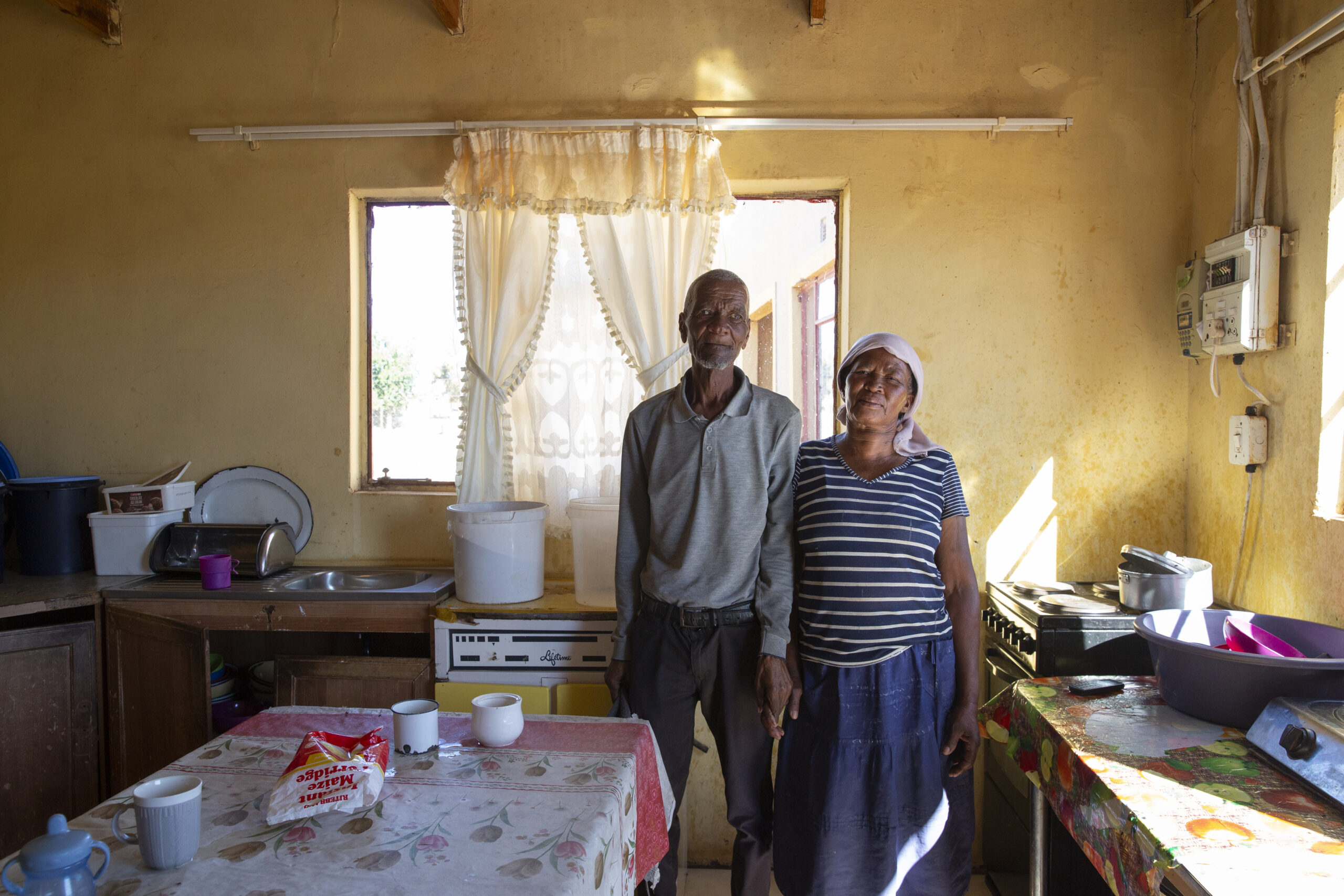
Itumeleng and Rosie Joel live in Maipeng in the Kalahari Basin, where manganese mining activity has accelerated since 2010. Photo: Madelene Cronjé
The walls of the Joel family’s brick house near Hotazel in the Northern Cape are cracked. The fissures run from floor to ceiling, and the windows no longer close properly. Sitting on a worn sofa in the living room, Rosie Joel explains that every time there’s an explosion from one of the nearby mines, “the ground shakes and the house creaks”.
The Joels live in Maipeng, an arid settlement in the Kalahari Basin. The region is the epicentre of a mining boom driven by the growing demand for manganese, an essential mineral for the manufacture of steel for wind turbines and batteries for next-generation electric vehicles. South Africa is by far the world’s largest producer of manganese, accounting for more than a third of global production. It also holds 70% of the world’s known reserves, most of which lie beneath the sands of the Kalahari.
Manganese mining activity in the region has accelerated since 2010, initially driven by China’s appetite for steel and, more recently, by the global race for minerals needed for the green transition. According the Minerals Council of South Africa, exports of manganese reached a record high of 26.2-million tons in 2025, surpassing the previous peak of 22.3-million tons reached in 2024.
Demand is expected to continue rising in the coming years. Benchmark Mineral Intelligence, a London-based consultancy, estimates that demand for manganese for batteries will increase eightfold this decade, primarily due to new battery chemistries and the rise in electric vehicle sales.
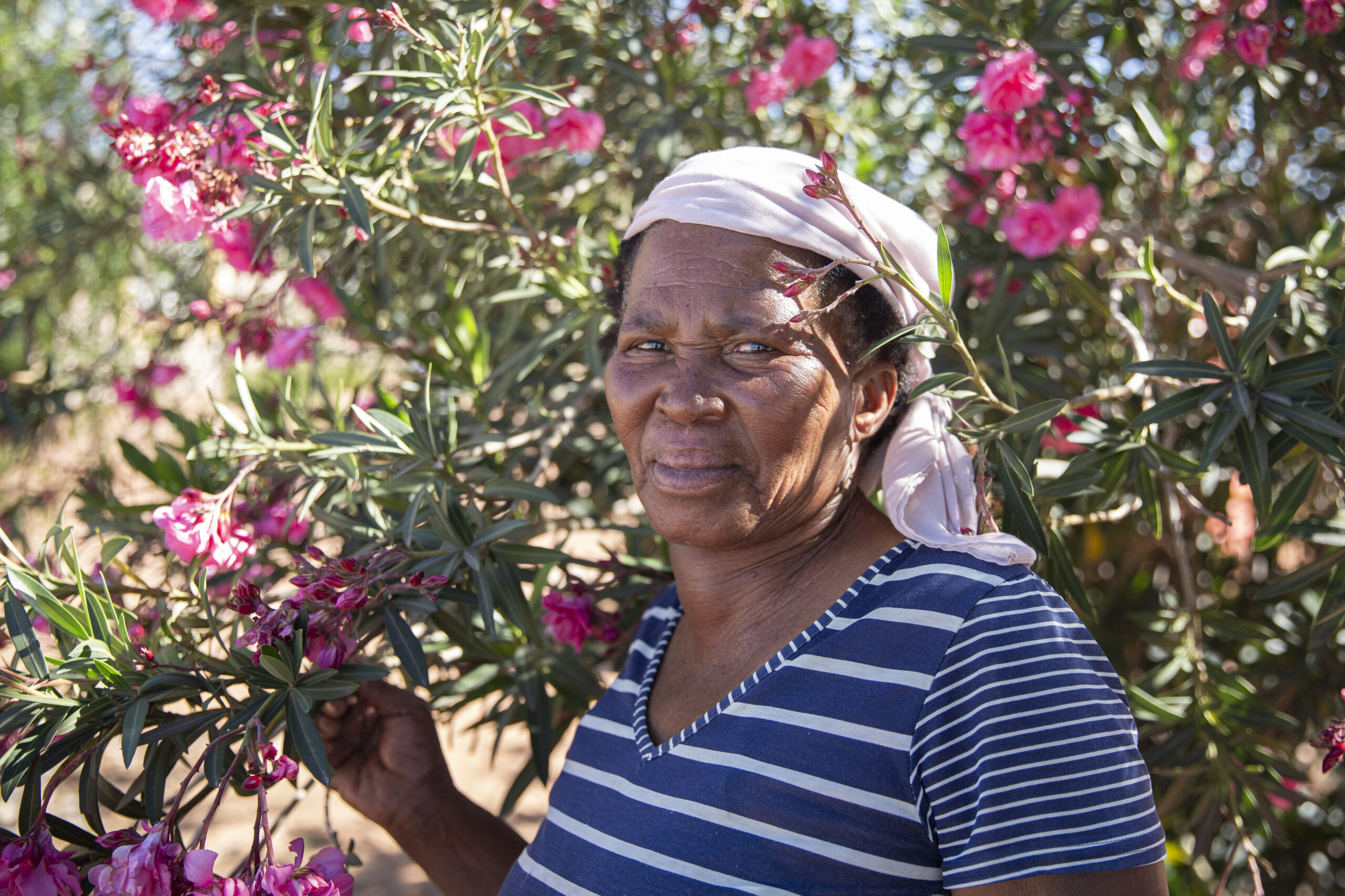
Rosie Joel, mother of seven children: Year after year, her vegetable patch shrank to a tiny cultivated strip. Photo: Madelene Cronjé
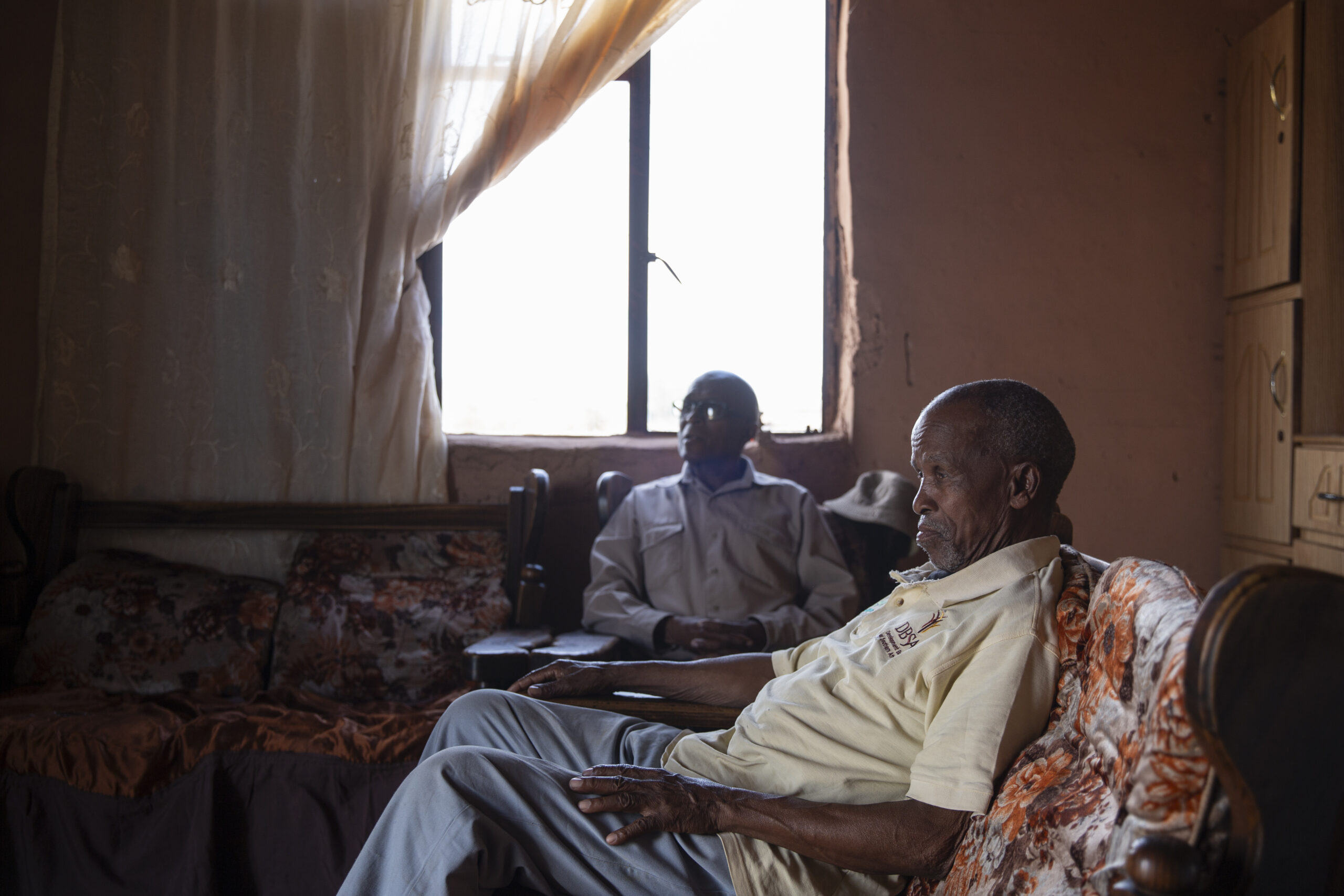
Ben and Joseph Seupe: Their ancestors lived on the manganese fields around Hotazel for centuries. Photo: Madelene Cronjé
Toxic dust
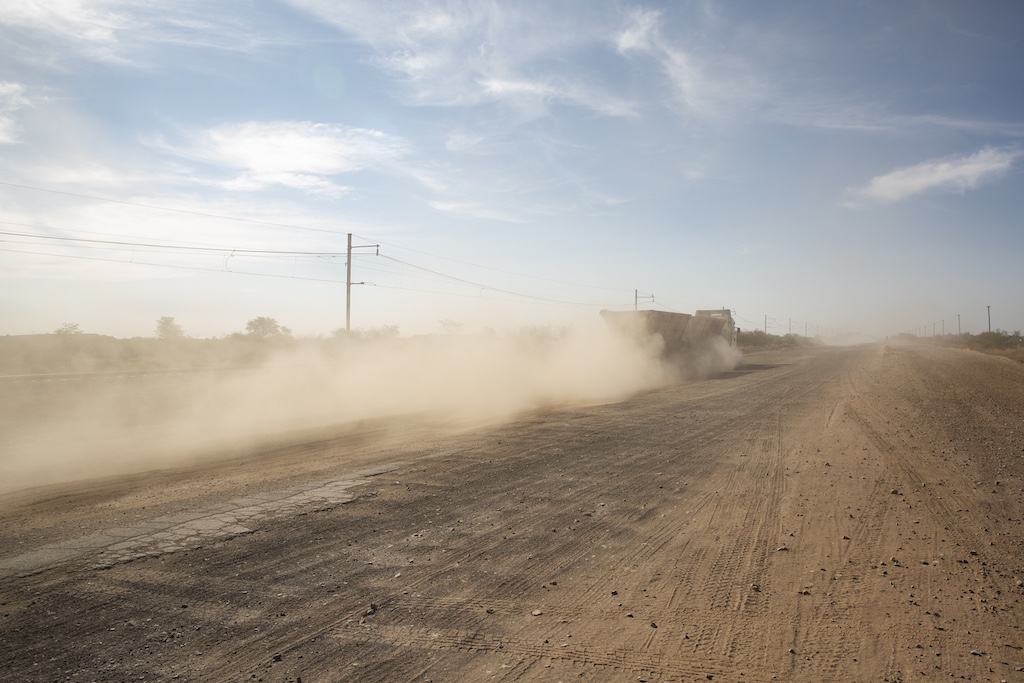
For the communities living near the mines, the boom has brought few benefits but many woes, including a toxic dust that coats their vegetables, grazing lands and waterways.
“We used to have a community garden,” says Rosie. “But then all the plants died.” She tried again in her own yard, planting a vegetable patch for the family. Year after year, it shrank to a tiny cultivated strip.
Her husband, Itumeleng, points to the empty kraal outside. “We used to have cows,” he says. “But the animals got sick. The cattle drink the water where the dust falls and eat the plants.”
Rosie says mining companies routinely undertake to provide paved roads, jobs for young people, streetlights, school facilities and food parcels, only to break their promises. Only one of the couple’s seven children works in the mines. The rest of the family survives on social grants.
Ben and Joseph Seupe live in the settlement of Maruping, a few kilometres to the east, in a two-room house with a corrugated iron roof. They are descendants of the Batlhaping royal dynasty. Their ancestors lived on the manganese fields around Hotazel for centuries. “Then the whites came and studied the minerals. When they started to mine, they chased us away,” says Joseph.
Their walls are cracked too. “When explosions happen, it touches the land,” says Ben, running his finger along a fissure. “Our houses can’t withstand it.”
Dust is also their enemy. “It floats down onto our village,” says Joseph. “It can fall into the water that supplies the animals. It condemns our insides, causing sickness of the lungs.”
He says the mining companies haven’t brought “any benefit” to Maruping. “When we ask for something, they ignore us. We asked them to build schools here. They don’t listen to us. And it’s not fair, because we gave them the right to take whatever they wanted from our land.”
Ben concurs: “This country is rich because of mines, but we are in a ghetto. All of us stay poor and suffer in a rich land.”
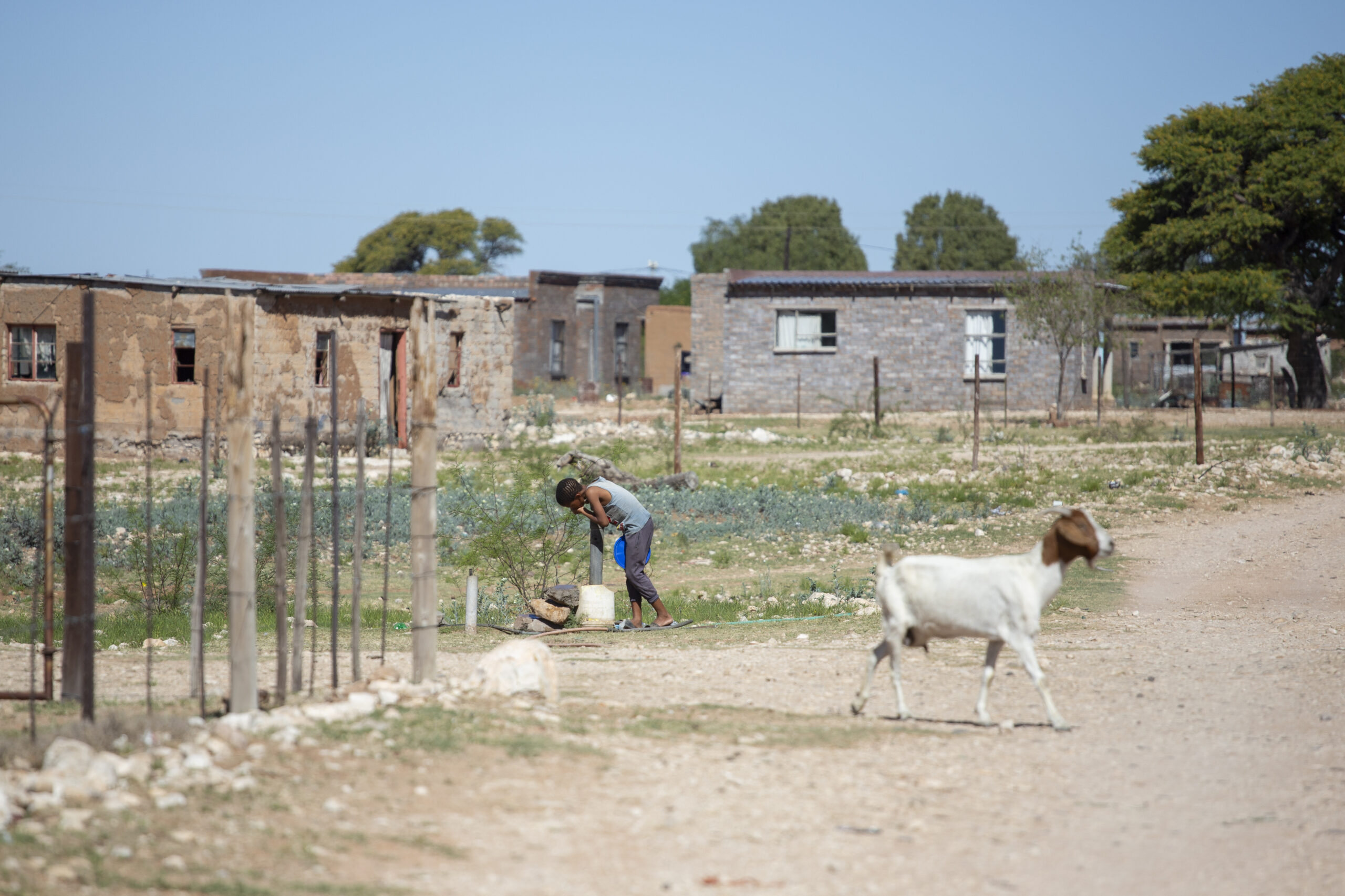
Maipeng village near the town of Hotazel in the Kalahari Desert, Northern Cape, South Africa. Photo: Madelene Cronjé
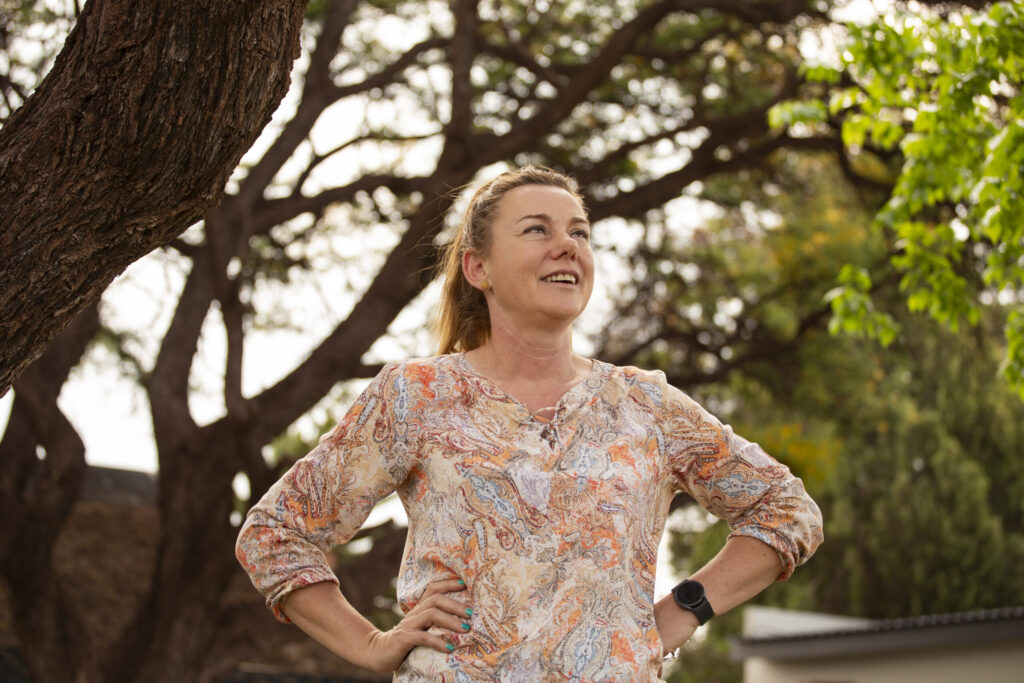
Chrizette Neethling, ecologist and environmental scientist, says thousands of protected trees are cut down every year to make way for roads, power lines and other infrastructure serving the mines. Photo: Madelene Cronjé
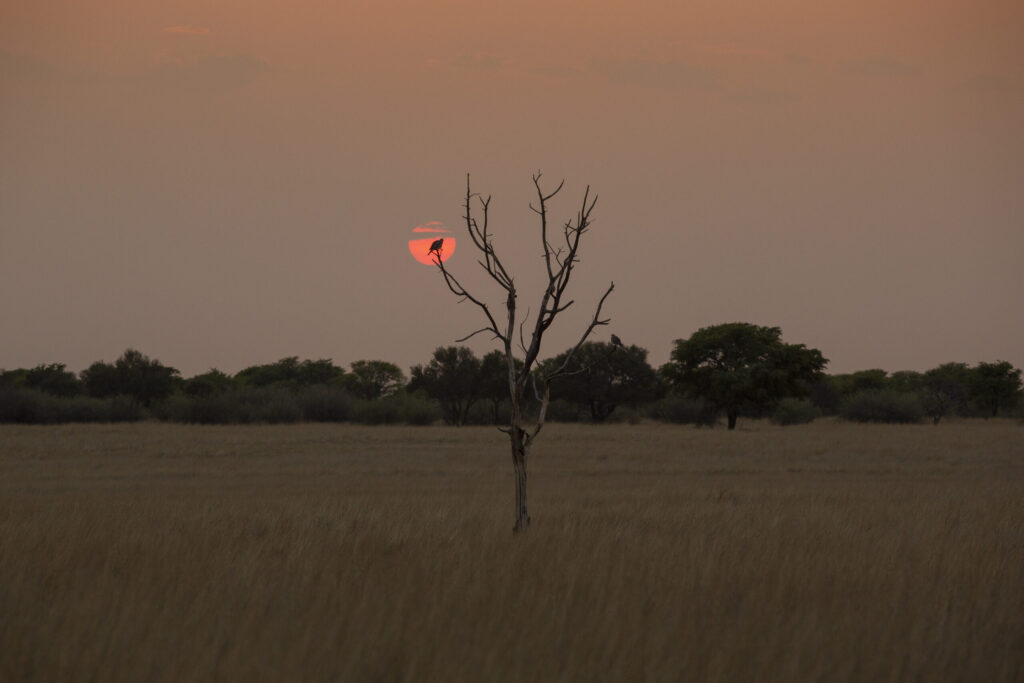
Massive amounts of dust caused by trucks on the dirt roads leading to the mines has a negative impact on the flora in the area, especially the camel thorn, a protected tree species in SA. Photo: Madelene Cronjé
Weak enforcement
The mining boom sweeping across the Kalahari is not only disrupting the lives of local communities but also poses a threat to one of Southern Africa’s most iconic landscapes. Among the victims are the protected Vachellia erioloba tree, a symbol of the region’s arid zones. Often known as “camel thorn” or “giraffe acacia” for the shade and fodder they provide for wildlife and livestock, these slow-growing trees can live for up to 800 years.
“Thousands of them are cut down every year to make way for roads, power lines and other infrastructure serving the mines,” says Chrizette Neethling, an ecologist and environmental scientist. “Companies are required to obtain permits before cutting them down, but enforcement is weak.”
Those that escape the bulldozers are not unscathed. The fine dust kicked up by the constant traffic of transport trucks and mining vehicles settles on their leaves, reducing their ability to absorb light and perform photosynthesis.
South Africa’s mining laws are regarded as socially and environmentally progressive. At the end of apartheid, mining rights were transferred from private owners to the state, which became the custodian of the country’s mineral wealth. The new legal framework was designed to address racial inequalities in mine ownership, limit environmental damage and ensure that workers and neighbouring communities shared in the benefits of mining.
However, complaints are rife that in reality many companies, especially the junior miners, flout or circumvent regulations due to their political connections and inefficient or poorly resourced enforcement.
A local government official, speaking on condition of anonymity, says that municipalities lack the capacity to regulate mines. That responsibility falls to provincial and national departments, which he accuses of merely enforcing “window dressing compliance”. Some smaller mines ignore the rules “because they are owned by big shots”, he says. The larger mines do allocate funds to local communities but “decisions are imposed from the top,” he adds. “It’s PR compliance. They just do it to get a mining licence.”
A Department of Water and Sanitation official, who also requested anonymity because he was not authorised to speak to the media, adds that even the largest mines rarely fully comply with regulations. “Most of them take compliance seriously but very few are 100% compliant,” he says. “Many are only 60% compliant – and we can’t get to all of them.”
The Department of Mineral and Petroleum Resources did not respond to a request for comment.
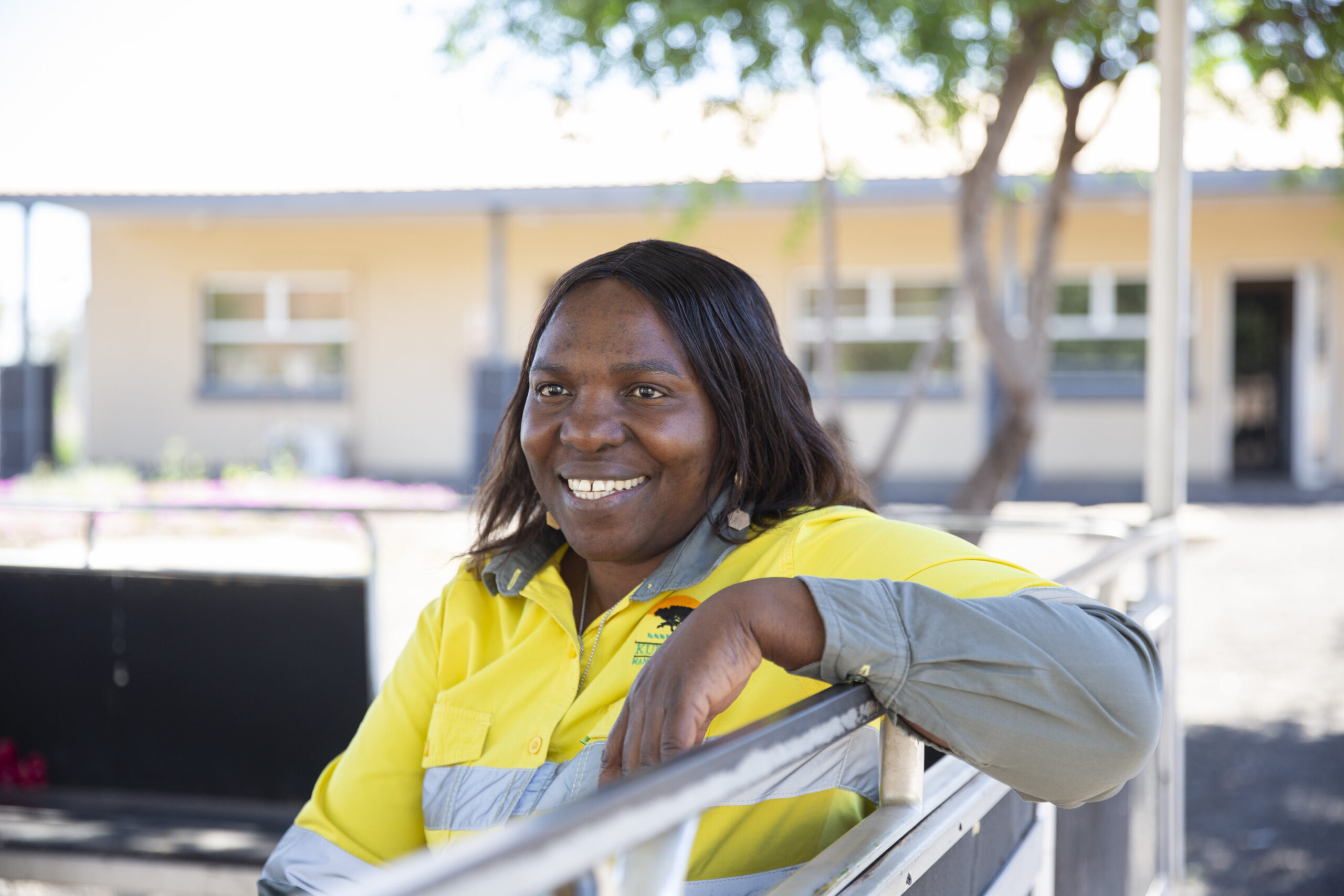
Tshifhiwa Nemakhavhani, health, safety and environmental risk manager at Kudumane Manganese Resources, which operates two mines in the Kalahari. Photo: Madelene Cronjé
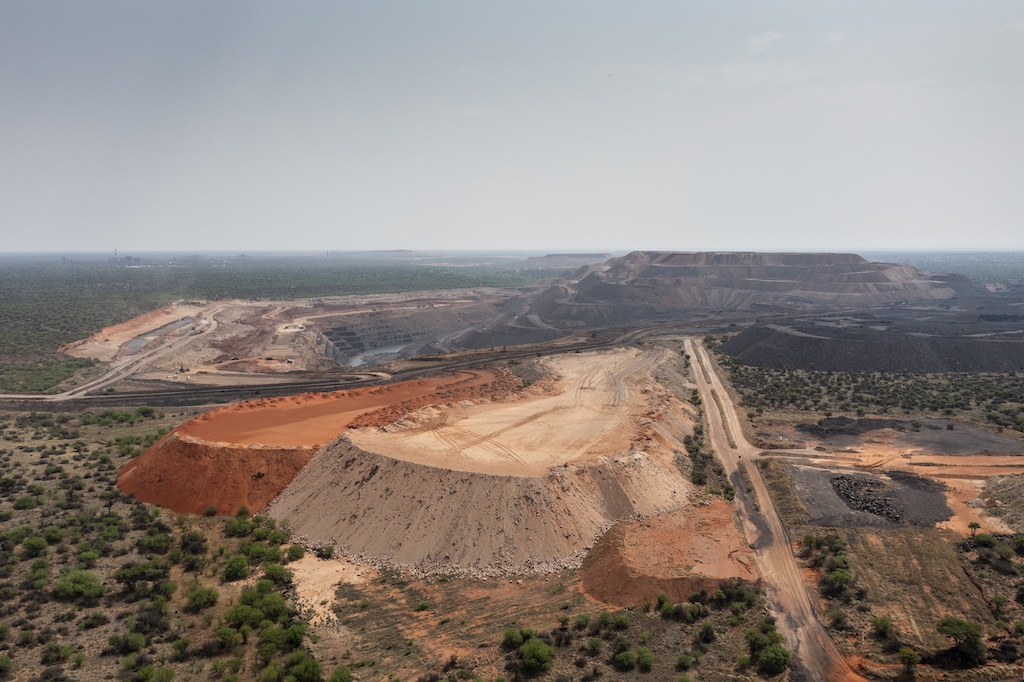
Kudumane Manganese Resources mine near the town of Hotazel in the Kalahari Desert, South Africa. Photo: Madelene Cronjé
Local consultation
Tshifhiwa Nemakhavhani, head of health, safety and environmental risk at Kudumane Manganese Resources, a company that operates two mines in the area, rejects the suggestion that the sector is poorly regulated. She insists that spending decisions are made after local consultation, and are signed off by municipalities. “Development project ideas come from the community, because they know what their needs are,” she says.
Environmental standards are stringent and strictly adhered to, she adds, noting the long list of permits required, including those for felling protected trees. Mines must keep a rehabilitation fund for closure, based on a constantly updated plan. Backfilling with waste continues during mining, and topsoil is stored separately, to be used later. Water and air quality is constantly monitored, and remedial action taken if needed, she says.
In an emailed statement, a spokesperson for South32, which owns a majority stake in Hotazel Manganese Mines (HMM), an operator of two mines in the area, says the company consults widely to ensure its social and labour plan commitments meet local needs.
“The HMM team goes to where the people are, including to the most remote places, to ensure we consult with our host communities,” he explains, adding that more than 3,000 people were consulted in preparing the most recent plan, which was printed in two languages and shared widely, and that regular progress meetings are held.
He insists the company “takes its environmental obligations seriously”, performing quarterly water monitoring in accordance with legal requirements and complying with integrated water use licences.
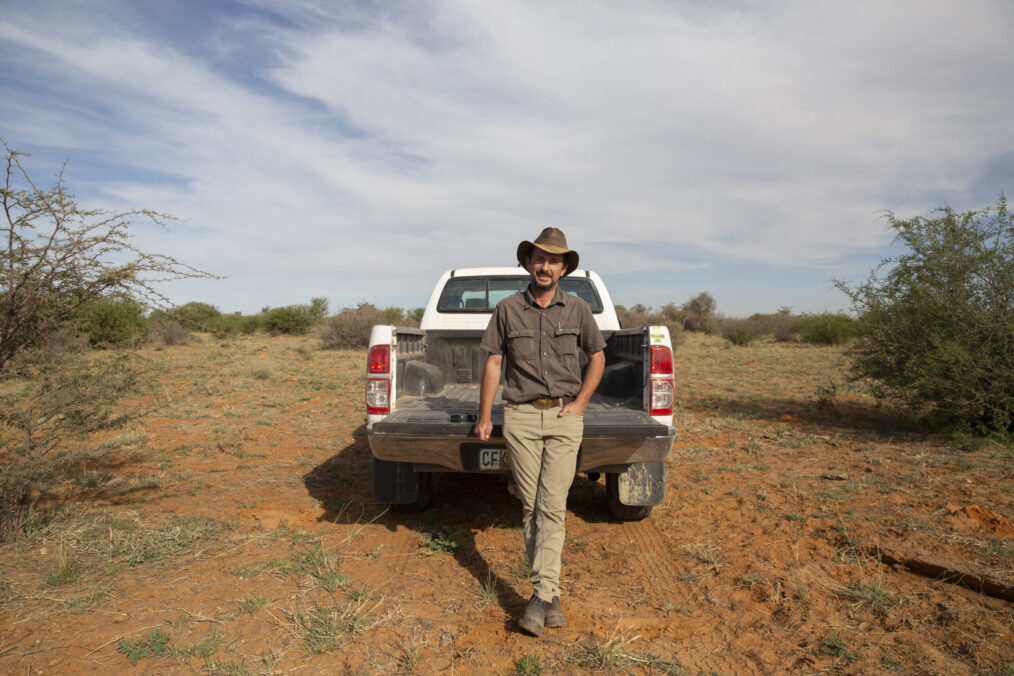
Eben Anthonissen, whose family farm is surrounded by manganese mines. Photo: Madelene Cronjé
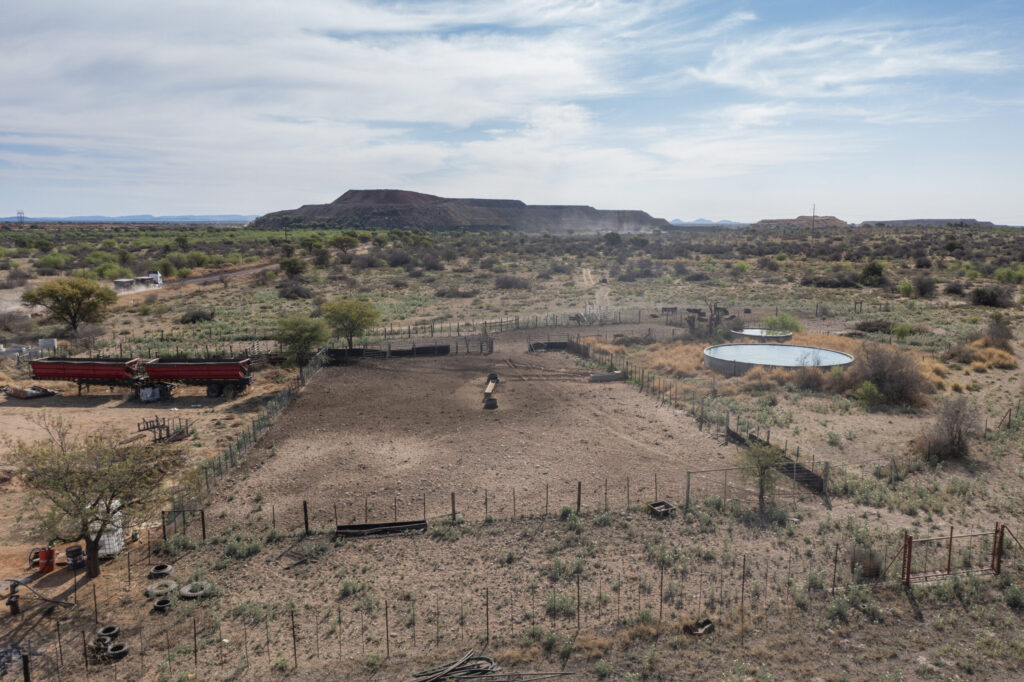
A manganese mine near Eben Anthonissen’s farm. Photo: Madelene Cronjé
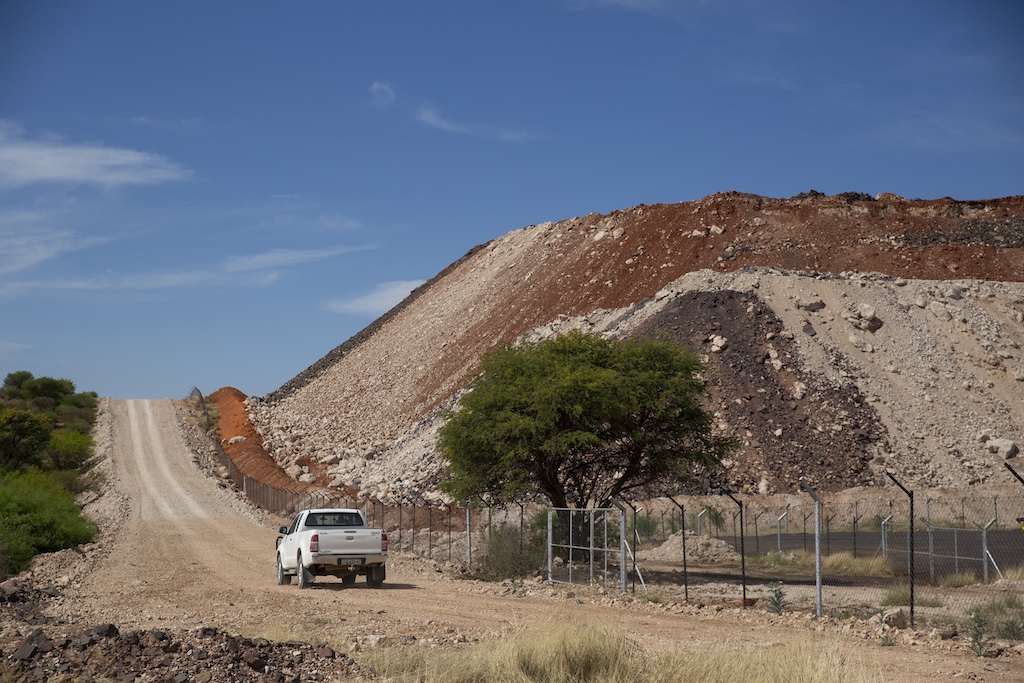
Eben Anthonissen drives past a manganese mine next to his farm. Photo: Madelene Cronjé
Water contamination
Eben Anthonissen sees things differently. On his cattle farm south of the mining town of Hotazel, wearing a leather bush hat to shield his face from the sun, he points to the dry riverbed that borders his grazing pastures. “They’re digging a mine right there,” he says. “Upstream, the blasting is contaminating the aquifer we use to water the animals.”
Anthonissen regularly tests the water and says nitrate levels are rising. Nitrates are contaminants that can impair the blood’s ability to carry oxygen and, at high levels, can be dangerous for babies.
Studies have shown that high nitrate levels are common in Kalahari groundwater and can result from both natural processes and human activity. Mining is one source, as many explosives used to fracture rock contain ammonium nitrate compounds that can leach into groundwater when loaded into blast holes with water or into fractured rock.
A 2018 assessment of the Tshipi Borwa manganese mine near Hotazel found nitrate levels in local groundwater exceeding the World Health Organization (WHO) guideline of 50 milligrams per litre, while a more recent study identified nitrate as a major contaminant of concern at an open-pit manganese mine near Hotazel. The study noted that the area’s groundwater is used by residents and farmers, and that mining activities such as blasting, waste dumping, and surface works can allow contaminants to reach the aquifer.
Anthonissen also states that his boreholes produce less water each year. Mining companies constantly pump out water to maintain the stability of the excavations, a process known as dewatering. This can cause wells to dry up for a radius of several kilometres.
A 2018 hydrological report commissioned by farmers’ union Agri Northern Cape warned that groundwater levels in the region could take more than a century to recover. The report points to loss of aquifer pressure, decreased flows in streams and wetlands, springs disappearing, and a legacy of contaminated pit lakes. It also flags concerns that water use licences are being issued without due regard to cumulative impacts.
Other reports, some commissioned by the mining companies themselves, have highlighted the lack of attention paid to the effects on groundwater of concentrated mining activity in the region, also pointing out flows are only expected to return to normal a century after mine closure and that underlying aquifers are at significant risk of contamination if sites are poorly managed.
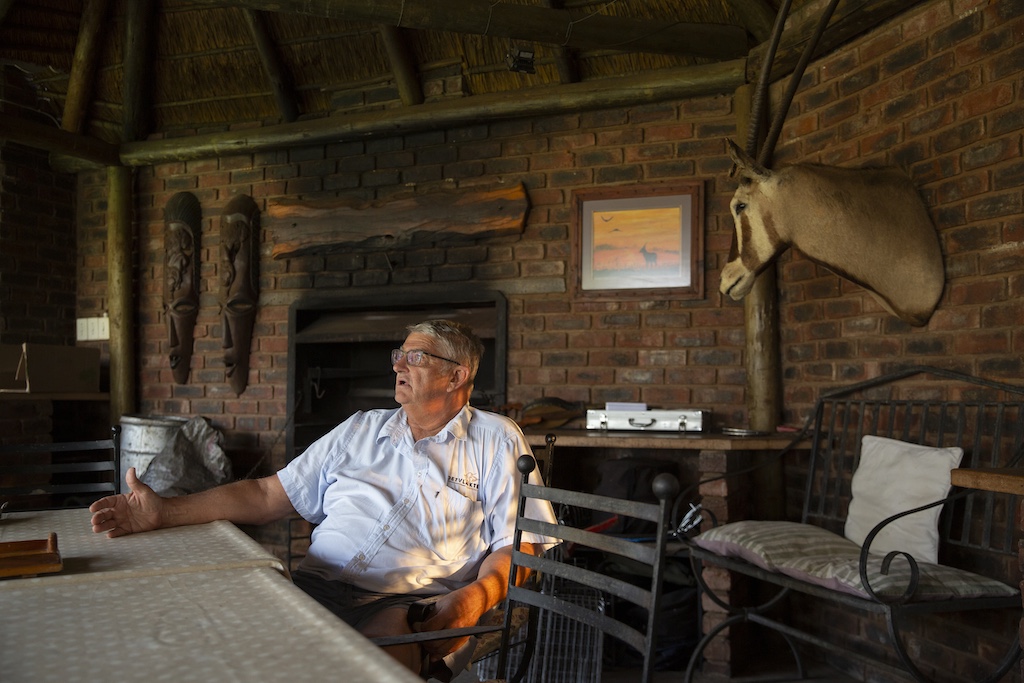
Local farmer Louis Hauman says hydrological reports deliberately downplay long-term impacts. Photo: Madelene Cronjé
Looking north
As the deposits around Hotazel become depleted, mining companies are looking north toward the Botswana border. This area remains unspoiled for now, filled with acacia forests, giraffe, gemsbok, kudu, sable antelope and wildebeest. Game and cattle farmers watch with trepidation as mineral prospectors encroach on their land.
“My family has owned this land since the 1970s,” says a rancher who asked not to be identified. “There’s nowhere else in the world I’d rather live.” His biggest fear is running out of water. Mining companies claim there will be enough for everyone, but he doesn’t believe them. “I’ve got water storage for one week – then my animals will start dying,” he says. “I’m not against mining. It has its place, since it creates jobs and contributes to the GDP. But no one can guarantee my water supply will be safe.”
Louis Hauman says those suspicions are not unwarranted. His family has been farming in the area since 1943, and he used to manage different manganese mines near Hotazel. He says hydrological reports deliberately downplay long-term impacts. “The instruction is not to conduct an objective study of the water. It’s to get a water use licence accepted.”
His neighbour Pieter Grové is also wary of the industry’s advance. Prospecting applications have already been lodged on his land. He is particularly concerned about plans to tar the only access road to the area, which would facilitate industrial-scale extraction. “That would be the final blow,” he says, watching a giraffe heading towards a watering hole, followed by her calf. “I don’t want to lose all this because of people who are only after money.”
This investigation, featured by the Oxpeckers #MineAlert programme, was developed with the support of Journalismfund Europe