
10 Jun Unprepared projects hold back climate finance
After three years of following JET money, Thabo Molelekwa finds the focus of high-level discussions now is how to prepare and implement projects
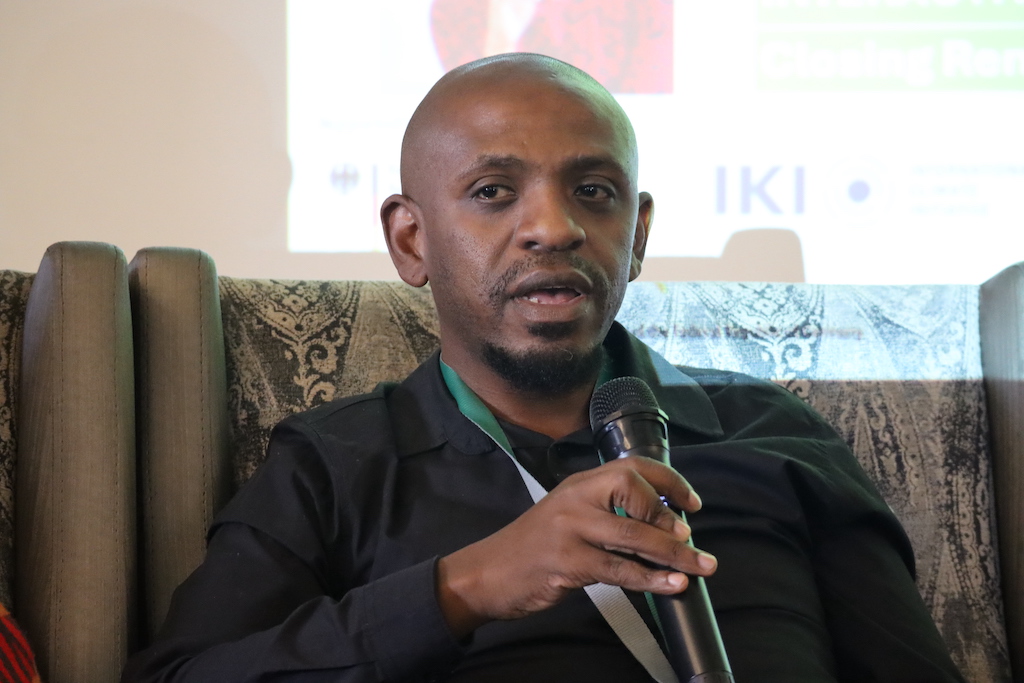
Oxpeckers associate editor Thabo Molelekwa spoke about the role of media at the Presidential Climate Commission (PCC) policy dialogue in May 2026. Photo courtesy PCC
South Africa has secured almost $14-billion in international climate finance commitments since launching its Just Energy Transition Partnership (JETP) with wealthy donor countries to fund the shift away from fossil fuels in 2021.
But funding data reviewed by Oxpeckers shows that, while some international partners have allocated most of their commitments, others have barely begun moving money into transition projects.
Germany has allocated its entire US$2.68-billion commitment. The World Bank has allocated its full US$1-billion package. Spain, meanwhile, has allocated just US$3-million of a US$2.28-billion commitment, while the Accelerating Coal Transition Investment Plan – a global financing mechanism by the Climate Investment Funds – has allocated US$50-million of its US$2.6-billion pledge.
Overall, approximately US$5.8-billion of the nearly US$14-billion committed – or (41%) – has been allocated to transition projects and programmes.
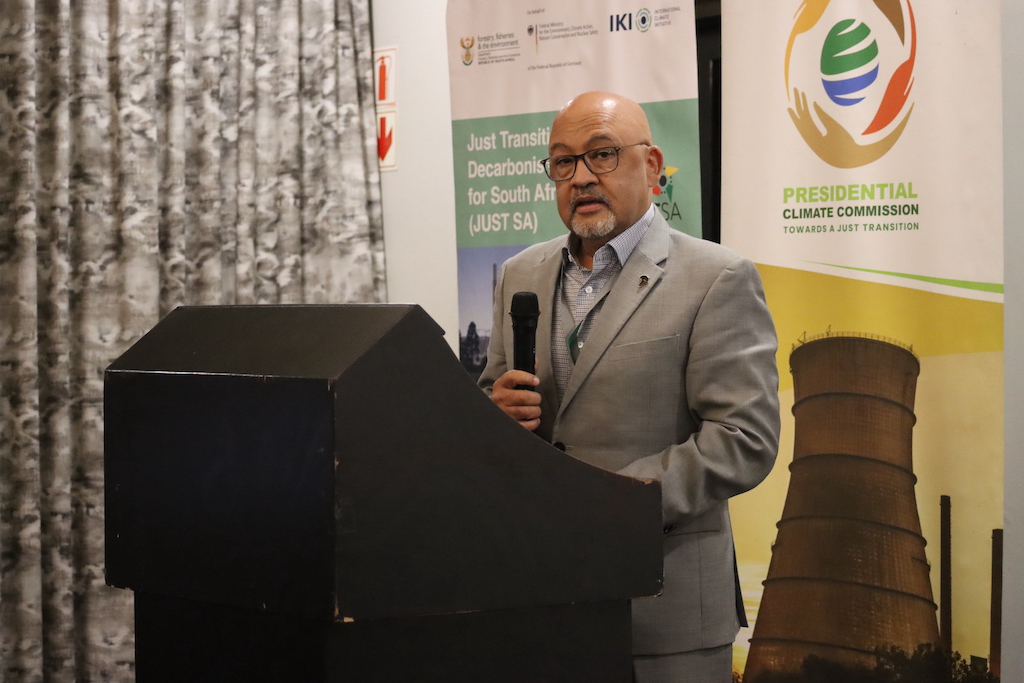
Neil Cole: ‘We don’t have a shortage of capital. What we have is a shortage of project pipeline and support for the preparation of those projects.” Photo courtesy PCC
Project preparation needed
The figures were presented during a Presidential Climate Commission (PCC) policy dialogue held in May 2026, where government officials, financiers, municipalities, researchers and civil society organisations gathered to assess progress in South Africa’s energy transition.
According to Neil Cole, the financing manager at the JET Project Management Unit, the issue is not just a financing gap.
“We don’t have a shortage of capital in South Africa,” Cole told Oxpeckers. “What we have is a shortage of project pipeline and support for the preparation of those projects.”
His assessment reflects a notable shift from concerns that dominated earlier stages of South Africa’s transition.
Following the money for the JETP since early 2023 (see Pledges roll in for SA’s energy transition), the Oxpeckers #PowerTracker project has identified weak municipal finances, project-readiness challenges and institutional bottlenecks as barriers preventing climate finance from reaching projects.
More than three years later, policymakers and financiers agree that increasing attention needs to be given to project preparation and implementation.
The question now is whether the barriers identified in our previous reporting are beginning to ease – and whether climate finance is translating into projects capable of creating economic opportunities in coal-dependent communities.
Following the money
The latest funding data reviewed by Oxpeckers reveals significant differences in how quickly international commitments are moving through the allocation process.
Germany remains one of the largest contributors and has assigned its commitment across a range of programmes, including support for electricity sector reforms, municipal infrastructure, green hydrogen development and skills initiatives linked to the transition.
The World Bank has allocated its commitment through a development policy loan, commonly referred to as a budget support package. This funding, provided directly to the government rather than a specific project, is intended to support reforms in the electricity sector, strengthen the country’s energy transition framework and create conditions that can attract further investment.
France has allocated $760-million of its $1.08-billion commitment (42%), while the United Kingdom has allocated $347-million of the $1.83-billion (19%) it pledged.
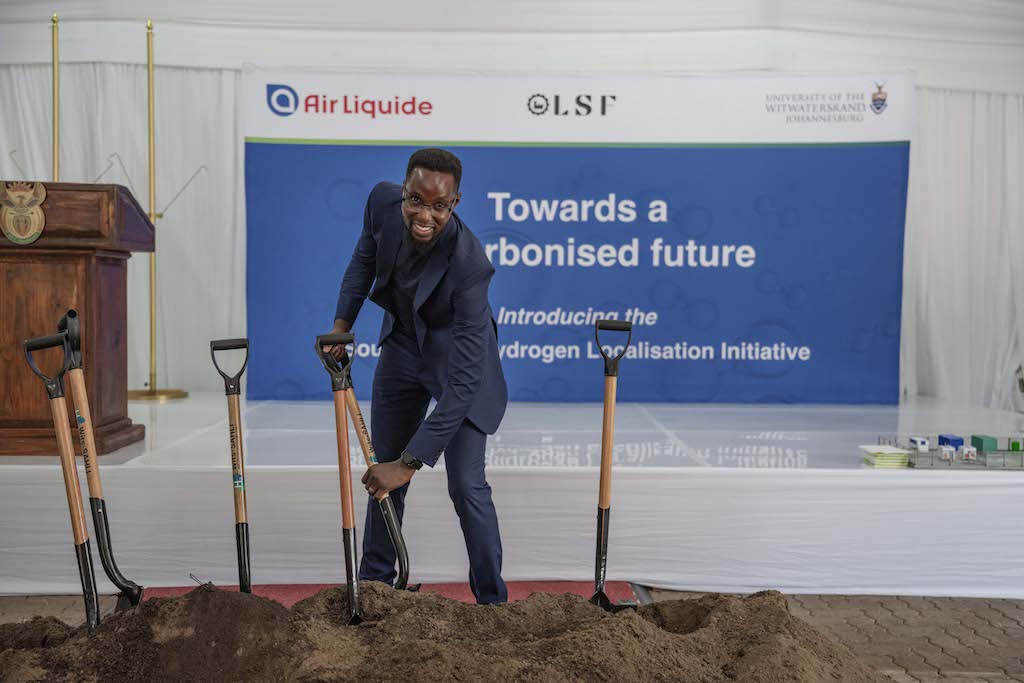
Green hydrogen development, which Oxpeckers has been following since 2023, is one of the key areas in need of financing, as identified by the JETP. Pictured here is Professor Rodney Genga, assistant dean of strategic projects at the Wits Faculty of Engineering and the Built Environment. Photo: Ihsaan Haffejee
Revisiting the barriers
The challenge of transforming finance into implementation is not new.
When #PowerTracker investigated climate finance flows in 2024, municipalities and transition stakeholders repeatedly cited weak balance sheets and project readiness constraints as barriers preventing projects from moving forward.
According to Cole, those challenges remain relevant: “The issue is less about a lack of project ideas and more about the shortage of well-prepared, finance-ready projects across the JET portfolios,” he said.
“The JET Investment Plan is designed to bridge that gap by translating strategic priorities into a pipeline of investable projects and programmes that can unlock funding and accelerate implementation.”
South Africa’s JETP identified financing needs across several priority areas, including electricity decarbonisation, economic diversification, skills development, municipalities, green hydrogen and new energy vehicles.
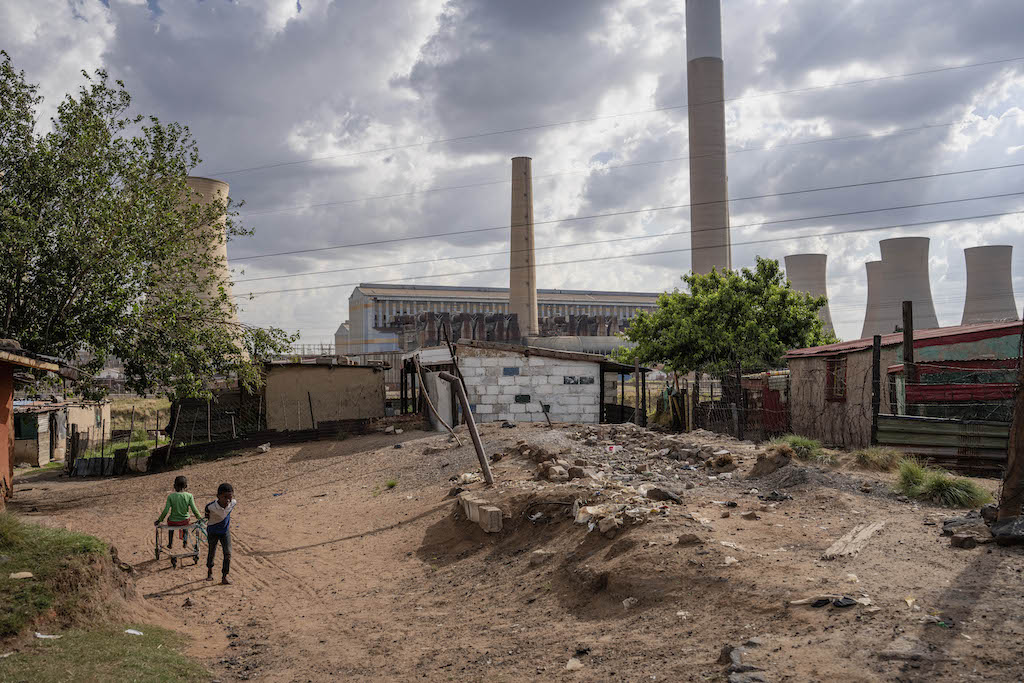
Our reporting has highlighted weak balance sheets across affected municipalities, but a new government programme seeks to change this. Photo: Ihsaan Haffejee
Bankable projects
But identifying investment needs and developing bankable projects are not the same thing.
Cole said his unit has increasingly focused on supporting project preparation through the JET Funding Platform.
“One of the facilities that we’re introducing into the funding platform now is project preparation,” he said. “We’ve secured funding for that to support communities to develop these plans.”
The intention is to help communities and institutions develop business plans and project proposals capable of attracting available finance.
One of the biggest barriers identified in previous Oxpeckers reporting was the inability of many municipalities to access finance because of weak balance sheets.
Cole said the Municipal Utility Reform Programme, launched in November 2025, was designed specifically to address that problem.
He noted that many municipalities had effectively become unbankable because of concerns about their creditworthiness.
He explained how the new model will work: “National Treasury will be the borrower of the funding. The resources will be channelled through the DBSA [Development Bank of Southern Africa] to support municipal infrastructure investments, with the DBSA responsible for procuring developers and implementing partners to deliver the projects.”
The programme is expected to support four municipalities in Mpumalanga: Lekwa, Mbombela, Goven Mbeki and Emalahleni.
For Cole, the logic is straightforward: finance cannot move if projects are not ready.
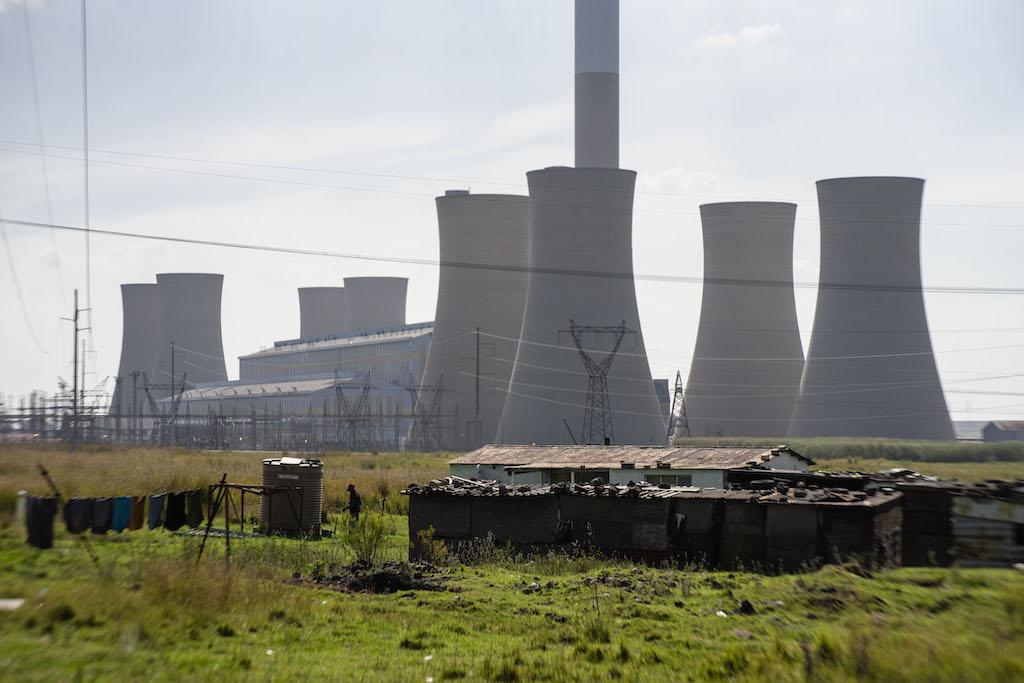
Researchers say that diversification should have been the focus before Komati Power Station was decommissioned in late 2022. Photo: Ihsaan Haffejee
Early stages
Ntombifuthi Tshabalala, an economist and researcher at Trade and Industrial Policy Strategies, said South Africa still has significant work to do: “We’re in the very, very early stages of implementation,” she told Oxpeckers.
Using the closure of Eskom’s Komati power station as an example, Tshabalala argued that diversification planning should begin long before facilities are decommissioned. (Read our investigation ‘Locked into coal’ here).
“If there was focus on diversification prior to the closure of Komati, then there would have been plans that were already in place to create economic opportunities,” she said.
Tshabalala warned that implementation delays create uncertainty for affected communities and can discourage both investment and new economic activity.
She added that countries that have progressed further in their transitions typically plan years in advance and align policy, investment and implementation before closures occur.
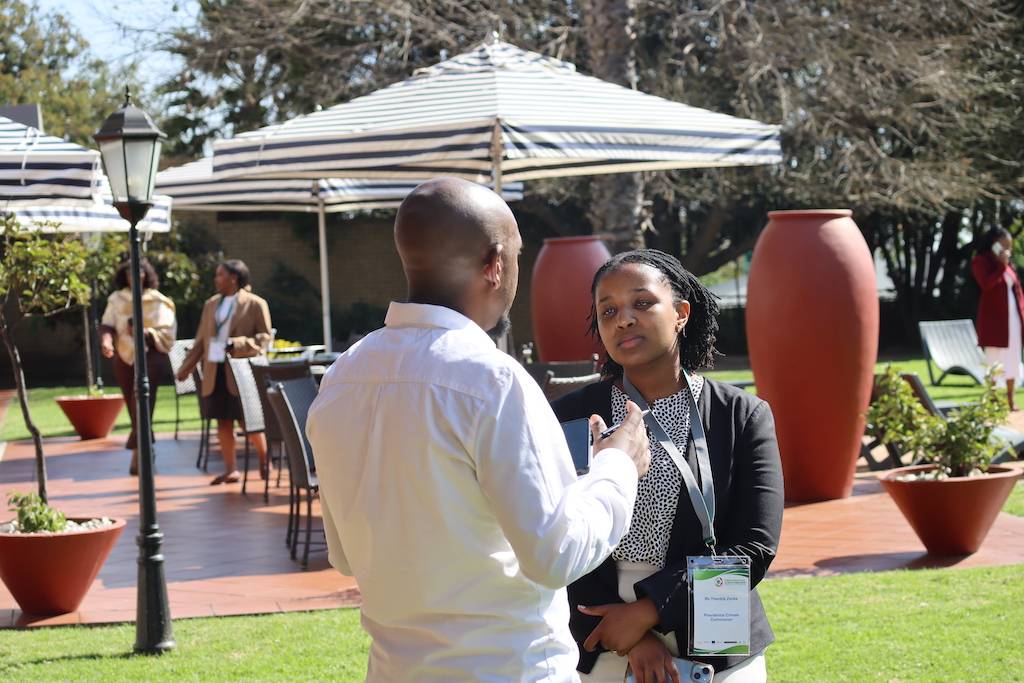
Oxpeckers’ Thabo Molelekwa interviews PCC commissioner Thandile Zonke, who emphasises that ‘nobody gets left behind’ in the just transition. Photo courtesy PCC
Beyond finance
While much of the PCC dialogue focused on funding and implementation, participants also highlighted the importance of community participation.
For PCC commissioner Thandile Zonke, procedural justice remains one of the foundations of the transition: “At the heart of the just transition is the sentiment that nobody gets left behind.”
Zonke said community consultation had been embedded in the PCC’s work since its establishment and would remain a priority as projects move into implementation.
“It’s not a matter of us starting to implement programmes and projects, and communities are not continuously kept in communication or understanding of what is happening,” she said.
According to Zonke, meaningful participation requires institutions to remain responsive to community concerns and avoid assuming they already know what communities need.
“We cannot proclaim that this is how it’s supposed to be,” she said. “It’s an iterative process.”
Track financing and development of energy sources on our #PowerTracker tool here
Thabo Molelekwa is assistant editor at the Oxpeckers #PowerTracker project, which is supported by the New Economy Hub and Ford Foundation