
22 May A silent killer lurks in Zimbabwe coal capital’s rivers
The waters of the Lukosi and Deka rivers are a lifeline for riverine communities in Hwange. But they also carry toxic waste from coal mines, sickening residents, livestock and fish alike. Could selenium poisoning be the culprit? Oscar Nkala investigates
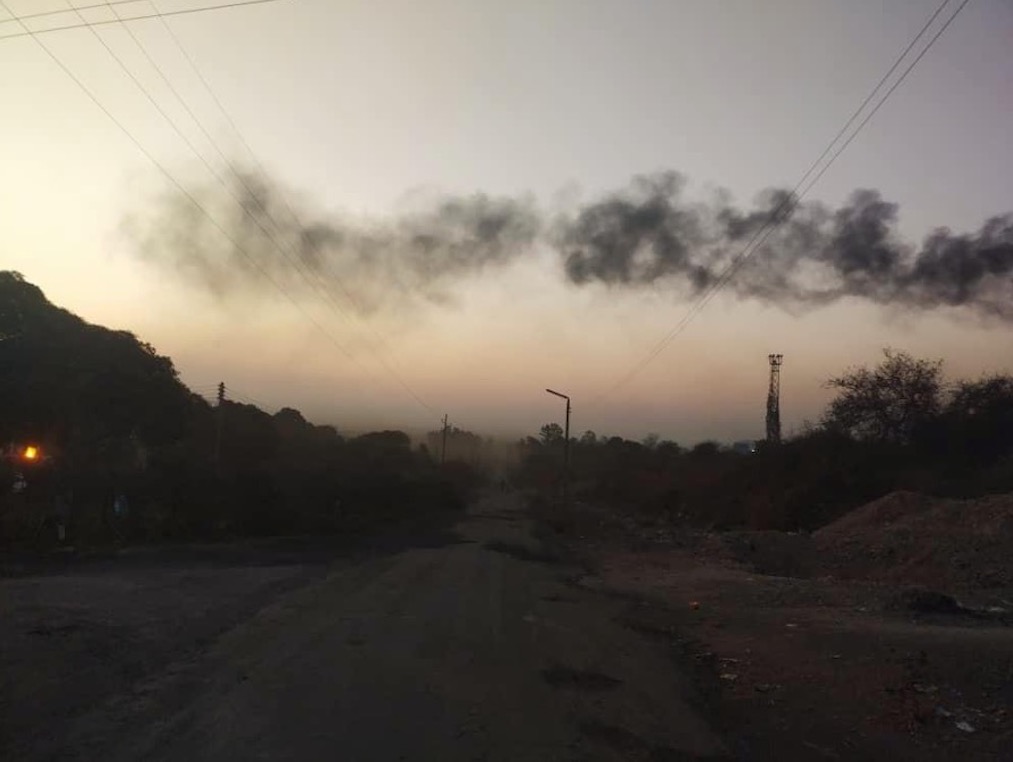
Smoke and haze drift over Hwange as the sunset gives way to dusk. Photo: Warren Nkala
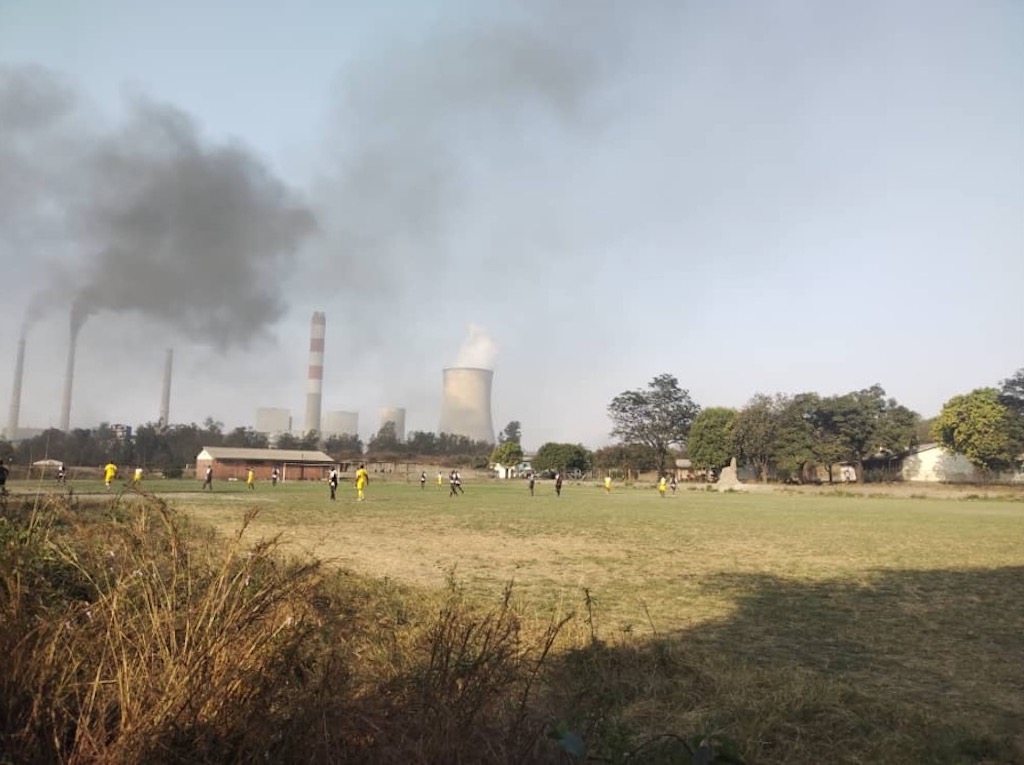
Every weekend, Hwange’s social soccer teams gather here for soccer tournaments despite heavy air pollution from the nearby thermal power station. Photo: Warren Nkala
At first glance there is nothing to distinguish the people of Nekabandama village in the remote northwestern district of Hwange, Zimbabwe, from residents of similar hamlets around the Lukosi River catchment.
But then they share stories of a mysterious, debilitating ailment that struck the village in 2018. It left 48 people frozen like statues within hours of onset – and residents and community activists insist it was caused by the coal-polluted waters of the very river that is meant to be a lifeline.
The Lukosi runs about 15km east of Hwange, the capital of Zimbabwean coal mining and thermal power generation. Its waters sustain around 2,000 people, their livestock and food gardens, and help to power coal mines in the area.
The 2018 outbreak of what locals dubbed “umsheshaphansi”, an Ndebele word referring to something secretive and elusive, is not the only example of an apparently water-borne health crisis in Hwange. Mass fish and livestock deaths have also occurred, most recently in 2023.
Water samples were tested after 2018’s umsheshaphansi. Residents say the government was secretive about the results. But hospital sources reportedly told community activists that tests “conclusively linked” the ailment to water from a stretch of the Lukosi contaminated by a chemical spill from a coal mining venture that was shut down in early 2018 for not complying with health and safety protocols.
Oxpeckers collated information from media reports published between October 2023 and December 2025 to assess what is known about the epidemiological impacts of coal mining on workers and communities along both the Lukosi and another nearby river, the Deka.
We found at least five coal-related water poisoning incidents that killed fish and livestock. Between 2005 and 2023, such incidents occurred about once every four years.
In the same period, people, aquatic and plant life that came into contact with the Deka’s waters have developed signs and symptoms of poisoning by selenium, a highly toxic compound produced by the combustion of coal in thermal power stations and coal mines. It is released into the air and water bodies through toxic wastes.
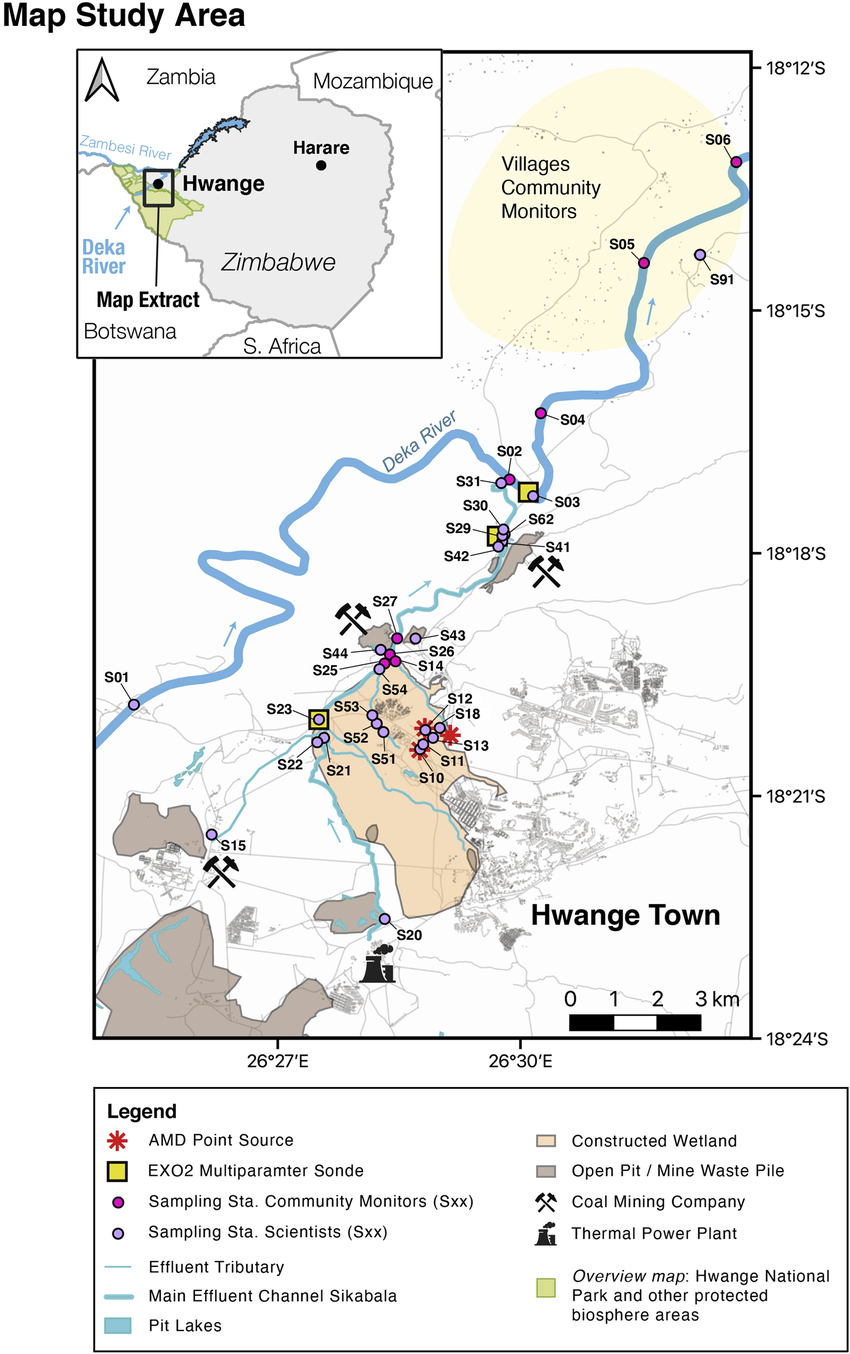
Maps showing the Deka River in relation to the sources of pollution in Hwange. Source: Science Direct
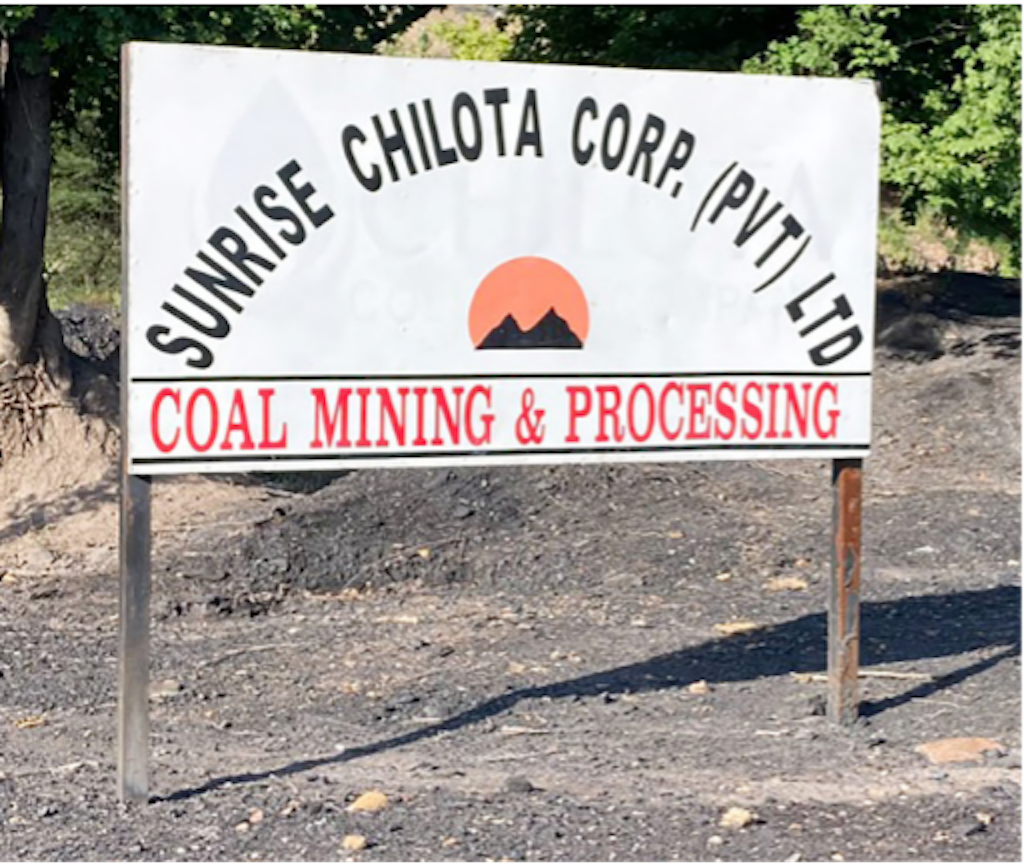
When it closed down late in 2018, Sunrise Chilota Colliery left a legacy of acid mine drainage that persists unchecked to date: Photo: Warren Nkala
Umsheshaphansi
Umsheshaphansi hit Nekabandama in May 2018.
“First, I felt dizzy. Then the headache and nausea set in. Within an hour, I lost body coordination. I was rendered immobile, a complete statue. Within hours, reports of more people falling ill and presenting the same symptoms I exhibited emerged,” Zamani Nyoni, a village headman at Nekabandama Ward, told Oxpeckers. (In Zimbabwe, a ward is an administrative unit of 100 homesteads.)
“By the end of the day there were 48 people seeking treatment at Lukosi Hospital. The nurses initially suspected malaria but none tested positive. We were given antibiotics for four days before we felt better and were discharged. We were not told the name of the disease or what caused it, but we have no doubt that it came from the waters of the Lukosi. The infected people came from different villages, but all sourced water from the same stretch of the Lukosi,” Nyoni said.
At the same time, 15 cows died in Nekabandama. Nyoni said the animals exhibited “bizarre symptoms never seen or heard of in this village before”.
Tissue samples collected by the Ministry of Health from patients, cattle carcasses and water samples from selected segments of the river reportedly produced “inconclusive” results. The villagers remain sceptical about the credibility of the testing process.
“We believe we were lied to. The samples were tested at two government hospital laboratories as well as Hwange Colliery Hospital. The government was secretive with its findings. However, sources at the Colliery Hospital said the tests conclusively linked the ailment to the ingestion of contaminated water from a specific stretch of the Lukosi which was affected by a mining chemical spill,” Tendai Kalimbota, a local community rights activist affiliated to the Greater Hwange Residents Trust, told Oxpeckers.
Kalimbota continued: “The hazardous chemical spill was traced to Chilota Colliery, a Chinese-Zimbabwean joint venture coal mine which operated on the banks of the Lukosi before it was closed down for non-compliance with mining and public safety protocols early in 2018.”
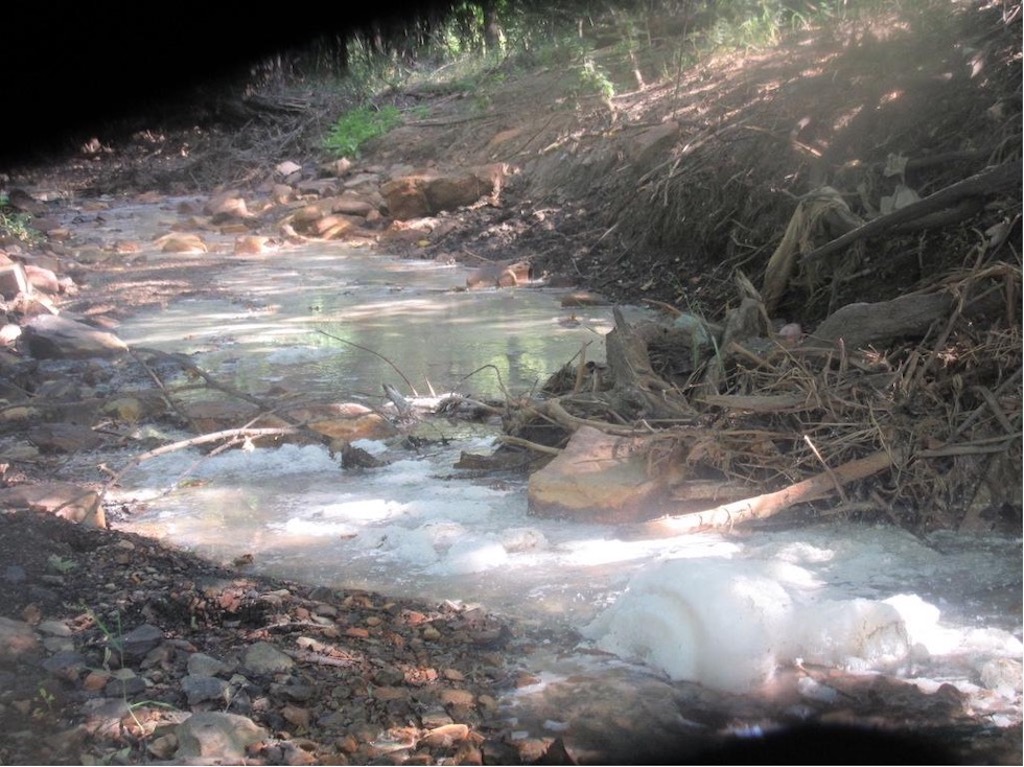
Acid mine entry point into the Deka River from the abandoned Chilota Colliery in Hwange. Photo: Warren Nkala
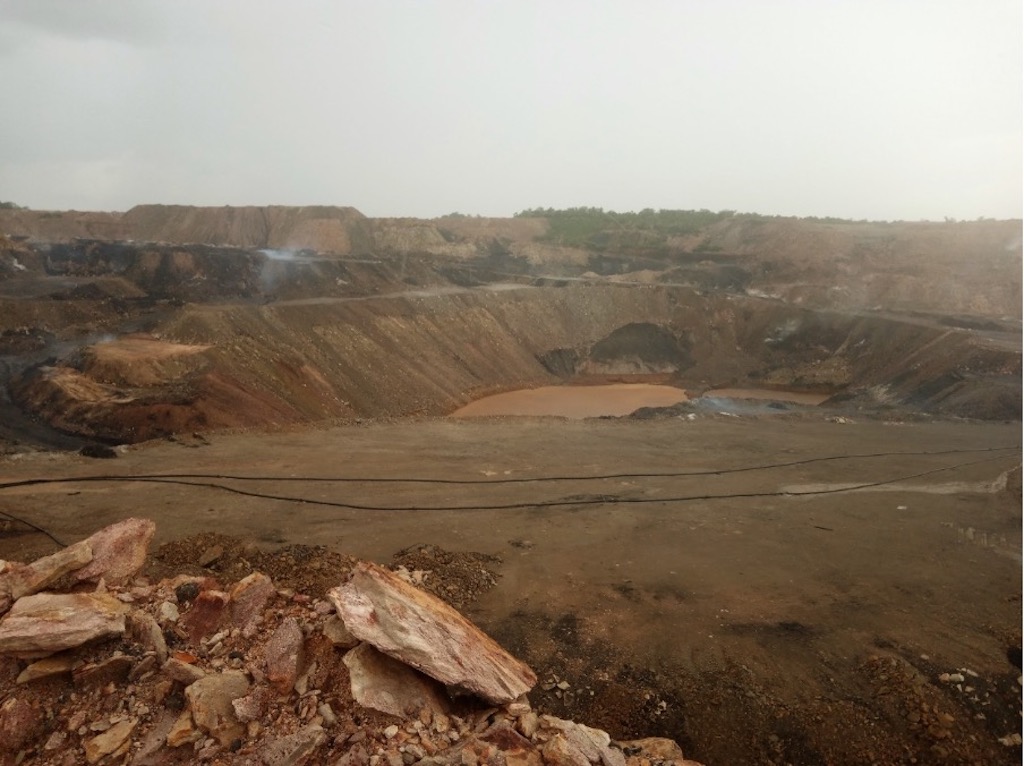
Disused open cast coal mines like this one are found throughout the Wankie coalfields. Photo: Warren Nkala
Death in the Deka
Communities along the Lukosi were still struggling to identify the cause of the mystery ailment when villagers living along the Deka River, north-west of Hwange, woke up one morning in April 2019 to find the river covered by a floating white carpet of dead fish.
“It was much more than fish. Frogs, snakes, snails and everything that lives under water was dead. The water, usually dull grey in colour, had changed to combat green. It was flowing, but much more sluggishly, splashing, but not bubbling and had a clearly visible oil slick. The fish which were still alive leapt frantically out of the water, gasping for breath, only to drop straight back into the green puddle and die,” Marjorie Ncube, a resident of Simangani Ward, recalled.
That was neither the first nor the last fish die-off along the Deka in living memory; some happened as far back as 1950. Coal mining began in Hwange in the early 1900s.
Shamiso Nechilibi, a cattle farmer, said it was only in 2012, “when fish, cattle and goats died en masse at the same time that we realised the problem was in the water”.
He said that a 2012 investigation by the biggest coal miner, Hwange Colliery Company, and the Environmental Management Authority “attributed the recurrent fish deaths to pollution from Chilota Colliery, Zambezi Coal and Gas, Hwange Colliery Company, Makomo Colliery and the Zimbabwe Power Company among others”. Oxpeckers sought out but could not obtain a copy of this report.
“Since then, mass fish and livestock deaths occurred in 2019, 2021 and 2023. Livestock which drink Deka water suffer premature and still births. The few calves that survive are born with terminal deformities and often die within days of birth,” Nechilibi said.
Former Hwange West Member of Parliament Jealous Sansole said these riverine communities were victims of geographical location and poor planning.
“All the governments prioritised coal mining and scaling up thermal power production in Hwange. However, they never planned for managing the implications of disposing hazardous wastes on a river that served people in the downstream communities, the environment and natural ecosystems.
“The source of the Deka River lies at the heart of the Wankie coalfields. All the mines, industries and municipal sewer systems in Hwange dispose raw effluent directly into the river. The volume of effluent has increased dramatically since 2000, when Zimbabwe licensed several new coal miners,” Sansole said.
He added: “Today, locals cannot farm or rear livestock. The people who proudly call themselves ‘Basilwizi’, which is Tonga for ‘the people of the river’, will never fish on the Deka again.”
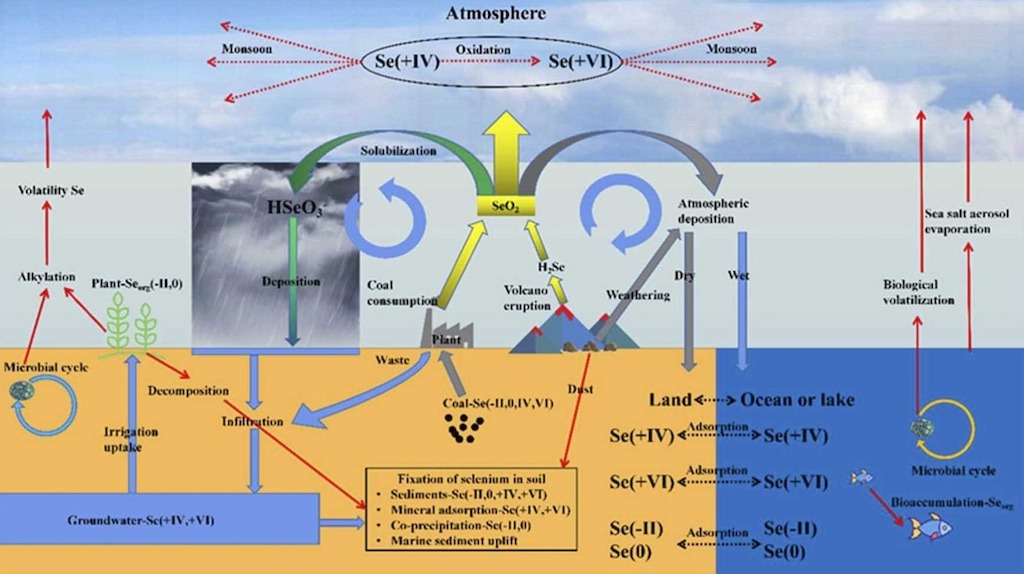
The selenium cycle in the land and atmosphere. Source: International Journal of Chemical Environmental Engineering
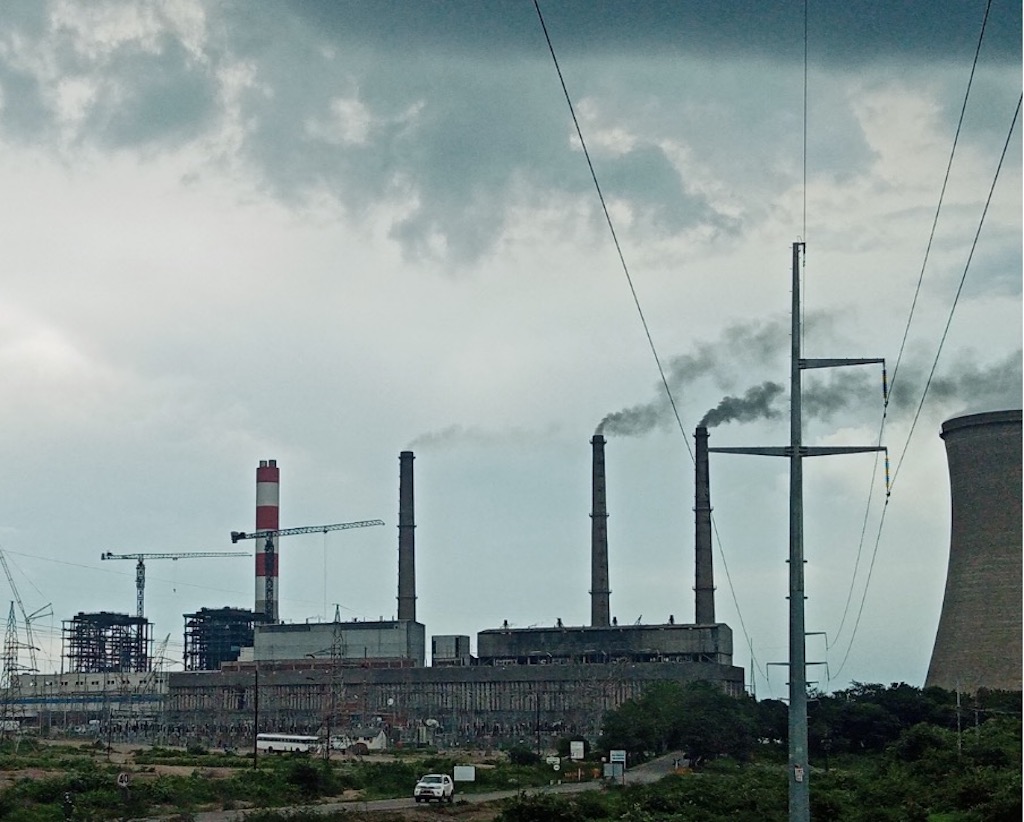
The Zimbabwe Power Company’s Hwange Power Station. It is reportedly one of the emitters of the hazardous waste choking the Deka River. Photo: Warren Nkala
Is selenium the culprit?
Oxpeckers asked the Department of Epidemiology and Disease Control for data. It promised to share this, but did not do so.
Oxpeckers then approached another government department, the National Social Security Authority (NSSA), whose mandate includes occupational health issues in the workplace. In the case of mining and power generation, it collects epidemiological data, monitors occupational health hazard trends and assesses whether employers are doing enough for the health and safety of workers.
According to the NSSA, coal face, coal conveyance and coal production line workers are exposed, mostly via inhalation, to gaseous toxins that contain excessive amounts of carbon dioxide, sulfur dioxide and hydrogen dioxide.
These all bear the selenium compound.
Selenium is a trace element that is essential for the survival of humans, plants and the human life cycle. But at high concentrations it causes seleniosis, major symptoms of which include physical frailty, hair loss, fatigue and pain in the joints and ligaments
“Both low and high intakes of selenium (Se) can have adverse health effects,” said a study titled “A review of selenium in coal-fired power plants” conducted by researchers from two Chinese universities and published in the Journal of Environmental Chemical Engineering in October 2024.
In the study, the researchers wrote that selenium is part of “several important proteins and enzymes in mammalian organisms”, but only “trace” amounts are required to preserve vital physiological functions in the human body.
The study identified industrial sewage waste compounds, coal mining and the combustion of coal and other fossil fuels by mining and power generation processes as major sources of selenium being released into the environment, largely through waste water and dust.
Our assessment of the medical symptoms presented by villagers, livestock and aquatic species affected by toxic sludge along the Deka – based on documents and research – suggests that selenium is the main contaminant being released into the river by coal mines.
Oxpeckers obtained its own water and soil samples from three sites along the Deka and sent these to a private laboratory. However, they could not be tested because too much time lapsed between collection and submission to an independent laboratory.
Even without testing, it is clear that there’s something dangerously wrong with the Deka. In 2024, when Oxpeckers did two investigations focused on the impacts of coal mining in Hwange, the water along some sections of the Deka could still be used for purposes other than drinking. Today the entire watercourse is covered by a public health advisory warning residents that direct contact with the water could lead to skin diseases and that it should not be used for any reason.
Due to the pollution, communities along the Deka now face serious water shortages and depend totally on water from boreholes drilled by non-governmental organisations.

Matabeleland North Resident Minister Richard Moyo told Oxpeckers the government was fully aware of the grave threats posed by mine waste pollution. Photo: Warren Nkala
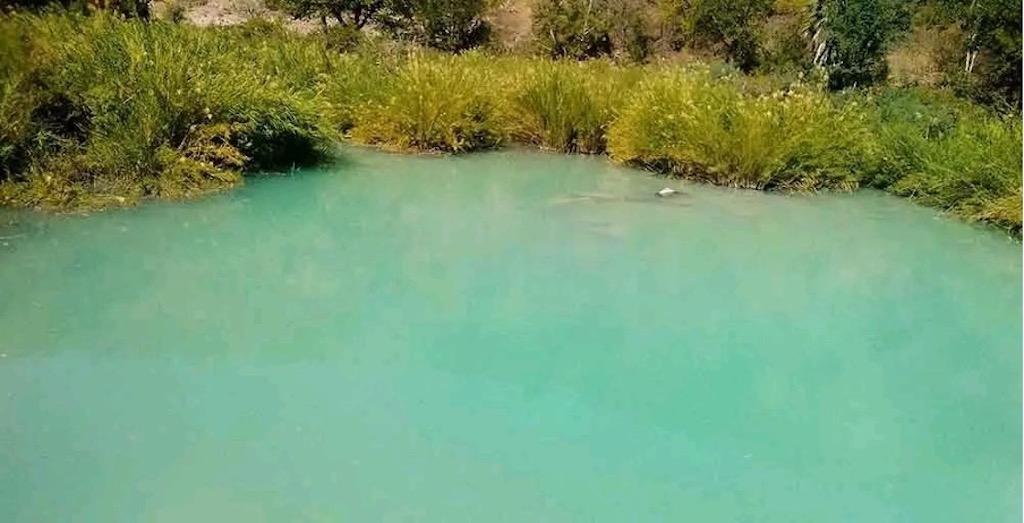
When Oxpeckers visited the Deka in 2024, the river was full of normal floodwater due to excessive rains. This is how it looks throughout the year. Photo supplied
Government takes action
Matabeleland North regional manager of the Environmental Management Authority, Chipo Zuze, told Oxpeckers that a national committee was set up in 2025 to investigate the most feasible long-term solutions to the coal pollution crisis along the Deka.
The committee includes experts from the University of Zimbabwe, the National University of Science and Technology and the government departments of Physical Planning, Geospatial Analysis and Geophysics.
“This is all part of efforts to bring a permanent solution to the hazardous waste pollution legacy which has not only affected the environment, but livelihoods which depend on the Deka for a living,” Zuze said.
Matabeleland North Resident Minister Richard Moyo told Oxpeckers the government was fully aware of the grave threats posed by mine waste pollution.
“As a province, we are trying our best to reduce the impacts of pollution on the people, livestock and livelihoods along the Deka. From the efforts made so far, we have observed a slight reduction in hazardous waste inflows into the Deka. Efforts are also underway to deal with the air pollution problem in Hwange town,” Moyo said.
This investigation is part of the Oxpeckers #PowerTracker investigative series titled ‘The human cost of energy in Africa’