
20 Mar Namibia’s oil rush: Who benefits most and who is in charge?
As Namibia now seems almost certain to become an oil producer by 2030, the war in Iran has added urgency to the government’s ambitions to become a major energy exporter. But who stands to benefit and what does it mean for the Diamond Coast’s local economies? John Grobler takes stock
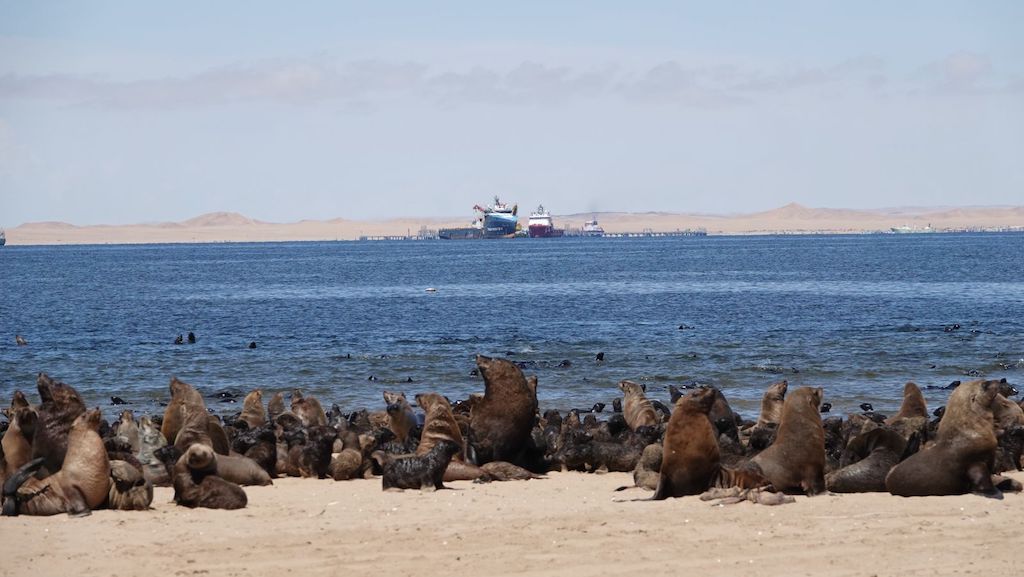
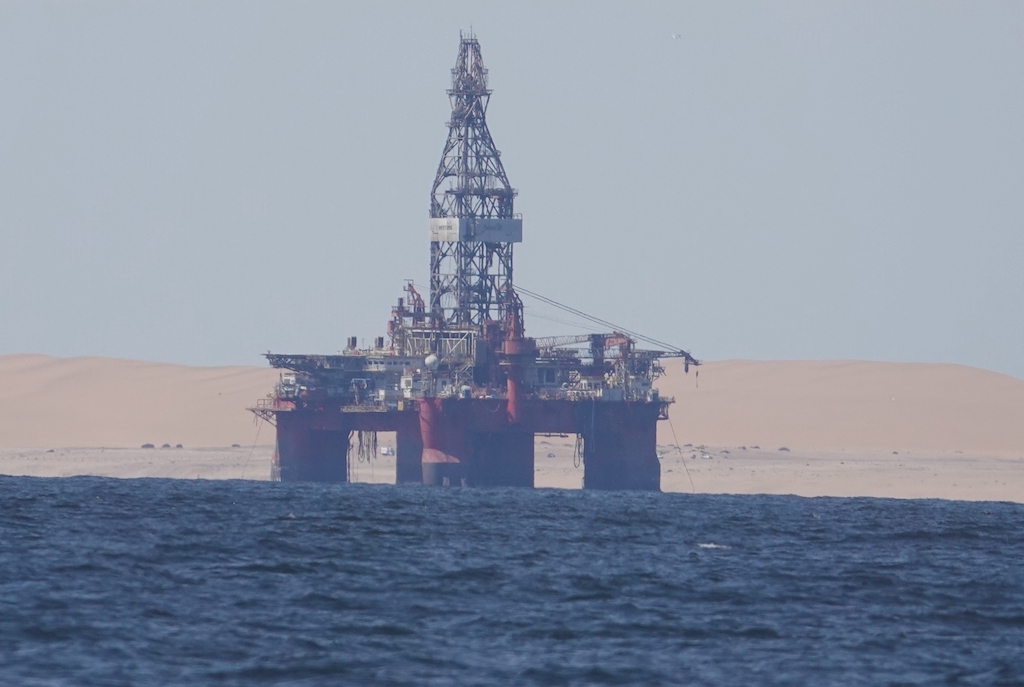
Who will benefit most from a new off-shore oil production industry? Critics of the new proposed amendments to Namibia’s Petroleum Act say it gives too much power to the President and does little to increase local economic benefits. Photo: John Grobler
It’s a boldly ambitious plan, audacious in its scope: to monetise the offshore Orange Basin’s enormous natural gas resources to turn the Orange River corridor of Namaqualand and Namibia’s Kharas Region into a rare earth mining and clean energy powerhouse to jumpstart the regional SADC economy.
It’s a plan that has been around for 10 years and is backed by the World Bank’s US$50 billion Mission 300 to electrify 300 rural African households by 2030 – so why do so few people on the ground know about this?
Field research conducted by Oxpeckers here over the past year among communities from Saldanha Bay to Lüderitz suggested it was a case of not being able to see the wood for all the political trees because of the selective manner in which information was being shared locally in the politically coordinated roll-out of this programme by the South African and Namibian governments.
What has emerged is a scenario of rising political pressure as a result of unmet expectations on the ground and an increase in official secrecy at political executive level that raised fundamental questions about the future direction of an offshore-based oil and gas industry in the Orange Basin.
The Orange Basin, spanning offshore Namibia and South Africa, is a global oil exploration hotspot, with more than 21-million barrels of potential light oil and gas discovered. The map below is the most complete source of information on the oil blocks in the Orange basin, to date.
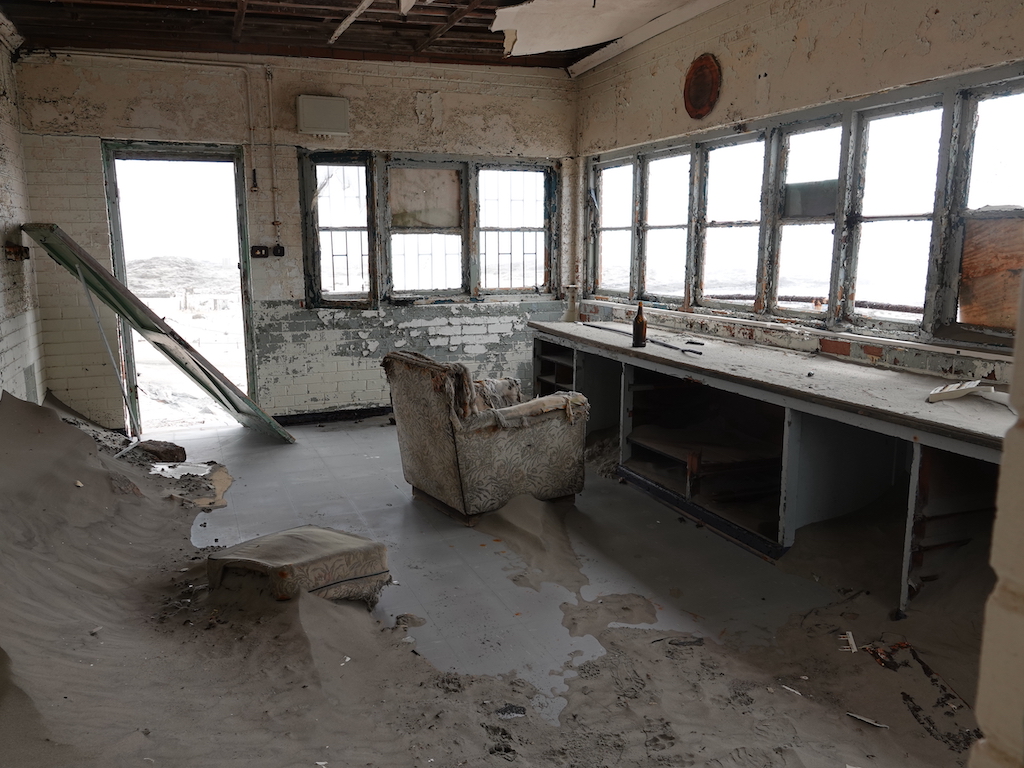
Who will be in the driving seat? Amid industry turmoil and corruption concerns at PetroSA and NAMCOR, weak and outdated regulations have created a governance vacuum – one increasingly shaped by political power, limited transparency, and growing concerns over oversight in Namibia’s emerging offshore oil sector. Photo: John Grobler
Regulatory void
With both the South African and Namibian petroleum industries in a state of turmoil as a result of major restructuring – in the case of South Africa’s PetroSA – and major corruption problems at National Petroleum Corporation of Namibia (NAMCOR), access to officials and official upstream data has become increasingly limited.
A recurring theme in the reporting over the past year was the regulatory void arising from the uncharted nature of a future offshore oil industry as outdated legislation struggled to keep pace with the sophisticated demands of ultra-deepwater drilling.
This was exacerbated by the pressure from prospective investors in the oil exploration sector that brought to light a political fault-line within the ruling ANC and SWAPO parties between the public interests and the vested interests of the political elite already involved in the sector for the past decade.
A case in point here: Namibian President Netumbo Nandi-Ndaitwah’s decision last year to place the management of the upstream sector under direct control of her office before the 2025 Amendment to the Petroleum Act of 1991 to formalise this process was passed by Parliament.
This move was widely criticised across the political spectrum of the Namibian Parliament as well as the private sector. A major sticking point was Article 63 that would give the President total discretion in respect of waiving royalty payments on oil exports which is feared could foment corruption at the highest level. As Kanyemba noted in a lengthy Linked-In article, Namibia needed a good law that would survive a bad President.
While there was no firm evidence to prove this accusation, the fact that all upstream records had been removed from public access as of August last year meant that no statutory inspections could be done to disprove it.
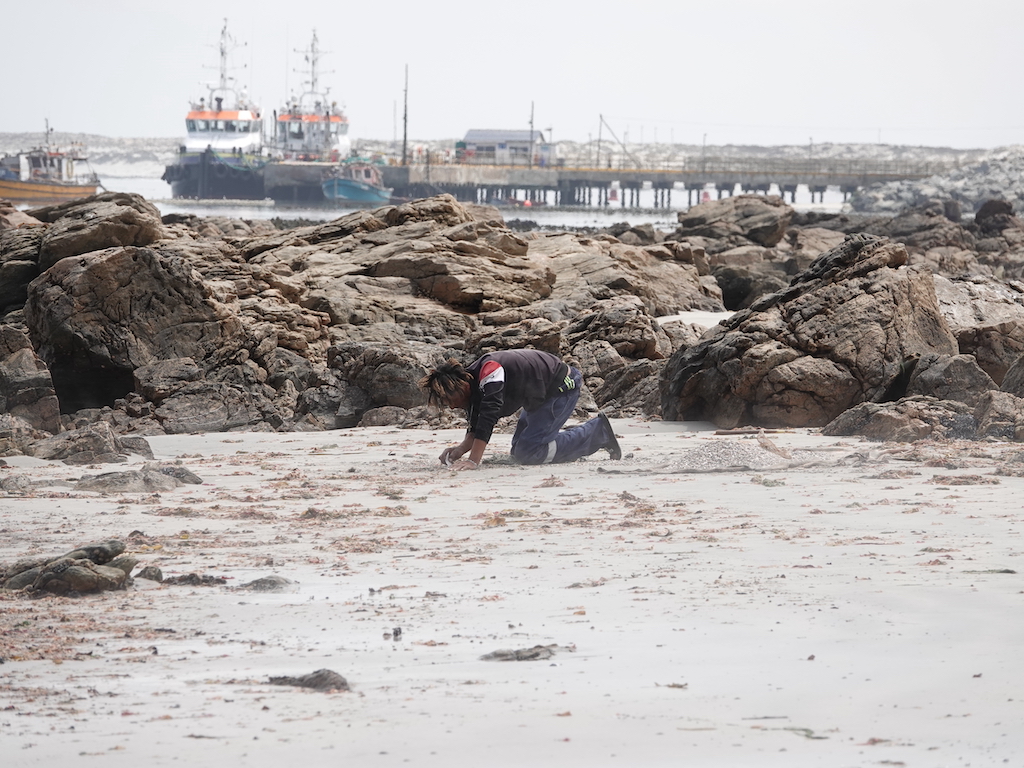
Port Nolloth resident Ruben Barbary panning for diamonds along the beach at the local harbour. With Chinese factory diamonds causing a market crash, the communities of the small towns along the famed Diamond Coast are experiencing economic hardship like never before, they said. Photo: John Grobler
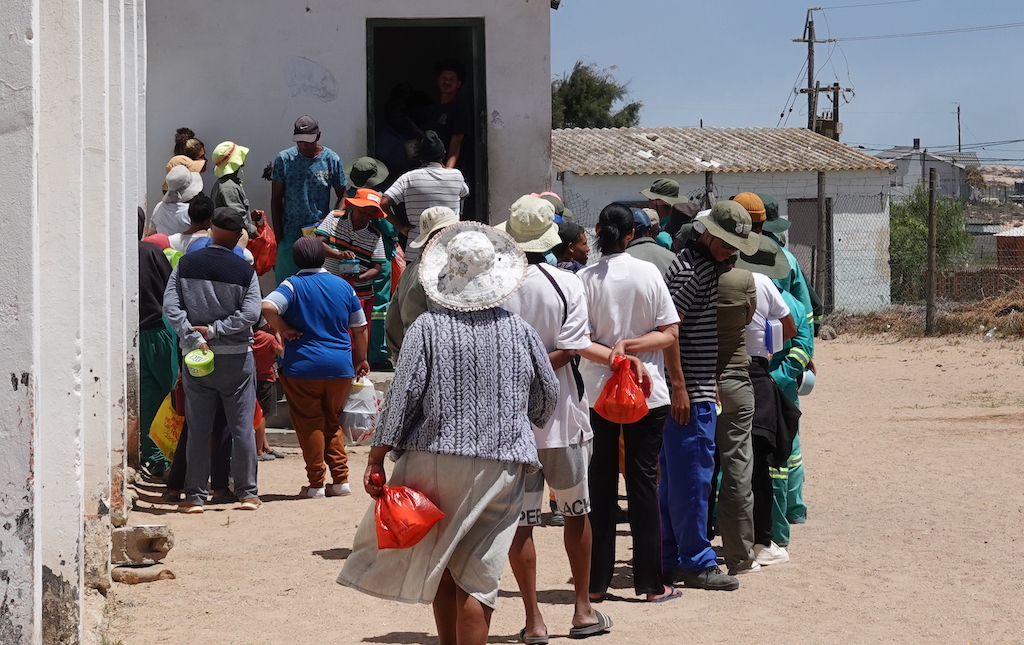
Rising poverty and hunger in the wake of local economies along the Diamond Coast has now reached desperate levels in places like Hondeklipbaai, where local residents are now totally dependent on social grants and a local soup kitchen for survival. Photo: John Grobler
Boom towns in decline
Meanwhile at grassroots level in the former diamond mining towns from Hondeklipbaai to Lüderitz, the slow collapse of the diamond industry over the past two years was becoming increasingly visible on the local economies.
With work-seekers flocking to these towns in the hope of finding jobs that were not there, poverty was at an all-time high and crime like house-breaking, drug use and gender-based violence was up by 33% in Lüderitz.
South of the border, things looked even worse in Namaqualand. Unemployment in Hondeklipbaai was at least 95%, if not more, with the only form of work being street-cleaning jobs paying R50 a day under a provincial social assistance programme. The only other source of income came from social grants and an increasing number of families were dependent on a soup kitchen for food.
Promises of a new Chinese-owned ilmenite mine so far has failed to materialise in what was a pattern of speculation in rare earth commodity mining. One such investor had commissioned the drilling of 250 test holes, but abandoned the project after the first few holes had been drilled.
While one could observe signs of the new rare-earth mining economy being rolled out in the new power-lines and pipeline corridor servitudes being laid out between Hondeklipbaai and Koiingnaas, regular power outages in the town was still the norm.
In Port Nolloth, people could be found digging for diamonds on the beach under a new pick-and-shovel permit system in the hope of finding small diamonds to sell to the declining number of tourists.
Surging global tensions and oil prices – driven in part by the Iran war – have accelerated Namibia’s push to become an energy hub, but the origins of this strategy and the re-emergence of politically linked players in major gas projects are raising fresh concerns about transparency and who truly benefits. Photo: John Grobler
Global conflict, local opportunity
Following the confirmation of at least 21-billion barrels of light sweet crude and rich deposits of gas over the past year on the Namibian side of the Orange Basin, the widening war in the Middle East that pushed the price of oil up to 2022’s record levels suggested it was all but certain that Namibia was going to become an oil-producer by 2030.
The Iran war has now validated Namibia’s plans to become a major energy hub because it enhanced the country’s strategic location and easy access to both Asian and European markets, said Gawie Kanjemba, Bank Windhoek’s clean energy specialist and the Economic Climate Advisor to the Namibian government.
In hindsight, this raised a question of how and why this energy hub plan had first been decided upon when Namibia started construction of the Walvis Bay Gas Port 10 years ago.
At a March 2015 press conference, outgoing Minister of Mines and Energy Isak Katali introduced the project as an urgently needed, R550-million upgrade of the ageing state-owned tank farm in the harbour as a strategic fuel reserve of 700,000 litres to serve as a supply buffer “… in the event of the outbreak of war”, he stated.
This upgrade came with a completely new deep-water port with a 3.7km long specialised fuel and gas-line jetty designed to accommodate LNG tankers, located north of the existing main harbour.
Completed in 2019 at a cost of R7-billion financed with a US$440-million Africa Development Bank loan, it was intended to facilitate the delivery of LNG feedstock to a new 250MW gas-to-power plant called Kudu Power.
Kudu Power was to be built and operated by Xaris Energy, which won a 2014 Nampower tender to provide a turn-key, base-load solution to a threatening regional electricity shortage.
This was controversial, as Xaris’s shareholders included the wife of the then-SWAPO secretary-general (and 2013-2015 interim President) Nangolo Mbumba. The Ministry of Mines and Energy, now renamed Ministry of Industrialisation, Mines and Energy (MIME), consistently denied that the Walvis Gas Port was intended to benefit Xaris, and after the Namibian Supreme Court set this tender aside due to tender irregularities in 2018, the matter became moot.
But on February 28 2022, the Namibian Electricity Control Board re-awarded this contract as a new 400-600MW licence to a 30-70 joint venture between Nampower and the same Xaris principals, now operating out of Dubai as Dubai Power LLC.
The other such gas-to-power licence was awarded to BW Kudu, as reported in the Oxpeckers articles.
So, should we be concerned over who is really driving the gas agenda? It is clear that the sector should be subjected to rigorous oversight, but the political will does not seem to be there at the moment.
John Grobler is a Namibia-based associate at Oxpeckers Investigative Environmental Journalism. This is an overview and analysis of a series of #PowerTracker transnational investigations that interrogate the environmental, socio-economic and political impacts that the Orange Basin Corridor oil and gas developments could potentially bring.