
29 Jan Eswatini’s coal comeback: From green promises to black fuel
The approval of a new thermal coal power project derails the kingdom’s green transition efforts, and marginalises local residents, reports Phathizwe Zulu. Photos: Linda Dlamini
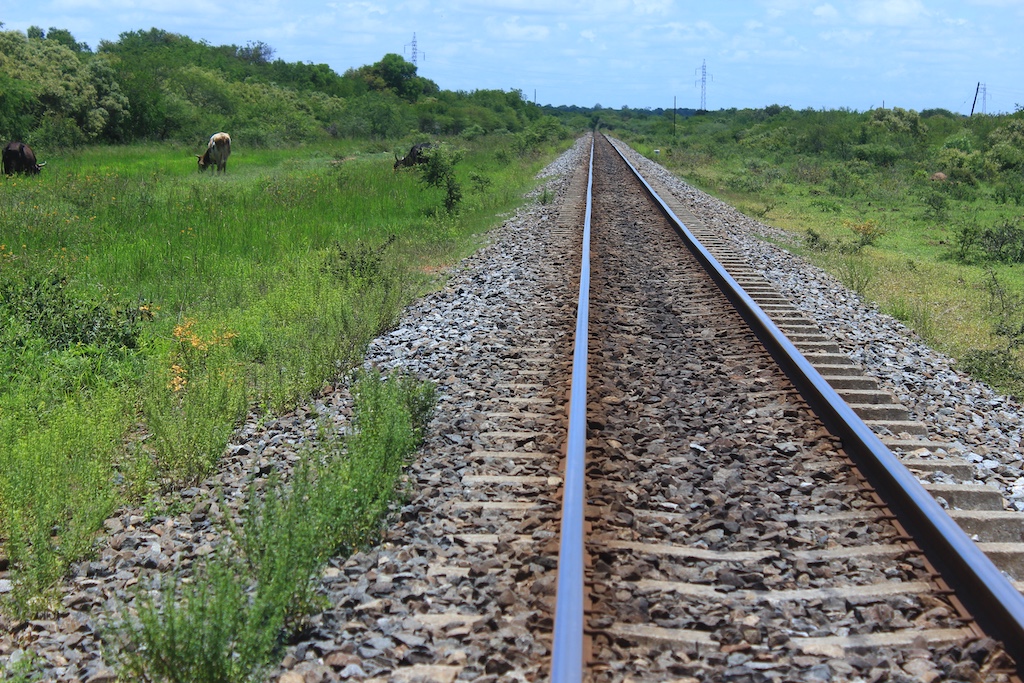
Straight ahead to coal power generation: The railway line at Lubhuku connects Mpaka, Tjaneni and Phuzamoya
In November 2025 the Eswatini government granted a 20-year licence for a thermal coal power station and mine on 4,000ha at Lubhuku, in a water-stressed region that abuts the Lubombo Biosphere Reserve, part of the Lubombo Transfrontier Conservation and Resource Area.
Environmental and energy experts approached by Oxpeckers warned that this shift to fossil fuel power generation undermines the southern African country’s plans to reduce 2.24-million tonnes of greenhouse gas emissions by 2035. Lubhuku residents raised concerns about the effect of the project on their water, land and health.
Speaking at a press conference during the launch of the Lubhuku coal power project, Minister of Natural Resources and Energy Prince Lonkhokhela Dlamini said the coal-fired power station will generate 1,500 megawatts (MW) of electricity, though the country currently needs just 250MW. The Eswatini Energy Masterplan projects that local maximum energy demand is expected to reach 334MW by 2035 as the country’s population and economic activity grow.
Dlamini stated that the excess power is to be sold to neighbouring South Africa or the Southern African Power Pool to boost revenue. The energy pool is a group of national electricity companies that have created a common power grid and market for electricity supply in the Southern African Development Community region.
Dlamini said the Lubhuku licence was special because it has been granted to a local company, the Eswatini Electricity Feedstock Company, a wholly-owned subsidiary of the Eswatini Electricity Company (EEC). The company owns 50% of the project, while the country’s monarch King Mswati III and the government each hold 25%.
“Unlike companies owned outside the country, the profits from this project will remain here in Eswatini,” he said.
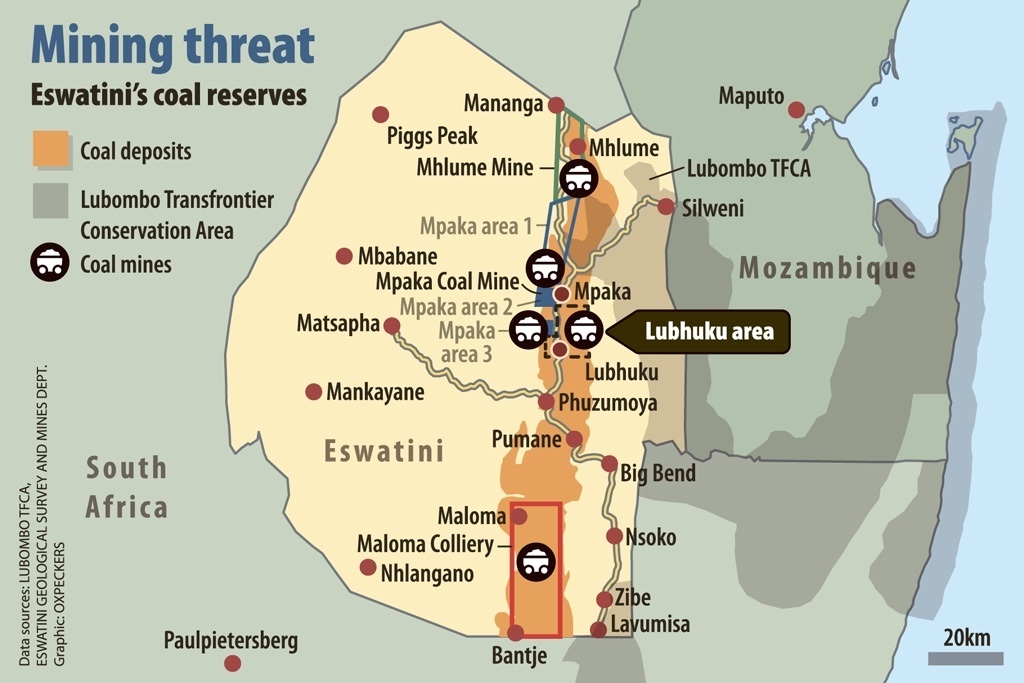
Lubhuku abuts the Lubombo Biosphere Reserve, part of the Lubombo Transfrontier Conservation and Resource Area
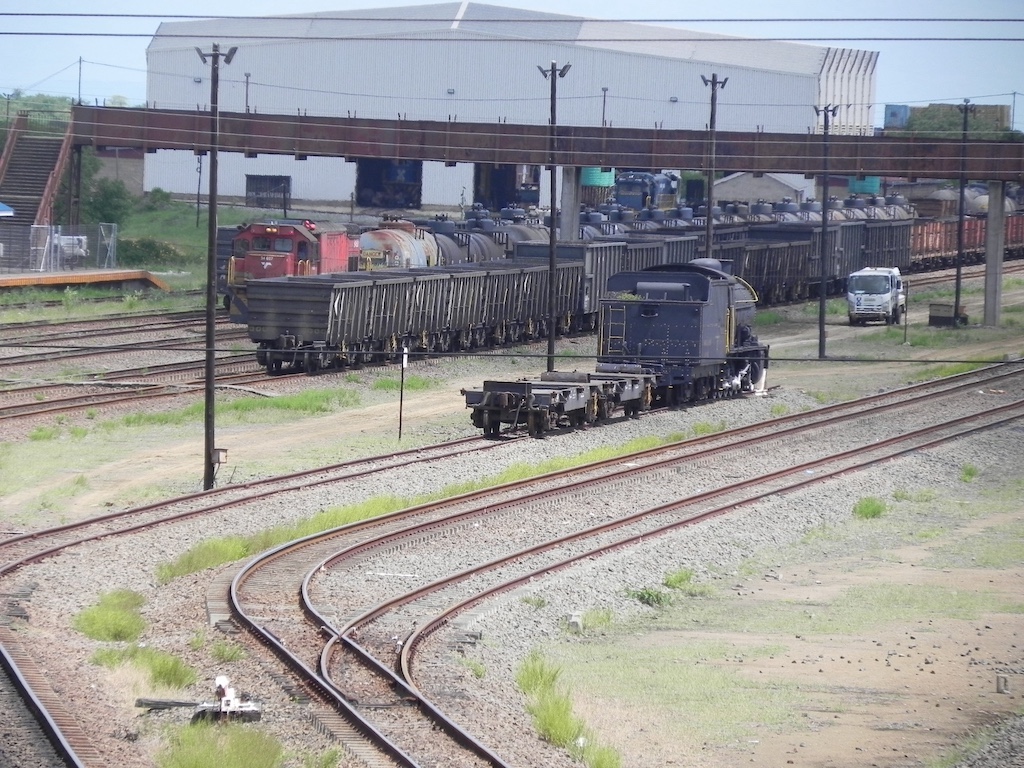
The Mpaka railway station that services the Lubhuku coal deposit located in the central eastern part of Eswatini
Internal generation
In 57 years of independence from British colonial rule, the EEC’s internal generation capacity has improved from 60.4MW to 70.435MW, following the completion in 2021 of the Lavumisa 10MW solar PV plant in the southeastern part of the country.
The EEC’s 2025 annual report shows Eswatini generated 30% of its electricity within its borders and imported about 70% from South Africa and Mozambique, 54% of which was from Eskom.
Pro-fossil fuel advocates argue that the Lubhuku project is a good venture for the kingdom because its coal deposit is ideal for power generation. According to a 2006 Mines Department’s report, The Mineral Resources of Swaziland: “The Lubhuku coal deposit is mainly semi-anthracitic to anthracite, and compares with Natal anthracite. The unclean coal would be used in a thermal power station…”
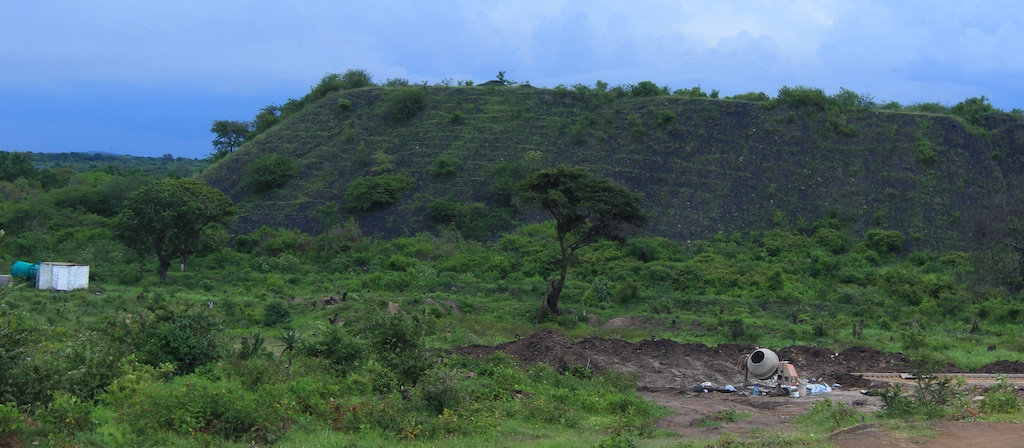
Dormant coal mine dumps left behind by an old Mpaka mine which closed years ago
Climate agreement
However, local environmentalists feel betrayed by the Lubhuku coal licence, particularly after King Mswati reiterated his country’s commitment to the global Paris agreement to combat climate change two months before the licence was announced.
During the 80th session of the United Nations General Assembly in September 2025, the monarch announced ambitious plans for the country to reduce its greenhouse gas emissions by 2035. Eswatini was among the first of 10 countries to submit its third nationally determined contribution to the global framework to combat climate change.
“It is critical for the country to remain committed to its targets under the Paris agreement and keep emissions in check, even if the coal plant goes ahead,” said Rodney Carval, a renewable energy and climate specialist in Eswatini.
Carval said the Lubhuku project could significantly increase greenhouse emissions and potentially reverse Eswatini’s existing carbon-absorbing capacity. “Coal is no longer the most reliable or future-proof option. A diversified, modern energy system provides stronger, more sustainable reliability for Eswatini,” he said.
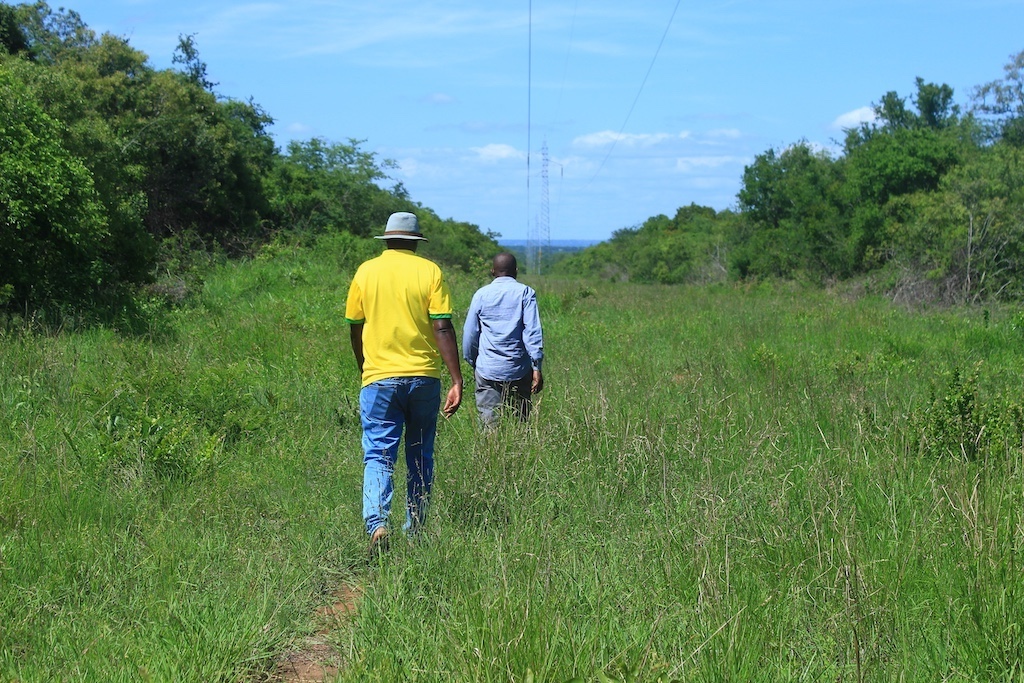
Lubhuku resident Bafana Dlamini escorts the journalist to an old mining site. Dlamini said engagement with locals about the new project had been minimal
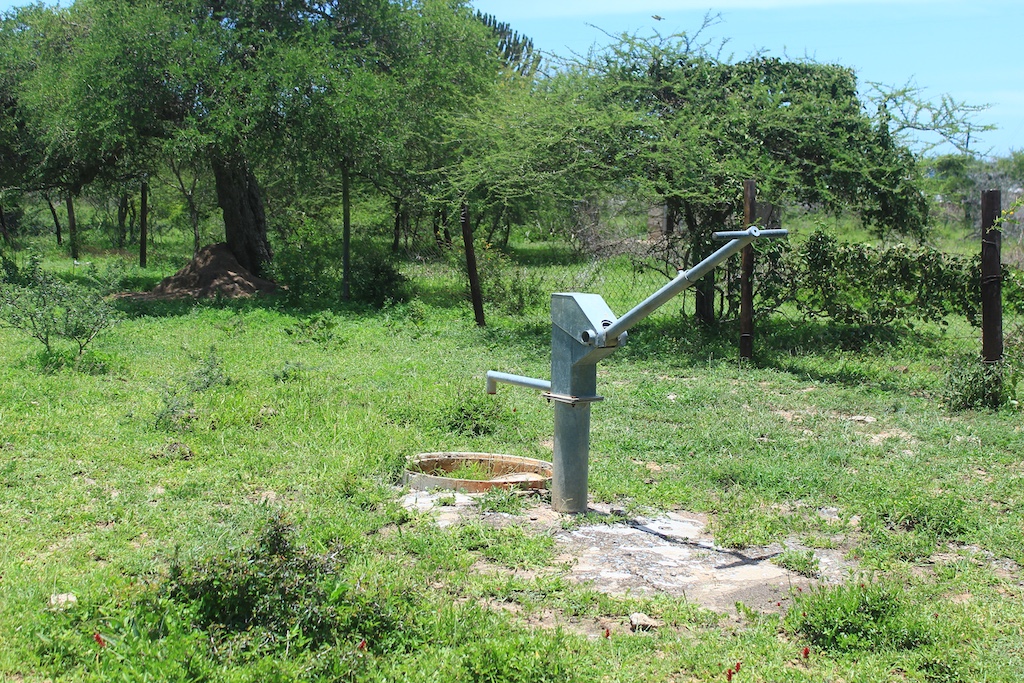
Thirsty land: Like many boreholes at Lubhuku, this one is no longer working
Interest of the country
Percy Simelane, communications manager in the King’s Office, argued that Eswatini is not listed among countries that are “dirty global emitters. We note that the countries that have been accused of poisoning the ozone layer with their industrial activities have not effectively backed off from relying on coal.”
“We beg to differ on the concerns regarding ‘betrayal’,” he said. “It’s too strong a term to describe an action done in the best interest of the country and in a manner that does not effectively tip the scales of global warming.”
“We will continue to believe the Lubhuku project is a calculated operation that is not in any way going to contribute to the depletion of the ozone layer because it is comparatively so small,” Simelane added.
Sivumelwano Nyembe, an environmental consultant and pro-democracy activist, said that in the wake of Russia’s war in Ukraine, some countries in Europe are reopening their coal mines and nuclear plants to replace Russian gas. This “might make it possible that the country [Eswatini] might get funding,” he said.
“We have to look critically at the cost-benefit analysis and evaluate impacts which might emerge, especially on agriculture,” he added. “Yes, energy supply does create potential to unlock the economy one way or the other. But it has to be balanced with the actual cost, because if the state will spend so much on a big project and then spend even more on the public health sector trying to solve a problem created by this project, eventually society finds itself having acquired negative benefits.”
“The elites that propose the project benefit and enjoy the profits in environmentally healthy places. They won’t live at Lubhuku, they will live in Ezulwini, elsewhere in Madonsa or Coates Valley,” Nyembe said.
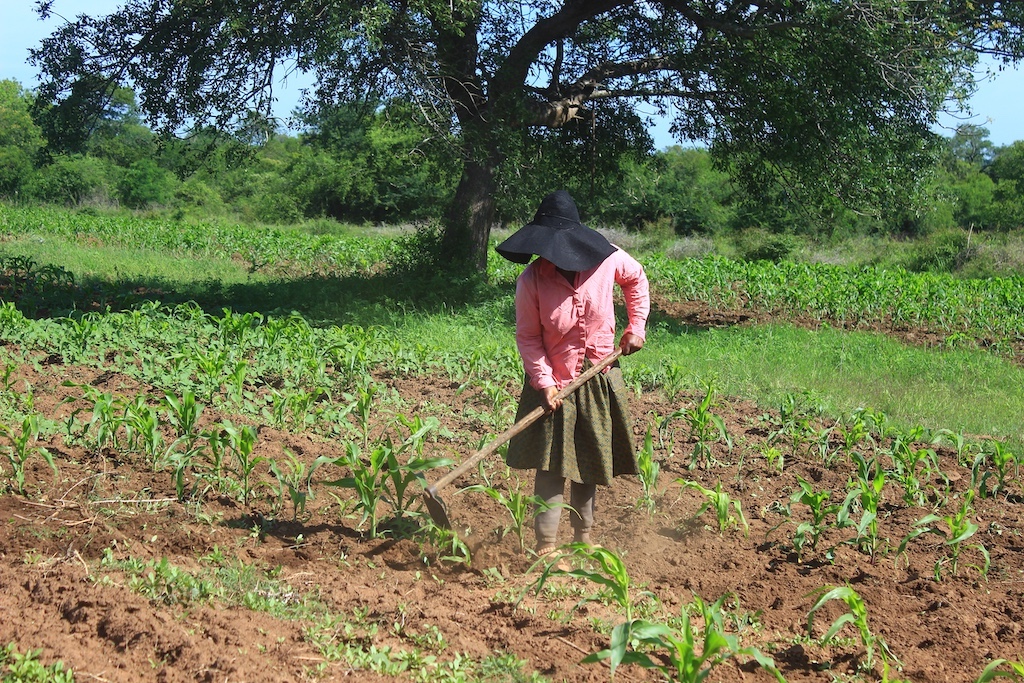
Phumzile Sengwayo, a local subsistence farmer: ‘We’re not against the project, but we want certain issues addressed’
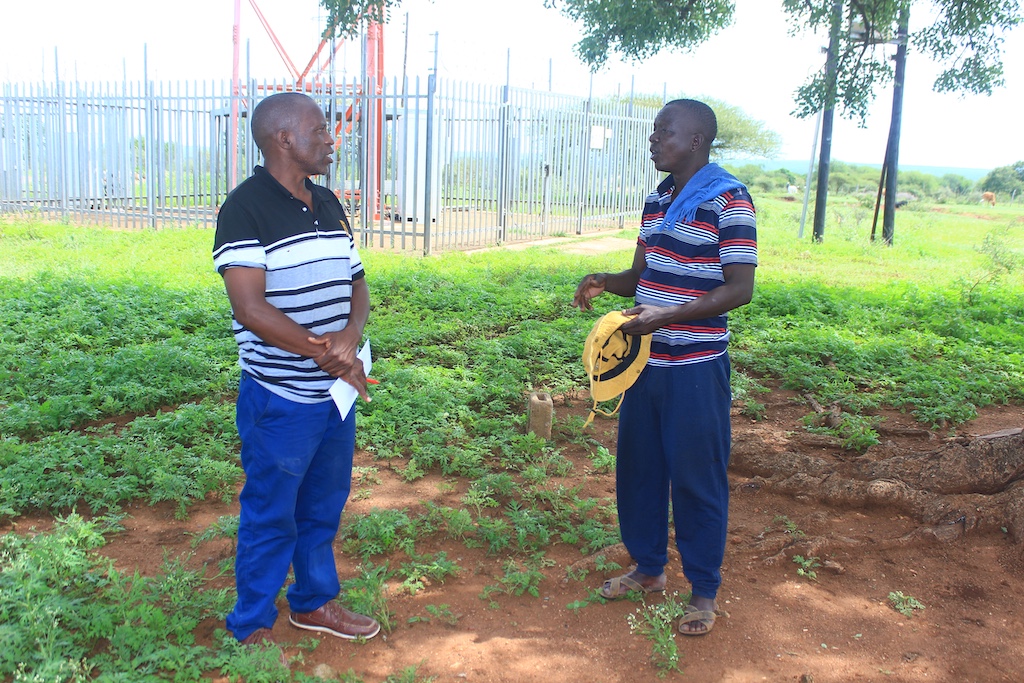
‘We still don’t have clear details,’ Mcitseni Shongwe (right), the acting Chief of kaNdangu, told the journalist (left)
People, planet and profits
Mcitseni Shongwe explained that the Lubhuku area covers about four or five chiefdoms – from Mpaka to Phuzamoya.
Shongwe, who is Ndagu chieftaincy’s acting chief, said they had heard that the elders of the land had “blessed” the mining and power plant project, “but we ask ourselves ‘whereabout in Lubhuku?’ We still don’t have clear details.”
Subsistence farmers in the area depend on seasonal rains to keep crops alive, as well as earth dams and boreholes for drinking water for themselves and livestock.
Bafana Dlamini, a Lubhuku resident from Malindza chiefdom, estimated that only 30% of his community has access to clean water. “Experts from World Vision warned us in 2008 that the underground water is a health hazard because of the abundant coal underneath the surface,” he said.
Dlamini said consultations and engagement with locals about the Lubhuku project had been minimal. “The government, because of our desperation as rural people, is quick to dangle the job opportunities carrot to dissuade us from concerns about the project,” he said.
Phumzile Sengwayo, a resident from Ndangu chiefdom, echoed Dlamini’s sentiments: “I heard about the official launch of the Lubhuku project on radio news. Some of us were surprised because we are the ones living at Lubhuku but we honestly know nothing about the project.”
“Some time ago we were summoned to the chief’s residence. Certain officials addressed us. We asked questions; they promised to come back with answers but they never returned. Now we hear the king has granted the operation licence. Yet we still have pending concerns,” said Sengwayo.
“We’re not against the project, but we want certain issues addressed. Issues like chieftaincy disputes and others must be addressed first before the project could start,” she said.
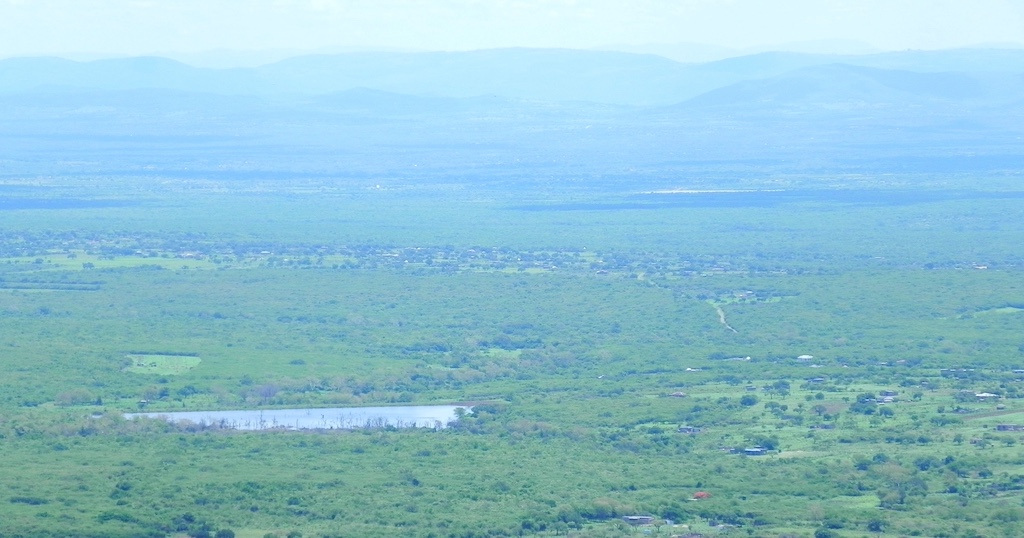
Green valley: Lubhuku lies below the Lubombo escarpment, a plush Lowveld region that is part of the Karoo super group
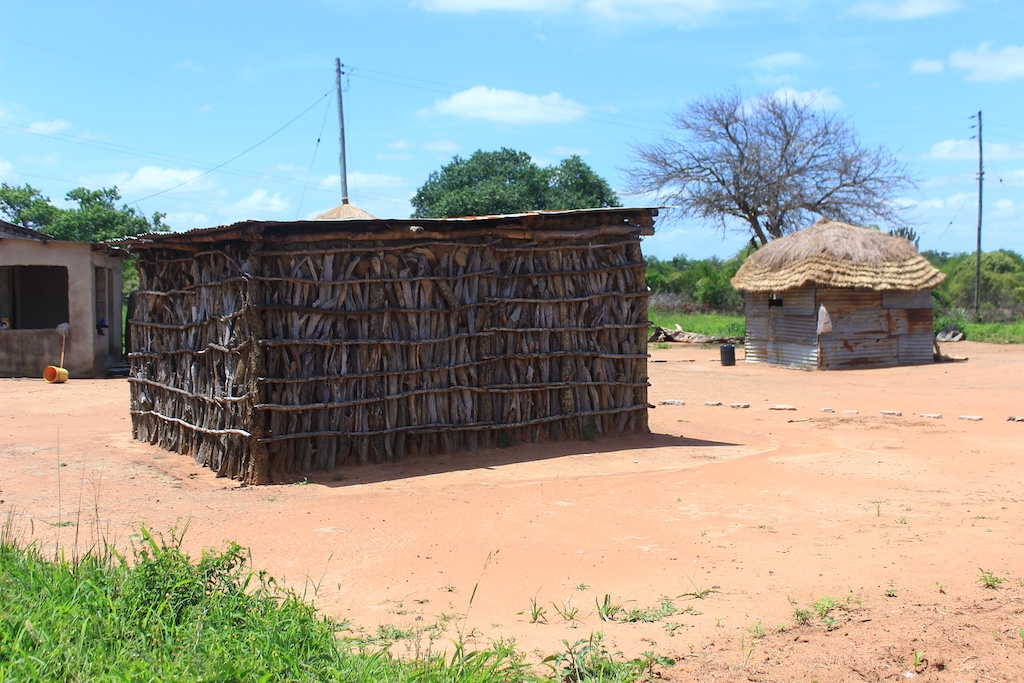
A log house at Lubhuku constructed from hardwood that characterises the rich Lowveld biodiversity in the area
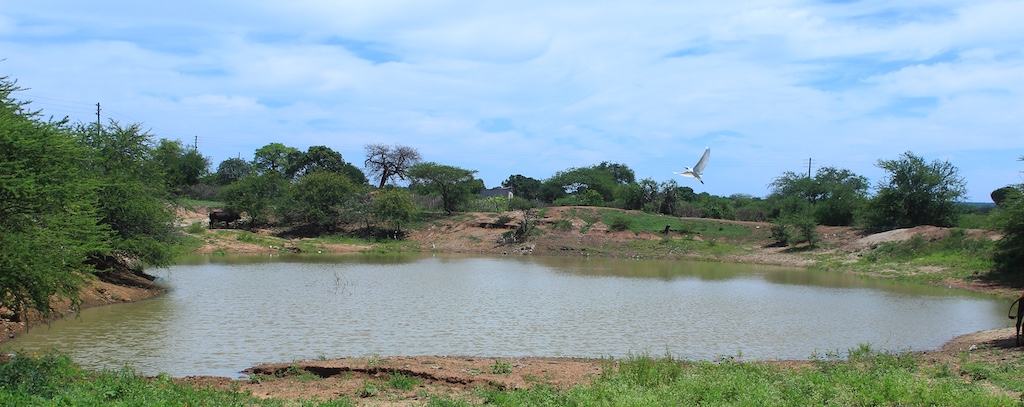
An earth pool in Lubhuku that provides water for birds and wildlife, as well as cattle and people. In winter they run dry, but enjoy full capacity in summer
Environmental impact assessment
Oxpeckers asked the Swaziland Environment Authority for a copy of the environmental impact assessment (EIA) for the project. The authority’s information officer, Zandisile Howe, said it did not have a copy because the first draft was submitted by the Ministry of Natural Resources and Energy, and comments were sent back by the authority for review. The ministry then informed them that the EEC would be taking over the project.
“The EEC will be re-submitting the project and they will then submit their plan. There is still no public review yet. The process has started from scratch. There is no document we can share with the public until EEC submits a completed report,” she said.
The EEC’s marketing and corporate communications manager, Khaya Mavuso, said the licence had only recently been issued to the Eswatini Electricity Feedstock Company. “There is not much that has been done; we needed to get the licence before engaging on certain operations.”
As the parent company the EEC is at the helm of developments until a chief executive officer is hired, premises are found and budgets are made, Mavuso added. “The company still needs to issue tenders and identify partners that we’ll work with. These are pending logistics. At present, several important details are still in the infancy stage.”
However, a senior environmentalist and biodiversity specialist who preferred to remain anonymous for fear of victimisation, said no project should start without an EIA and permission from the Land Management Board, which are interdependent entities.
He said the coal power generation project at Lubhuku will affect vegetation, wildlife and introduce urbanisation and other human activities that will affect society.
“Lubhuku is the Lowveld, which has slow-growing, climate-resilient plant species, many of which are irreplaceable. It is also a roaming habitat and corridor for wildlife. The impacts have been worsened by sugar cane cultivation,” he said.
Nyembe said the project will bring a barrage of impacts: “We need the EIA for us to have a proper understanding of the impacts, and the social impact report to evaluate society from household level.”
“The morality of society changes when we have mining activities. Also, when the country moves people to a cash economy away from other economies they are used to, food security is compromised because the able-bodied people who can plough are moved to the cash economy. That’s how as a country we achieve food insecurity, then we are forced to buy maize in South Africa or elsewhere to meet that gap,” he explained.
This investigation is part of the Oxpeckers #PowerTracker investigative series titled ‘The human cost of energy in Africa’.
- Find the #PowerTracker digital tool and more investigations here