
12 Dec Broken promises: Why South Africa’s Fairtrade farm workers feel short-changed
The international certification system promised to help dismantle inequalities on wine farms, but many workers say reality falls far short of promises made. By Marcello Rossi and Stephan Hofstatter
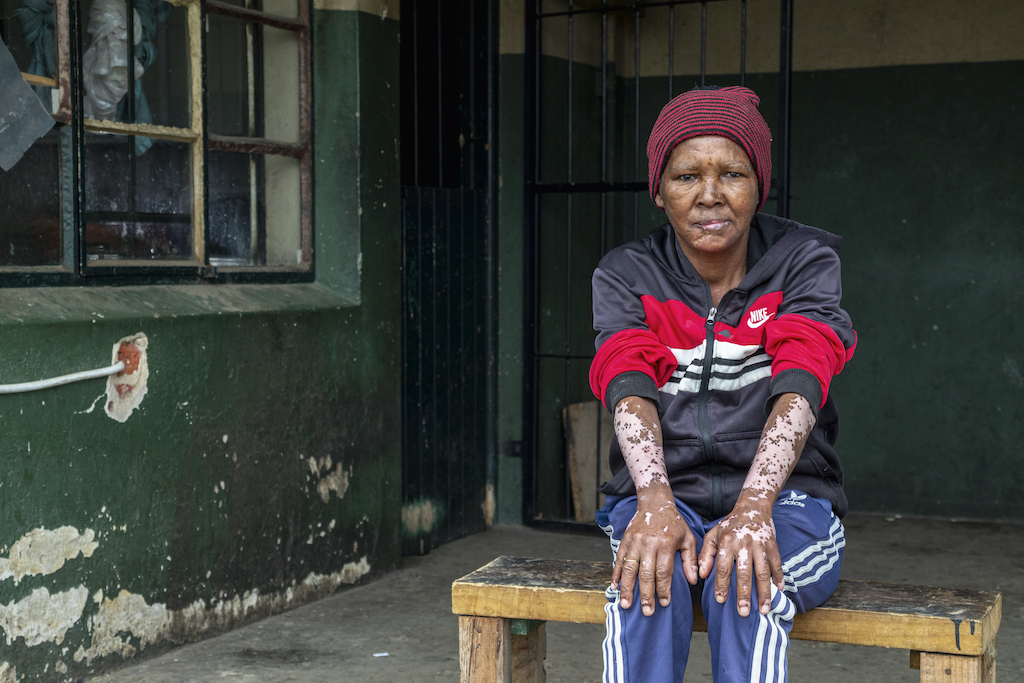
Cheated: After working on a Fairtrade-certified farm for more than 20 years, Francis Flippies says she was tricked into resigning after she raised concerns that working in vineyards still damp from pesticide spraying resulted in her debilitating skin ailment. Photo: Adrian de Kock
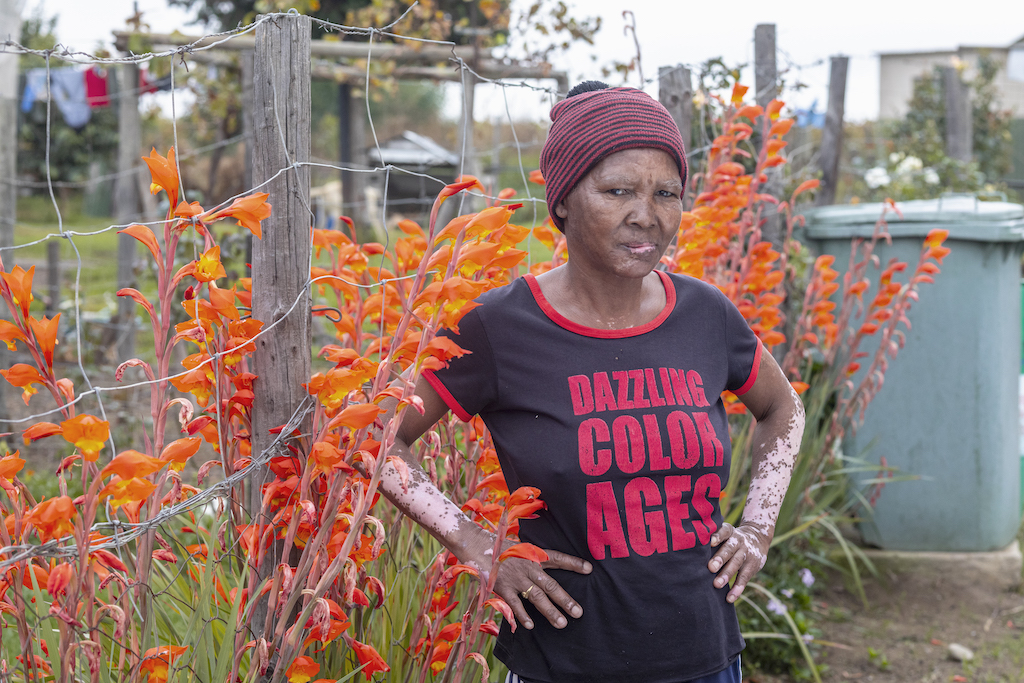
One day Francis Flippies’s life changed forever. For nearly two decades she’d worked on a farm attached to Merwida, one of more than 30 Fairtrade-certified South African wineries. That day, while stripping dead leaves from rows of vines she says were still damp from recent pesticide spraying, her skin began to tingle. Moments later, red, irritated patches appeared on her forearms, spreading quickly until they were completely covered in a rash.
The irritation became unbearable, so she hitchhiked to Worcester 15km away and walked nearly an hour to a public hospital, where doctors prescribed ointments and tablets. No one could explain what had happened.
“The doctors didn’t tell me anything,” recalls the 57-year-old, sitting outside her house near Rawsonville, a small wine growing and farming community in the Breede River Valley in the Western Cape. The treatment brought no relief. Her nights were sleepless, and sunshine made her skin feel on fire. “My skin got worse,” she says.
In despair, Flippies decided to speak out at a community hall meeting. She stood up and, with a trembling voice, told the gathering her skin ailment was caused by pesticides – something she remains convinced of to this day. Instead of offering sympathy, the farm manager shouted her down, insisting no spraying had taken place that day. She was laughed at and sat down, humiliated.
Unable to work outdoors, Flippies begged to be reassigned to domestic duties but was told there were no positions available. A few days later, she was handed a document. Illiterate, she scribbled her initials at the bottom, unaware that she had signed her resignation letter.
The Merwida estate, according to its website, has belonged to the Van der Merwe family for more than seven generations and “has always strived to produce grapes in a sustainable and responsible manner, making us one of the leading Fairtrade wine producers in southern Africa”. The current owners are cousins Schalk and Pierre van der Merwe.
Flippies recalls being called to a meeting about 15 years ago, where Fairtrade was explained to Merwida’s workers. “I understood it will benefit the children. They would get school clothes and food hampers. The problem,” she adds, rolling up her sleeves to reveal her disfigured skin from that fateful day eight years ago, “is that they say things, but they don’t deliver.”
Her scepticism of the benefits of Fairtrade was shared by many of the workers interviewed on 11 wineries throughout the Western Cape.
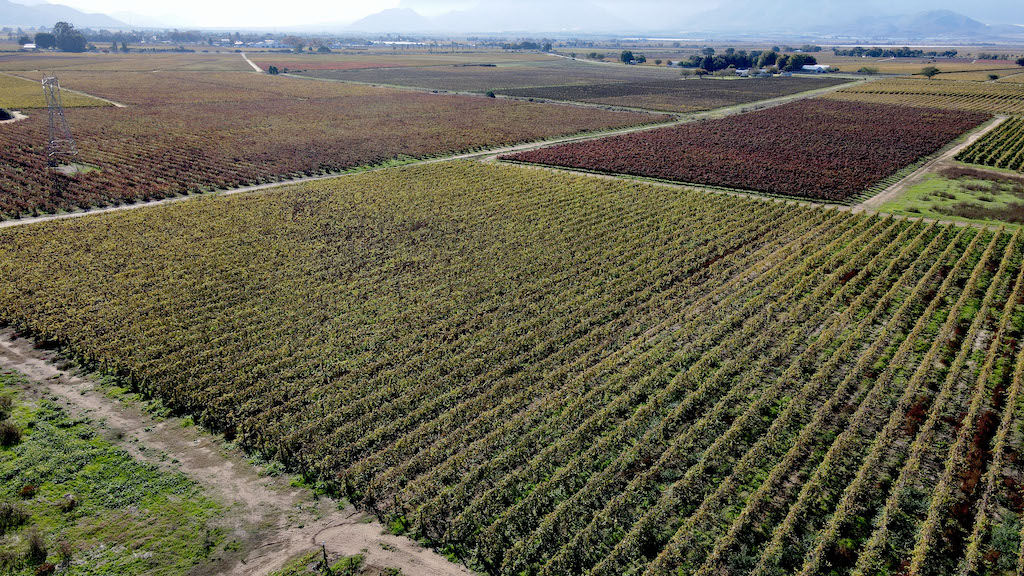
Fair enough? Vineyards in the Breedekloof valley near Rawsonville, where dozens of farms supply wine grapes to the Fairtrade-certified Du Toitskloof and Merwida wineries. Photo: Adrian de Kock
Fairtrade certification
The Fairtrade certification was originally conceived for smallholder co-operatives such as coffee growers in Latin America or cocoa farmers in West Africa, where it offered a way to bypass exploitative middlemen and build direct trading links with European markets.
In South Africa smallholder grape growers are rare. Instead, the industry is dominated by commercial estates, almost all still in white hands. Faced with this reality, Fairtrade extended certification to those large estates, arguing it could still deliver tangible benefits to the thousands of workers they employed.
“It was hoped that by offering Fairtrade certification to commercial wine farms, marginalised black workers on such farms would benefit,” wrote Rhodes University researchers Joshua Bell and Sally Matthews in a paper published in June. “Furthermore, it was hoped that Fairtrade certification could also potentially help alleviate gender inequality and paternalistic practices.”
The main pillar of the system is the Fairtrade premium, an extra sum paid by consumers on top of the selling price. The premium is pooled and controlled by a committee of workers and one management representative known as a Fairtrade officer. Workers are meant to decide how their premium is spent, with guidance from the Fairtrade officer.
Fairtrade rules also require farms to pay at least the minimum wage and commit to narrowing the gap between this and the much higher living wage, to provide safe and decent housing, treat permanent and seasonal workers equally, allow free unionisation and ensure safe use of pesticides.
Today South Africa is the largest producer of Fairtrade wine globally. According to industry body Wines of South Africa, more than 80% of all Fairtrade wines sold in the world come from South Africa, which exports more than 46-million litres of Fairtrade wine a year.
Almost half is destined for the United Kingdom, where it is sold by large retailers such as Marks & Spencer and Co-op – the latter being the world’s largest retailer of Fairtrade wine. Elsewhere in Europe, Fairtrade-certified South African wines are available in Germany, the Netherlands and Belgium, through chains such as Aldi and Lidl, as well as in Sweden and Norway through their state-owned wine buying monopolies.
The ethical certification system first came to South Africa in the early 2000s. Besides providing winemakers access to European markets, Fairtrade promised to help dismantle historically exploitative power relations on wine farms. Yet, 20 years later, many of its promises remain largely unfulfilled.
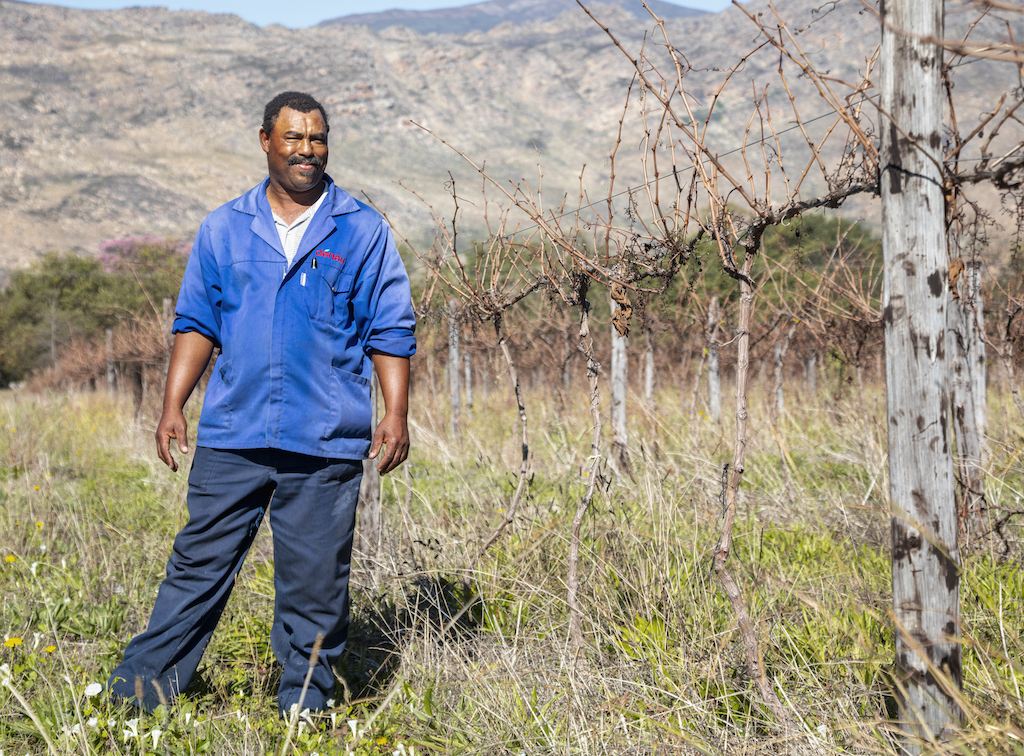
Disempowered: Once proud of the progress Fairtrade brought to his community and others like it, Abraham Oerson now speaks to a growing concern that workers no longer have real control over the premiums meant to uplift them. Photo: Adrian de Kock
Reality on the ground
The main critique expressed on the farms centred on how the premium is managed. Fairtrade’s own promotional materials say workers should have “100% control of the premium” and decide how it is spent “based on their needs”. The reality on the ground often fails to match up to this ideal, with many workers complaining they have little or no say in how their premium is spent.
Abraham Oerson spent 15 years working on one of South Africa’s first Fairtrade-certified projects, Fairhills. The scheme brought together 19 producers supplying grapes to Du Toitskloof winery in collaboration with Origin Wine, one of South Africa’s biggest exporters.
Oerson, who chaired the Fairhills premium committee for four years and previously served on the board of Fairtrade Africa, fondly recalls early gains. Premium funds were channelled into daycare centres and a health clinic, minibuses for transport, a mobile library, bursaries for students and a primary school equipped with a computer lab.
“Fairtrade played a very positive role,” said Oerson. “Workers learned to run elections, manage budgets and read bank statements. Staff were trained to run their own business. Even pesticide spraying became safer. There were real changes.”
But over time workers began to feel removed from decisions that affected them. Premium money, once earmarked for concrete projects, was increasingly absorbed by salaries for project staff and maintenance costs for vehicles and buildings, and workers had little control over spending. Budget allocations, said Oerson, “come from management”, to be rubber-stamped by workers.
Similar accounts were provided by workers on many other farms. Most of the more than 30 workers interviewed did not want to be named, fearing they could lose their job or homes.
“Procurement decisions are made without the premium committee’s involvement and payments are made without the chairman authorising them,” a committee member on an estate north of Cape Town said. “We can’t even hold our own meetings. The Fairtrade officer tells us when we will meet. It makes you feel useless.”
The control of premium revenues is often so stringent that many requests, even the most modest, are rejected, with worker representatives denied access to the bank accounts where premium funds are deposited.
“I’m the chairman, but I don’t have access to the bank account,” a worker on a farm near Malmesbury said. “It’s controlled by the Fairtrade officer. I don’t think that’s right.” He is left feeling disempowered and “very frustrated” not to “have any control of how the premium is used”.
His complaint was echoed at many other farms, including by workers at a major export estate near Worcester. Here, workers are simply handed typed income and expenditure statements. “We must just sign,” a premium committee member said. “I was even asked to sign if I wasn’t there when the items were discussed. I told them I don’t like this system, but nothing comes of it.”
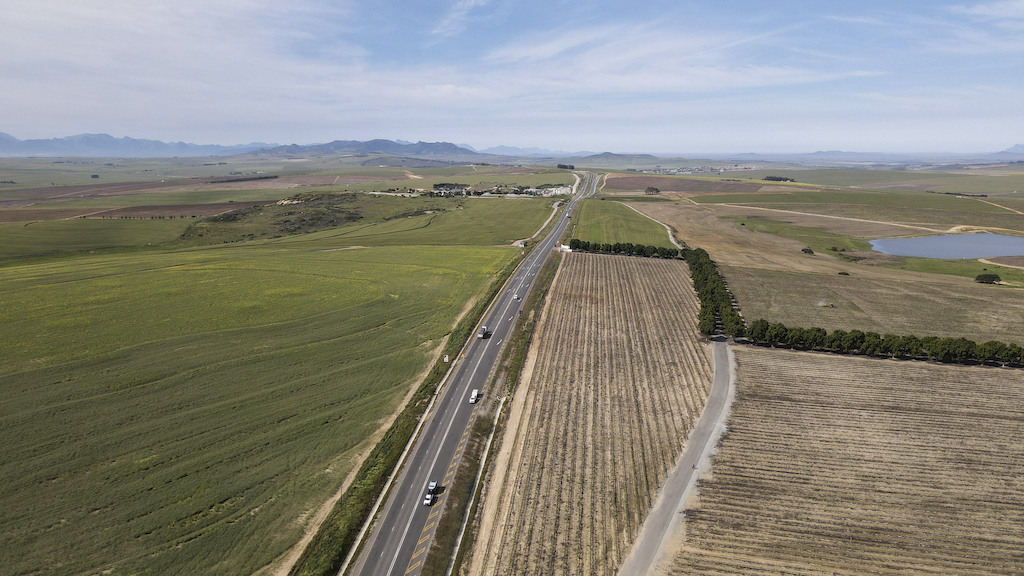
An idyllic landscape masking harsh realities: Wheatfields in the Swartland region of the Western Cape, where several Fairtrade-certified wine farms are located. Photo: Adrian de Kock
Employment conditions
Two other pillars of Fairtrade – wages and employment conditions – are marked by profound inequalities.
Permanent workers almost always receive only the legal minimum wage, with little evidence of any effort to bring pay scales closer to the living wage, which is about three times higher.
Seasonal workers, who according to the Fairtrade labour standards should enjoy equal pay and benefits, are paid for piecework and sometimes lose access to services enjoyed by permanent workers, such as medical care or a creche.
“If you work hard, you earn more than the minimum wage,” said a seasonal worker on one of the Fairhills farms who used to have a permanent job there. “If you don’t, it’s less.”
The minimum wage increase for farm workers following violent protests in 2013 in De Doorns made the situation worse for some. “After the increase, I was told there was no more work for me,” said the seasonal worker, who now survives on odd jobs.
Another critical issue concerns workplace safety – particularly the use of pesticides.
Although the testimonies collected for this investigation show that, in several cases, Fairtrade has contributed to improving pesticide safety, worrying incidents persist.
One worker at a Merwida farm reported employees and their families were not told which pesticides were being used, received no training about their dangers and weren’t given advance warning of spraying.
On two other wineries, workers reported pesticides containing substances banned in Europe were still being used, including clothianidin – a neonicotinoid produced by Bayer banned since 2018 – and compounds based on paraquat dichloride, quinclorac and sulfentrazone.
Housing is another sore point. The right to safe and decent accommodation is enshrined in the Fairtrade rules, but on many estates worker homes are dilapidated and, in the worst cases, covered in asbestos sheets, with no toilets or electricity.
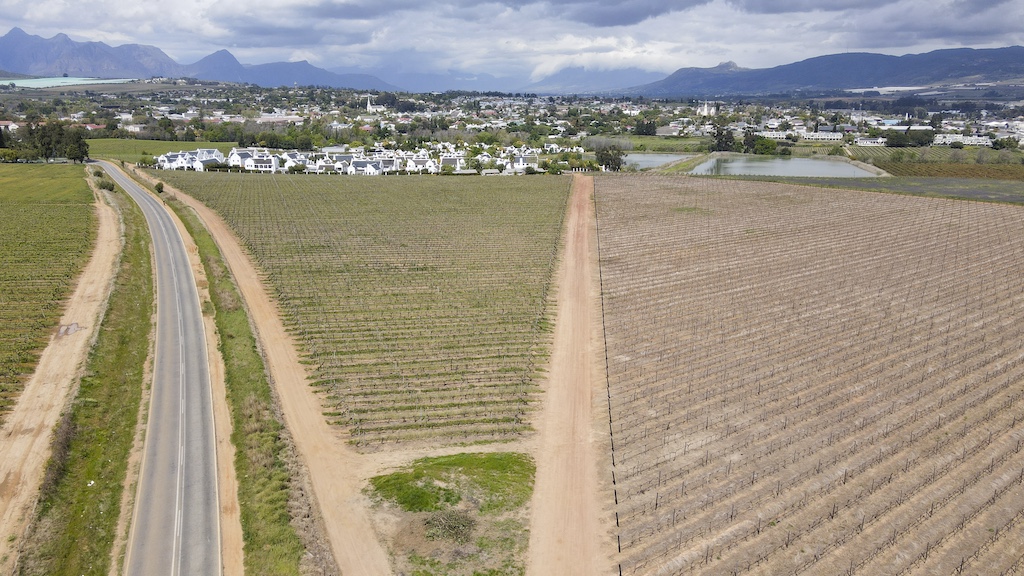
Entrenched: Many workers on Fairtrade farms feel promises of dismantling historical inequalities have failed to materialise. Pictured above are vineyards near Wellington in the Western Cape, where several Fairtrade-certified wine farms are located. Photo: Adrian de Kock
Compliance checks
Compliance oversight rests with Fairtrade’s own independently governed certification body, FLOCERT, which is responsible for auditing farms, checking compliance with Fairtrade standards, and issuing or withdrawing certification.
Wine producers applying for certification pay application fees, followed by annual charges for inspections and audits. The model was designed to make the system financially self-sufficient, but critics argue it creates a built-in conflict of interest, weakening oversight.
Denile Samuel, labour rights co-ordinator with the Stellenbosch-based NGO Women on Farms Project, says it has been “a constant battle to get Fairtrade to understand their audits are not working. The day before an auditor arrives, the mobile toilet arrives, there’s proper protective equipment and drinking water”. She describes the audit as “a box ticking exercise. It’s not a real thing. A conflict of interest could be a reason for this.”
This was confirmed by several workers. One on Merwida described how auditors “hand pick the workers to interview, and then just for a very short time. They could walk among us and ask us what our grievances are, but they don’t because then the farm work will fall behind. We are not heard.”
Workers complained audits are often announced in advance and carefully stage managed. “They come and make us clean everything beforehand,” said one who lives on a farm near Malmesbury. She said auditors would first meet with the Fairtrade officer before interviewing workers. Those known to be outspoken would be sent to distant vineyard blocks on audit days, while their more compliant colleagues were selected for interviews.
Some lamented interviews with auditors were held in the presence of supervisors, making it impossible to speak openly. “We can’t tell the truth,” another worker on the same farm said.
Those who try to assert their rights, like Francis Flippies, end up being silenced and marginalised.
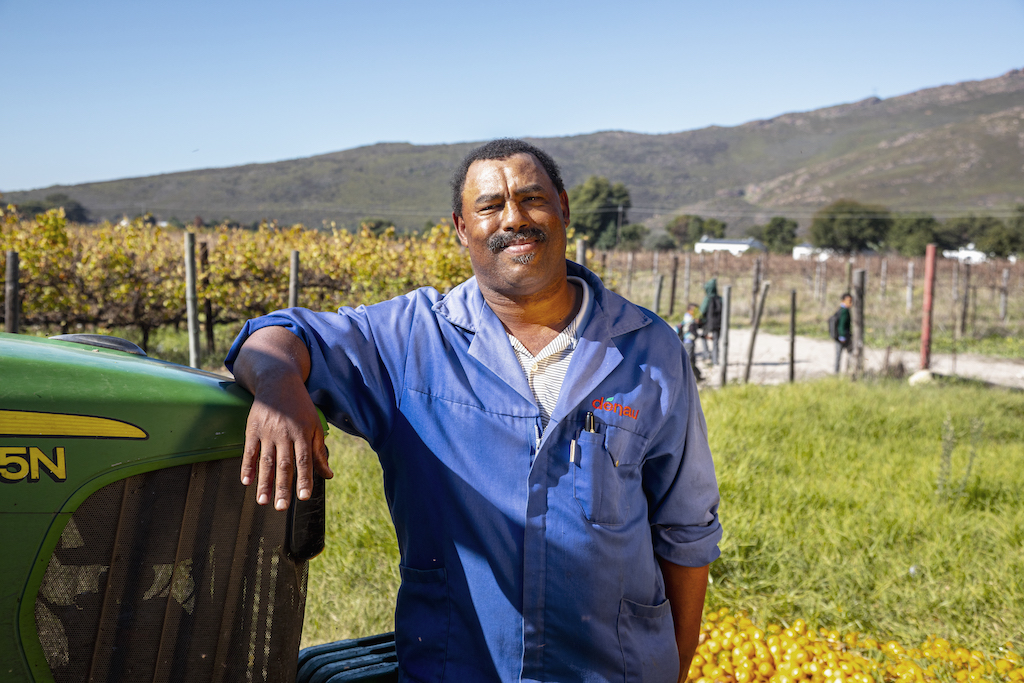
Pockets of success: Despite some successes, farmworker Abraham Oerson is sceptical that Fairtrade has delivered on its promise to shift power dynamics on farms. Photo: Adrian de Kock
Positive examples
Positive examples do exist. On a farm near Paarl that delivers grapes to a major supplier to the wine-buying monopolies in Sweden and Norway, the premium committee chairperson described a democratic and accountable system that genuinely improves the lives of workers. “The premium helped us a lot as workers and the community, to uplift them.”
Here, farm management has no say in how the premium is spent, allocations are based on need and feasibility, and all financial records are posted on a noticeboard accessible to workers. “Ninety-five percent of the workers are happy with Fairtrade,” he said. “When we have audits and there are red flags, they must make improvements. And they do it.”
But critics say examples such as this are the exception rather than the rule. “I’ve been working in this field for 30 years and I can honestly say I’ve only seen odd farms where there are better practices in terms of premium spending,” says Samuel of Women on Farms. “So I wouldn’t say Fairtrade has brought genuine empowerment.”
She believes the system has even reinforced existing hierarchies. “The way Fairtrade is implemented in South Africa has a lot to do with the paternalistic way things are done on farms. This is true of the whole agricultural sector, not just Fairtrade. But Fairtrade must also be blamed for perpetuating these power imbalances.”
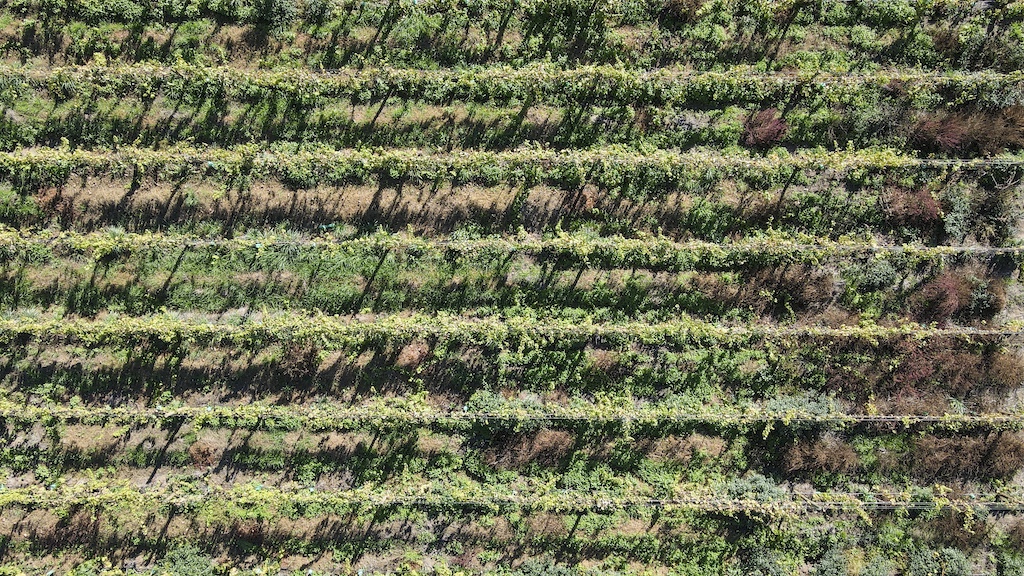
No comment: Fairtrade and major producers offered little response to allegations raised by workers in the heart of the winelands, pictured here from above. Photo: Adrian de Kock
Right of reply
We put all the issues raised in this article to Fairtrade. We were initially invited to an interview with two representatives from Fairtrade International, one from FLOCERT and one from Fairtrade Africa, that was later cancelled. Fairtrade International spokesperson Rosamaria Mancini said the organisation would instead prefer to “evaluate following the publication of your story”.
“If, however, during your investigation you have found violations of Fairtrade Standards we encourage you to submit those to FLOCERT (you can do so anonymously), as we have a duty to protect as part of our commitment to human rights and ethical trade practices,” she said.
Du Toitskloof, Fairhills, Co-op and Marks & Spencer all declined to comment.
Only Merwida co-owner Pierre van der Merwe agreed to an interview. Asked about Francis Flippies, Van der Merwe said he had asked doctors whether her severe skin reaction could have been caused by chemical exposure. Since he never received a report confirming that possibility, he concluded it was unrelated.
He added that after the incident Flippies stopped showing up for work, prompting him to send the farm manager to check on her. When she still did not return, the manager went back with a document that, Van der Merwe said, “she knew was a resignation letter”. He said he believed she had left on good terms. “If she came today and asked for assistance, I’d help,” he said.
Van der Merwe said all company operations, including pesticide spraying, are conducted “in full compliance with Fairtrade rules”. Premium funds, he said, are handled transparently, and the audits overseeing them are “rigorous and independent”.
Workers, he added, are free to submit written complaints directly to him. “If an issue is too complex, an external consultant steps in. We do everything we can to address problems transparently and fairly.”
Flippies has not worked since she was allegedly tricked into resigning eight years ago.
Oerson, the former foreman at Fairhills, has moved on to greener pastures. Today he works on a neighbouring citrus estate without Fairtrade accreditation, where he lives rent-free and his electricity costs half of what it did before. “All we want is the same on Fairtrade farms,” he said.
This investigation was developed with the support of Journalismfund Europe